Sitapur Lok Sabha Election Result 2024
For this constituency, the election was successfully held on May 13th. The voter turnout was 62.54 percent.Sitapur Lok Sabha Constituency in Uttar Pradesh is a political powerhouse renowned for its significant influence in Indian politics. Sitapur reflects a diverse demographic and remains a crucial constituency of Uttar Pradesh. Now in 2024, the electorate is even more enthusiastic to show the power of their vote. As for the 2024 candidates list in Sitapur Lok Sabha Constituency, Rakesh Rathore from Indian National Congress , Mahendra Singh Yadav from Bahujan Samaj Party and Rajesh Verma from Bharatiya Janta Party are the prominent candidates. Keep watching this page to get the latest updates about the Sitapur Lok Sabha elections.
Sitapur Lok Sabha Elections
Sitapur Candidates List

Rakesh Rathore
Indian National Congress

Mahendra Singh Yadav
Bahujan Samaj Party

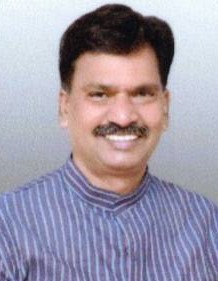
Sitapur Lok Sabha Elections Results 2024 to 1957
Browse By Year
| Candidate's Name | Votes | Vote Share | |
|---|---|---|---|
|
Rakesh Rathore
Winner
|
Indian National Congress |
5,31,138
Lead: 89,641
|
48.2% |
| Rajesh Verma | Bharatiya Janata Party | 4,41,497 | 40.06% |
| Mahendra Singh Yadav | Bahujan Samaj Party | 99,364 | 9.02% |
| Mo. Kashif Ansari | Apna Dal (kamerawadi) | 7,586 | 0.69% |
| Nota | None Of The Above | 6,958 | 0.63% |
| Lekhraj Lodhi | Aazad Samaj Party (kanshi Ram) | 6,734 | 0.61% |
| Vidyawati Gautam | Independent | 4,194 | 0.38% |
| Chandra Shekhar Verma | Rashtriya Shoshit Samaj Party | 2,429 | 0.22% |
| Ram Adhar Verma | Sardar Patel Siddhant Party | 2,115 | 0.19% |
Strike Rate
Assembly Constituencies in Sitapur
| Assembly Constituencies | Winner | Votes | Vote Share |
|---|---|---|---|
| Sevata |
Gyan Tiwari
BJP
|
108,057 | 48.43% |
| Biswan |
Nirmal Verma
BJP
|
106,014 | 44.77% |
| Mahmoodabad |
Smt. Asha Maurya
BJP
|
92,091 | 41.89% |
| Sitapur |
Rakesh Rathore "guru"
BJP
|
99,349 | 42.72% |
| Laharpur |
Anil Verma
SP
|
112,987 | 47.05% |
Sitapur Past Election Results
| Year | Candidate's Name | Party | Votes | Vote Share |
|---|---|---|---|---|
| 2024 | Rakesh Rathore | INC |
531,138
(Lead:
89,641)
|
48% |
| Rajesh Verma | BJP | 441,497 | 40% | |
| 2019 | Rajesh Verma | BJP |
514,528
(Lead:
100,833)
|
48% |
| Nakul Dubey | BSP | 413,695 | 39% | |
| 2014 | Rajesh Verma | BJP |
417,546
(Lead:
51,027)
|
41% |
| Kaiser Jahan | BSP | 366,519 | 36% | |
| 2009 | Kaisar Jahan | BSP |
241,106
(Lead:
19,632)
|
34% |
| Mahendra Singh Verma | SP | 221,474 | 31% | |
| 2004 | Rajesh Verma | BSP |
171,733
(Lead:
5,234)
|
29% |
| Mukhtar Anees | SP | 166,499 | 28% | |
| 1999 | Rajesh Verma | BSP |
211,120
(Lead:
36,362)
|
33% |
| Janardan Prasad Misra | BJP | 174,758 | 27% | |
| 1998 | Janardan Prasad Misra | BJP |
216,874
(Lead:
27,920)
|
33% |
| Prem Nath Varma | BSP | 188,954 | 29% | |
| 1996 | Mukhtar Anis | SP |
148,252
(Lead:
10,046)
|
30% |
| Janaradan Prasad Mishra | BJP | 138,206 | 28% | |
| 1991 | Janardan Prasad Misra | BJP |
134,569
(Lead:
37,706)
|
32% |
| Rajendra Kuumari Bajpai (w) | INC | 96,863 | 23% | |
| 1989 | Rajendra Kumari Bajpai | INC |
156,906
(Lead:
9,158)
|
35% |
| Shiv Sevak | JD | 147,748 | 33% | |
| 1984 | Rajendra Kumari | INC |
185,722
(Lead:
93,298)
|
50% |
| Hargovind Verma | LKD | 92,424 | 25% | |
| 1980 | Rajendra Kumari Bajpai | INC(I) |
121,211
(Lead:
45,697)
|
42% |
| Hargovind Verma | JNP(S) | 75,514 | 26% | |
| 1977 | Hargovind Verma | BLD |
194,400
(Lead:
109,975)
|
63% |
| Jagdish Chandra Dixit | INC | 84,425 | 27% | |
| 1971 | Jagdish Chandra Dixit | INC |
130,086
(Lead:
52,232)
|
57% |
| Jainarain Rathi | BJS | 77,854 | 34% | |
| 1967 | S. Nand | BJS |
102,742
(Lead:
26,074)
|
39% |
| Jagannath | INC | 76,668 | 29% | |
| 1962 | Suraj Lal | JS |
76,242
(Lead:
3,377)
|
36% |
| Dinesh Pratap Singh | INC | 72,865 | 34% |
FAQs
Who is the MP of Sitapur?
Rakesh Rathore from INC, is the MP of Sitapur.
What is the Sitapur polling percentage in 2024?
The polling percentage for Sitapur in 2024 was 62.54 %.
Candidates list of Sitapur?
- Rakesh Rathore(Indian National Congress)
- Mahendra Singh Yadav(Bahujan Samaj Party)
- Rajesh Verma(Bharatiya Janta Party)
The information provided on this page about the current and previous elections in the constituency is sourced from various publicly available platforms including https://old.eci.gov.in/statistical-report/statistical-reports/ and https://affidavit.eci.gov.in/. The ECI is the authoritative source for election-related data in India, and we rely on their official records for the content presented here. However, due to the complexity of electoral processes and potential data discrepancies, there may be occasional inaccuracies or omissions in the information provided.
Election News




Political Parties in India










Major Parties Candidate List
Governor List
Lok Sabha Links
List Of Popular Leaders In India
State-wise Politicians List
Politicians By Age And Professions
-
 Sign in with Google
-
Block for 8 hours
-
Block for 12 hours
-
Block for 24 hours
-
Don't block


 Click it and Unblock the Notifications
Informed.
- Male
- Female
- Others
- Under 18
- 18 to 25
- 26 to 35
- 36 to 45
- 45 to 55
- 55+