Get Updates
Get notified of breaking news, exclusive insights, and must-see stories!
Home | Political Parties | Kerala Congress (jacob)

Kerala Congress (jacob)

Kerala Congress (Jacob) is a prominent regional political party in Kerala, India, rooted in the state’s socio-political fabric. Known for its strong advocacy of federalism, decentralization, and agricultural development, the party emphasizes policies tailored to Kerala's unique demographics. It was founded in 1979 as a splinter group of the Kerala Congress, focusing on the interests of farmers and marginalized communities.

Over the years, Kerala Congress (Jacob) has played a significant role in coalition politics, particularly within the United Democratic Front (UDF) alliance. It is recognized for promoting economic reforms while safeguarding Kerala's agrarian economy. The party's leadership has consistently worked to address rural development, infrastructure growth, and social justice issues.

Kerala Congress (Jacob) continues efforts to balance traditional values with progressive policies, consolidating its position in Kerala politics and addressing key state-level priorities such as environmental conservation and equitable development.

Read More

By Rashmi

Time Square

Monday, February 23, 2026, 02:45:29 PM [IST]

`

Kerala Congress (jacob) (KECJ) Information

Party Name Kerala Congress (jacob)
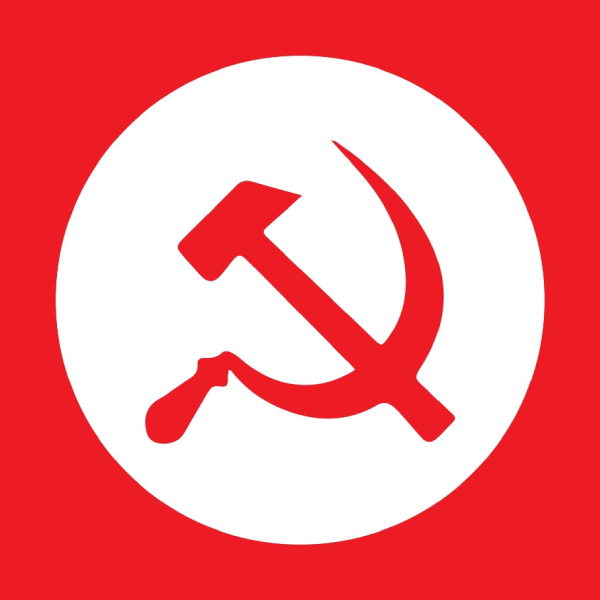
Party Flag
Kerala Congress (jacob)
Party Symbol
Battery Torch
 Battery Torch
Founder T. M. Jacob
Party Founded Date 16 Dec 1993
Split From Kerala Congress (m)
Party Headquarters

Central Committee Office, T.B Road, Kottayam, Kerala

Party President Anoop Jacob
Parliamentary Chairperson Vakkanad Radhakrishnan
Social Handles
facebook

Kerala Congress (jacob) (KECJ) Flag

Kerala Congress (Jacob) election symbol is not permanently reserved by the Election Commission of India. The party is registered but unrecognised. It receives a common symbol for each election under the Symbols Order. Recognised parties alone hold exclusive, reserved symbols across elections. In the 2012 Piravom by-election, Anoop Jacob contested on the Torch symbol. In 2021, KEC(J) again contested Piravom under UDF with an allotted symbol.

Kerala Congress (Jacob) flag is not formally assigned by the Commission; ECI regulates symbols, not flags. Any Party Logo or flag at rallies is organisational and not shown on ballots or EVMs. Party Abbreviation KEC(J) labels candidates on official lists and strengthens their political identity. This distinction matters for voter recall and consistent canvassing materials.

KEC(J): Symbol allocation and flag status

Under UDF seat-sharing, the party has repeatedly contested Piravom. Anoop Jacob won in 2012, 2016, and 2021. Because Kerala Congress (Jacob) lacks a reserved symbol, returning officers allot a free symbol each election. This arrangement ensures uniform visibility even without a permanent Kerala Congress (Jacob) election symbol. Allotments follow ECI timelines and applications.

No officially recognised Kerala Congress (Jacob) flag exists within ECI rules. Only symbols appear on ballots and EVMs. Any flag imagery in campaign materials is organisational, not part of registration or reservation.

Read More

Kerala Congress (jacob) (KECJ) Ideology

The Kerala Congress (Jacob) ideology emphasizes regional empowerment, rooted in the socio-economic development of Kerala’s populace. Grounded in agrarian priorities, the party advocates policies supporting farmers, agricultural advancements, and protection of rural livelihoods. Decentralized governance forms a critical part of its political philosophy, prioritizing local self-governance and participatory decision-making across communities.

Aligned with its core ideological framework, the party principles highlight inclusive growth and sustainable development. The Kerala Congress (Jacob)’s governance model focuses on fostering education, employment generation, and improving infrastructure while ensuring environmental conservation. It champions federal ideals, emphasizing the necessity of balancing regional aspirations within the national framework. The party agenda underscores the importance of addressing agrarian crises, equitable resource allocation, and promoting welfare schemes for marginalized communities.

Kerala Congress (Jacob): Agricultural Focus and Development Ideals

At the heart of Kerala Congress (Jacob)’s principles is the preservation of farmer rights and sustainable agricultural policies. Safeguarding the interests of rural producers remains essential to their political philosophy. Furthermore, the party embraces decentralization as a key tenet, advocating for resource empowerment at the grassroots level while maintaining efficient administrative structures for governance.

Kerala Congress (Jacob) also integrates faith in federalism, ensuring collaboration between the state and central governments. Their governance model promotes regional identity while blending progressive socio-economic strategies. Balancing traditional values with modern reforms, the party’s ideology remains firmly committed to advancing Kerala’s holistic development.

Read More

Kerala Congress (jacob) (KECJ) Principles

The principles of Kerala Congress (Jacob) emphasize a decentralized governance model and farmer-centric development. This political party strongly advocates for equitable resource distribution to ensure inclusive growth across Kerala. Its ideology focuses on promoting sustainable agriculture, improving rural livelihoods, and addressing socio-economic disparities. The party values transparency, fairness, and accountability in public administration, maintaining a clear vision for the welfare of marginalized communities.

Kerala Congress (Jacob) prioritizes effective policymaking to empower farmers and small-scale entrepreneurs. Its governance model promotes collaboration between local self-governments and state authorities to implement development programs efficiently. Upholding democratic values, the party believes in fostering active citizen participation in decision-making processes, exemplifying their commitment to people-focused politics. It aligns its political beliefs with Kerala's diverse socio-cultural ethos to strengthen grassroots connections.

Key Political Beliefs of Kerala Congress (Jacob)

The Kerala Congress (Jacob) ideology promotes social justice, prioritizing access to education, healthcare, and employment opportunities for all. As part of its principles, the party ensures that environmental sustainability remains an integral part of its agenda. Its political beliefs advocate bridging the urban-rural divide while strengthening Kerala’s agricultural economy. With a strong emphasis on regional welfare, this party remains committed to preserving Kerala's unique identity and heritage.

The core values of Kerala Congress (Jacob) also include fostering communal harmony and religious coexistence. By adhering to constitutional principles, the party ensures progressive policies catering to all sections of society. These values reflect its dedication to maintaining Kerala's progressive socio-political framework effectively.

Read More
Kerala Congress (jacob) (KECJ) Organisation Structure

The Kerala Congress (Jacob) is a regional political party in Kerala known for its focused organizational framework. Its primary structure revolves around a centralized hierarchy, ensuring smooth decision-making processes and coordinated activities at various levels. The party emphasizes streamlined communication and a clearly defined chain of command to maintain unity within its ranks.

The party's governing body is the core decision-making authority. It comprises senior leaders responsible for policy formation, electoral strategies, and organizational management. This governing body provides strategic guidance, ensuring the party's objectives align with its long-term vision. All major policy decisions are deliberated within this body to maintain cohesiveness across its operations.

Kerala Congress (Jacob) Structure: Leadership and Committees

Leadership in Kerala Congress (Jacob) follows a top-down approach, with a president as the central figure. The president oversees the overall direction and ensures alignment with the party's guiding principles. Below the president, there are vice-presidents and general secretaries who manage specific portfolios, including outreach, finance, and policy advocacy.

The party operates via committees at both state and district levels. At the state level, committees focus on state-related policies and coalition strategies. District committees act as the bridge to grassroots units, ensuring that the party’s initiatives reach the people effectively. This layered approach reinforces Kerala Congress (Jacob)’s political framework.

Kerala Congress (Jacob) Party Hierarchy and Grassroots Organization

The Kerala Congress (Jacob) hierarchy is structured to integrate grassroots participation with state-level policymaking. Below the district-level committees, local cadre and regional representatives contribute to mobilization and grassroots development. These regional representatives escalate local issues to higher levels, creating continuous feedback mechanisms within the organization.

To empower its base, the party has a youth wing and a women's wing. These sub-organizations focus on engaging specific demographic groups through targeted initiatives. The youth wing plays a critical role in attracting new members and amplifying the party's reach among younger voters. The women's wing is instrumental in advocating for gender-inclusive policies and participation.

Decision-Making Process in Kerala Congress (Jacob)

Kerala Congress (Jacob)’s decision-making process emphasizes collective participation. Proposals undergo deliberation in specialized committees before final approval by the governing body. This decentralized process ensures inclusivity while maintaining accountability through streamlined approval mechanisms.

Regular meetings at the district and state levels strengthen communication within the party organization. Leaders at all levels are encouraged to submit progress reports detailing local challenges and achievements. These reports influence the party’s strategic pivots, showcasing how decision-making is informed and data-driven.

Political Framework and Role Allocation in Kerala Congress (Jacob)

The political framework of Kerala Congress (Jacob) ensures specific roles for members based on expertise. Senior leaders concentrate on strategic alliances with other parties, particularly within Kerala’s coalition landscape. Regional leaders focus on constituency-specific campaigns and representation to solidify support bases.

The party's internal elections further enhance organizational transparency. Positions at various levels are democratically filled, allowing representatives to actively influence the decision-making process. This election-oriented structure bolsters Kerala Congress (Jacob)’s commitment to participatory democracy.

Organizational LevelResponsibilityKey Players
Governing BodyPolicy and StrategyPresident, Vice Presidents
State CommitteesStatewide PoliciesGeneral Secretaries
District CommitteesGrassroots MobilizationRegional Leaders

Through its well-defined structure and comprehensive organization, Kerala Congress (Jacob) consistently sustains its political relevance within Kerala. Its focus on hierarchy, grassroots organization, and participatory leadership sets it apart within the state's complex political ecosystem.

Read More

Kerala Congress (jacob) (KECJ) Timeline

2026

Ahead of the 2026 Kerala Assembly elections, Kerala Congress (Jacob) sought to expand its electoral footprint while continuing as a UDF constituent.

2025

The party formally demanded additional seats in the UDF for the 2026 Kerala Assembly elections, citing its organisational strength beyond Piravom.

2024

Kerala Congress (Jacob) remained active within the UDF and began internal discussions on seat allocation ahead of the 2026 Assembly elections.

2023

The party focused on constituency-level governance and organisational consolidation within central Kerala while remaining aligned with the UDF.

2022

Kerala Congress (Jacob) continued as a UDF ally, with Anoop Jacob serving as MLA from Piravom and leading the party’s legislative presence.

2021

Kerala Congress (Jacob) merged with Kerala Congress (Joseph), marking the end of its independent existence as a political party.

2016

The party suffered a significant defeat in the 2016 Kerala Legislative Assembly elections, losing much of its political influence.

2011

The party faced a major setback with the demise of its founder-leader T. M. Jacob due to a cardiac arrest.

2011

Following the death of T. M. Jacob, his son Anup Jacob took over the leadership of Kerala Congress (Jacob) and continued the party\'s legacy.

2005

The party witnessed internal divisions, leading to a temporary split among its members.

1991

T. M. Jacob, the leader of the party, became a minister in Kerala\'s government under UDF, marking a significant achievement for the party.

1987

Kerala Congress (Jacob) joined the UDF coalition, strengthening its political influence in Kerala.

1982

Kerala Congress (Jacob) contested in the 1982 Kerala Legislative Assembly elections and became a notable political force.

1979

The Kerala Congress (Jacob) party was formed, splitting from the original Kerala Congress. It was led by T. M. Jacob and his followers.

Disclaimer:The information provided on this page is sourced from various publicly available platforms including https://en.wikipedia.org/, https://sansad.in/ls, https://sansad.in/rs, https://pib.gov.in/, https://affidavit.eci.gov.in/ and the official websites of state assemblies respectively. While we make every effort to maintain the accuracy, comprehensiveness and timeliness of the information provided, we cannot guarantee the absolute accuracy or reliability of the content. The data presented here has been compiled without consideration of the objectives or opinions of individuals who may access it.

Notifications
Settings
Clear Notifications
Notifications
Use the toggle to switch on notifications
  • Block for 8 hours
  • Block for 12 hours
  • Block for 24 hours
  • Don't block
Gender
Select your Gender
  • Male
  • Female
  • Others
Age
Select your Age Range
  • Under 18
  • 18 to 25
  • 26 to 35
  • 36 to 45
  • 45 to 55
  • 55+