

Get Updates
Get notified of breaking news, exclusive insights, and must-see stories!
Home | Political Parties | Bharatiya Janta Party

Bharatiya Janta Party

The Bharatiya Janata Party (BJP) is one of India’s leading political parties, rooted in nationalist ideology. Formed in 1980, it emerged as a significant force in shaping modern Indian politics. The BJP emphasizes policies promoting economic growth, cultural heritage, and strong governance. With a robust political base, it actively champions national security, development, and reforms aimed at empowering citizens.

Currently, the BJP holds a commanding presence in both national and state-level politics. Renowned for initiatives like "Digital India" and "Make in India," the party's influence reflects its focus on modern infrastructure and grassroots connectivity. Its leadership has been pivotal in steering policies that resonate with India’s growing aspirations. Supported by millions, the BJP has built an extensive organizational framework aligned with its vision of inclusive development. As a transformative political force, the Bharatiya Janata Party continues shaping India's socio-economic and political landscape.

Read More

By Administrator

Time Square

Tuesday, March 17, 2026, 10:21:45 AM [IST]

`

Bharatiya Janata Party (BJP) Information

Party Name Bharatiya Janta Party
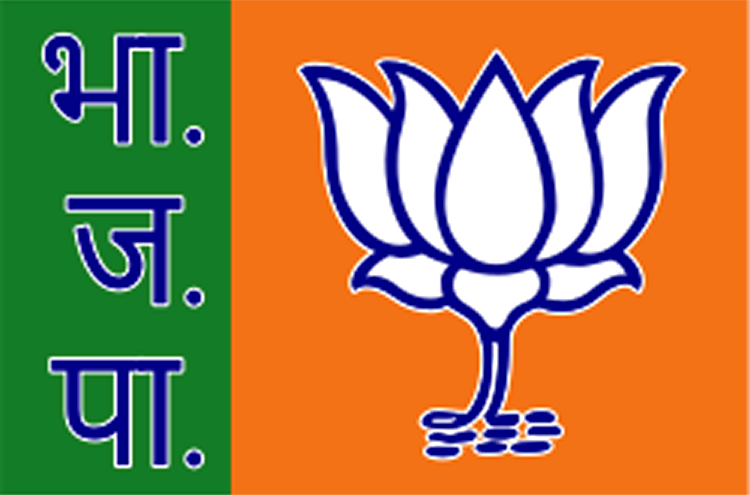
Party Flag
Bharatiya Janata Party
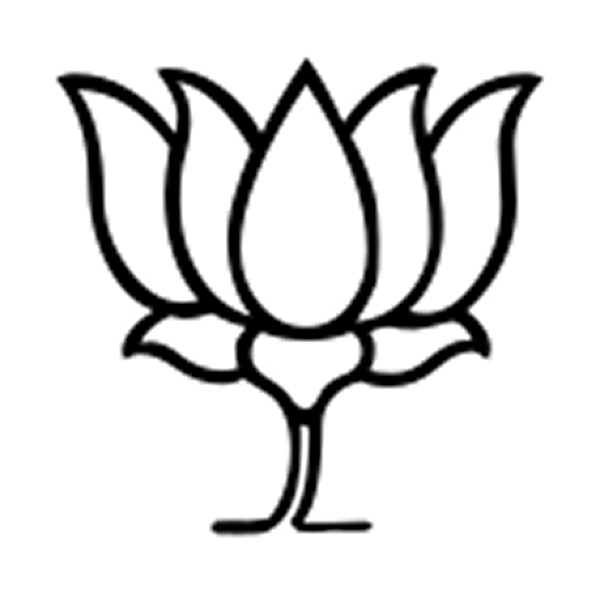
Party Symbol
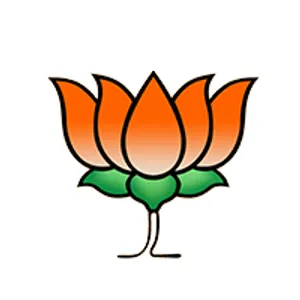
Lotus
 Lotus
Founder Atal Bihari Vajpayee, Lal Krishna Advani
Party Founded Date 06 Apr 1980
No. of MPs Loksabha : 240
Rajyasabha : 102
Party Headquarters

6-A,Deen Dayal Upadhyaya Marg, New Delhi, Delhi, India

Party President Nitin Nabin
Presidium National Executive
Parliamentary Chairperson Narendra Modi
Loksabha Leader Narendra Modi
Rajya Sabha Leader J. P. Nadda
Treasurer Rajesh Agarwal
Newspaper Kamal Sandesh (English and Hindi)Kamal Barta (Bengali)
Student Wing Akhil Bharatiya VidyarthiParishad
Youth Wing Bharatiya Janata YuvaMorcha
Women's Wing BJP Mahila Morcha
Labour Wing Bharatiya Mazdoor Sangh
Peasants Wing BJP Kisan Morcha
Political Position Right-wingto far-right
International Affiliation Asia Pacific DemocracyUnion
Website www.bjp.org
Social Handles
facebook
x

Bharatiya Janata Party (BJP) Flag

The Election Commission of India recognizes the Lotus as the Bharatiya Janata Party election symbol. It appears on EVM units and paper ballots for recognized candidates. The emblem is reserved nationwide under the Symbols Order. Voters identify the party through this mark during elections across Lok Sabha and state contests.

Election usage follows strict ECI rules on reserved symbols. The party may authorize nominees and substitutes to use the Lotus. Misuse can trigger complaints and action by returning officers. Alliances do not change allocation. In seatsharing, BJP fields candidates on Lotus, while partners contest using their own symbols.

BJP: Symbol and Flag Status

The Election Commission of India does not allocate party flags. Any Bharatiya Janata Party flag is organizational, used in campaign materials and offices, not on ballots. The Party Logo commonly mirrors the Lotus emblem for consistency. Guidelines are internal, while election signage must prioritize the reserved symbol for identification.

Public communications cite the Party Abbreviation, BJP, to aid political identity. Candidate affidavits, notifications, and EVM displays pair the name with the Lotus. Historical records show no change of symbol for BJP in national polls. Partners within the NDA continue using their own ECI symbols during joint campaigns.

Read More

Bharatiya Janata Party (BJP) Ideology

The Bharatiya Janata Party (BJP) ideology stems from the principles of integral humanism and cultural nationalism. Introduced by Deendayal Upadhyay in 1965, the party's political philosophy emphasizes the holistic development of individuals and society. The BJP ideology promotes harmony between modern governance models and India's rich cultural traditions. It seeks to unify citizens while protecting the nation's heritage and identity. This focus drives its policy frameworks and economic strategies.

At the core of BJP principles lies the belief in self-reliance, good governance, and national security. The party agenda prioritizes economic growth, development of rural infrastructure, and the empowerment of marginalized sections. BJP leaders advocate policies that support domestic industries, entrepreneurship, and technological advancement. These strategies align with their governance model, emphasizing strong leadership and reform-driven politics.

BJP Ideology and Nation-Building Philosophy

The BJP principles integrate cultural nationalism with a vision for inclusive development, fostering solidarity among diverse communities. The political philosophy ensures that modern reforms blend seamlessly with India's tradition of pluralism. Their agenda includes strengthening India’s democratic institutions and emphasizing collective national interests. The party considers economic equality and cultural preservation as key pillars of social harmony.

The Bharatiya Janata Party ideology firmly supports decentralization while empowering states with greater autonomy. Its governance model ensures public welfare schemes reach grassroots levels efficiently. The BJP principles also reflect a focus on environmental conservation, sustainable development, and digital transformation as priorities for building a self-reliant India.

Read More

Bharatiya Janata Party (BJP) Principles

The Bharatiya Janata Party (BJP) principles are founded on integral humanism, focusing on inclusive societal progress. Emphasizing "Sabka Saath, Sabka Vikas," the party prioritizes equal opportunity, justice, and empowerment for all communities. Upholding India's cultural heritage, the BJP ideology promotes unity and patriotism while respecting local diversity and traditions.

The party values transparency and good governance as critical pillars of its governance model. It stresses accountability, efficiency, and minimal government intervention to enhance citizen services. Economic self-reliance or "Atmanirbhar Bharat" is a central aspect of BJP's political beliefs, fostering policies to support indigenous industries and innovation.

BJP's Commitment to Social Welfare and National Security

Social welfare remains a cornerstone of Bharatiya Janata Party principles, focusing on healthcare, education, and women’s empowerment. Initiatives like Jan Dhan Yojana and Beti Bachao Beti Padhao reflect its dedication to improving grassroots quality of life. Additionally, BJP values environmental conservation through sustainable development approaches.

National security forms a critical part of the BJP ideology, ensuring a robust defense system while addressing internal security challenges. Strengthening border management and countering terrorism are integral to its political beliefs. BJP encourages global partnerships that align with India’s sovereignty and strategic interests.

Read More
Bharatiya Janata Party (BJP) Organisation Structure

The Bharatiya Janata Party, or BJP, operates through a well-defined organization and structured hierarchy. Its framework is built to ensure smooth governance, effective decision-making, and wide representation across India's diverse political landscape. The BJP's organization emphasizes both grassroots participation and centralized authority, maintaining cohesive party operations nationwide.

BJP’s structure is layered, starting from the national leadership down to local levels. This comprehensive hierarchy enables coordination between the central governing body and regional units. The organization also promotes adherence to its ideological principles and policy implementation through a disciplined chain of command.

BJP Leadership Framework and Governing Roles

The BJP’s leadership structure is headed by the National President, who is the top executive authority within the party. The National President leads policy formulation, strategic planning, and coordination among national and regional leadership. Supporting the president is the Parliamentary Board, the party’s highest decision-making body, tasked with candidate selection and policy review.

The BJP's core decision-making process revolves around its National Executive. This body comprises senior party leaders and elected representatives who deliberate on political strategies, governance issues, and organizational matters. It further ensures statewide representation and alignment with the party's national objectives.

Decision-Making Process in BJP's Organizational Structure

The decision-making process in the BJP is often guided by its collective leadership and consultative practices. Decisions at the national level are usually discussed and approved by the National Executive and ratified by the Parliamentary Board. Regional units propose policies tailored to local issues, which align with the broader national strategy.

Beneath the national tier, State Presidents lead operations in their respective states. They are supported by district and block-level committees, ensuring efficient implementation of decisions. Such a multi-tiered approach fosters grassroots empowerment while maintaining alignment with the party's centralized political framework.

BJP's Electing and Appointing Mechanisms

The BJP practices both democratic elections and strategic appointments within its organization. National and state-level leaders, including the National President, are elected according to the party constitution. Appointments for significant posts, such as General Secretaries or Spokespersons, are made considering performance and loyalty.

The General Secretaries, pivotal in the BJP's structure, manage day-to-day operations and oversee regional units. They assist in policy communication and party organization, ensuring smooth functioning across all levels. Their coordination efforts uphold the BJP’s political framework and facilitate collaboration between various governing bodies.

Committees and Specialized Wings of BJP

The BJP has numerous committees and specialized wings to address diverse societal needs. For instance, the Yuva Morcha focuses on youth mobilization, while the Mahila Morcha addresses women's participation and empowerment. Similarly, intellectual forums and cultural committees cater to specific interest groups.

At the grassroots, Mandal (block-level) committees play a critical role within the BJP’s structure. These committees mobilize local communities, coordinate campaigns, and implement party initiatives at the village level. Such a comprehensive network strengthens the BJP’s reach and enhances its grassroots impact.

Importance of BJP’s Hierarchical Alignment

Alignment between the national and regional units is pivotal to BJP's organizational success. While the National Executive oversees macro-level policies, district and block-level committees customize their application per local requirements. This seamless coordination underlines the efficiency of BJP's political framework.

The BJP’s structure ensures accountability and representation across varying administrative levels. This hierarchical model facilitates quick decision-making, policy dissemination, and conflict resolution within the party's ranks. As a result, the BJP remains an organized political force in Indian democracy.

Read More

Bharatiya Janata Party (BJP) Status in India 2026

S.No States MLAs CM Name
1 Arunachal Pradesh 41 --
2 Assam 60 --
3 Bihar 74 Shri Tarkishore Prasad
4 Delhi 8 --
5 Gujarat 112 Shri Vijay Rupani
6 Haryana 40 Shri Manohar Lal Khattar
7 Himachal Pradesh 44 Shri Jairam Thakur
8 Karnataka 119 Shri B. S. Yediyurappa
9 Madhya Pradesh 125 Shri Shivraj Singh Chauhan
10 Maharashtra 105 --
11 Uttar Pradesh 306 Shri Yogi Adityanath
12 Uttarakhand 56 Shri Pushkar Singh Dhami
13 West Bengal 77 --

Bharatiya Janata Party (BJP) Timeline

2022

BJP secured significant electoral victories in states including Uttar Pradesh and Gujarat, solidifying its political dominance.
2019

BJP retained power by winning the 2019 general elections with an even larger mandate.

2019

BJP-led government revoked Article 370, ending Jammu and Kashmir\'s special autonomous status.

2014

Under Narendra Modi’s leadership, BJP achieved a sweeping victory, forming the government with an absolute majority in Lok Sabha.

2014

Narendra Modi was sworn in as the 14th Prime Minister of India after BJP\'s victory in the general elections.

2008

BJP won the state assembly elections in Karnataka, marking its first major success in southern India.

2004

BJP and the NDA lost the 2004 general elections, paving the way for the Congress-led UPA to form the government.

1999

BJP-led NDA won the 1999 general elections, forming a stable government under Vajpayee’s leadership.

1998

BJP formed the National Democratic Alliance (NDA) and Atal Bihari Vajpayee became the Prime Minister.

1996

Atal Bihari Vajpayee became India’s Prime Minister for 13 days following BJP emerging as the single largest party in the general elections.

1992

The Babri Masjid demolition occurred, leading to significant political developments surrounding BJP’s stance on Hindutva.

1989

BJP supported the Janata Dal-led coalition government headed by Prime Minister V.P. Singh.

1984

BJP contested the 1984 general elections but secured only 2 out of 543 seats in Lok Sabha.

1980

The Bharatiya Janata Party (BJP) was founded in India as the political successor to the Bharatiya Jana Sangh.

Disclaimer:The information provided on this page is sourced from various publicly available platforms including https://en.wikipedia.org/, https://sansad.in/ls, https://sansad.in/rs, https://pib.gov.in/, https://affidavit.eci.gov.in/ and the official websites of state assemblies respectively. While we make every effort to maintain the accuracy, comprehensiveness and timeliness of the information provided, we cannot guarantee the absolute accuracy or reliability of the content. The data presented here has been compiled without consideration of the objectives or opinions of individuals who may access it.

Notifications
Settings
Clear Notifications
Notifications
Use the toggle to switch on notifications
  • Block for 8 hours
  • Block for 12 hours
  • Block for 24 hours
  • Don't block
Gender
Select your Gender
  • Male
  • Female
  • Others
Age
Select your Age Range
  • Under 18
  • 18 to 25
  • 26 to 35
  • 36 to 45
  • 45 to 55
  • 55+