




Get Updates
Get notified of breaking news, exclusive insights, and must-see stories!
Home | Political Parties | Communist Party Of India (marxist)

Communist Party Of India (marxist)

The Communist Party of India (Marxist) is a prominent leftist political organization in India, advocating Marxist-Leninist principles. Founded in 1964, the CPI(M) played a pivotal role in Indian politics, shaping progressive ideologies. With a focus on socialism, economic equality, and workers' rights, the party has a strong presence in states like Kerala, West Bengal, and Tripura. It works towards uplifting marginalized communities through land reforms and social welfare initiatives.

Committed to secularism, democratic values, and anti-imperialism, the CPI(M) continues influencing policies aligning with its ideological vision. The party actively opposes communalism and neoliberal economic policies while supporting agricultural development and labor reforms. Representing the working class, it collaborates with trade unions and other progressive movements nationwide. With its emphasis on grassroots mobilization, the Communist Party of India (Marxist) remains a significant force in addressing socio-economic disparities and striving for a more equitable and inclusive society in India.

Read More

By Administrator

Time Square

Monday, March 23, 2026, 11:10:05 AM [IST]

`

Communist Party Of India (Marxist) (CPM) Information

Party Name Communist Party Of India (marxist)
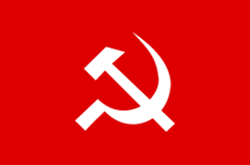
Party Flag
Communist Party Of India (Marxist)
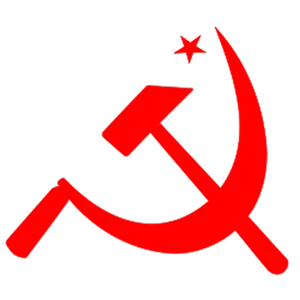
Party Symbol
Hammer Sickle and Star
 Hammer Sickle and Star
Founder List P. Ramamurthi M. Basavapunnaiah E. M. S. Namboodiripad H. S. Surjeet Promode Dasgupta Jyoti Basu H. K. Konar P. Sundarayya B. T. Ranadive A. K. Gopalan
Party Founded Date 07 Nov 1964
Split From Communist Party of India
No. of MPs Loksabha : 4
Rajyasabha : 4
Party Headquarters

A. K. Gopalan Bhawan, 27-29, Bhai Vir Singh Marg, New Delhi-110 001

Party President NA
Presidium Politburo
General Secretary M. A. Baby
Loksabha Leader K Radhakrishnan
Rajya Sabha Leader John Brittas
Newspaper People's Democracy Ganashakti Deshabhimani Theekkathir Loklahar Daily Desher Katha
Student Wing Students' Federation of India Tribal Students Union
Youth Wing Democratic Youth Federation of India Tribal Youth Federation
Women's Wing All India Democratic Women's Association
Labour Wing Centre of Indian Trade Unions
Peasants Wing All India Kisan Sabha All India Agricultural Workers Union
Political Position Left-wing
International Affiliation IMCWP
Website cpim.org

Communist Party Of India (Marxist) (CPM) Flag

The Election Commission of India reserves the Hammer, Sickle and Star for CPI(M). This is the Communist Party of India (Marxist) election symbol. The symbol appears on ballots and EVMs to aid voter recognition. It anchors the partys political identity and is used with the party logo in campaign materials.

CPI(M) contests elections under its own symbol in alliances and seatsharing arrangements. Recognized party status ensures the symbol does not shift to an allys mark. The Election Commission of India prints the same device beside CPI(M) nominees across constituencies. There is no record of temporary allocation replacing this emblem in recent general or assembly polls.

CPI(M): Election Symbol and Flag Use

The Communist Party of India (Marxist) flag is organizational. It is not allotted by the Election Commission of India. The party uses a red flag with a white hammer and sickle. Some units depict an accompanying star at offices and rallies. Usage follows party logo conventions. Ballots retain the ECIallotted Hammer, Sickle and Star for voter recognition.

In Kerala, West Bengal, and Tripura, CPI(M) candidates contest under the emblem during seatsharing. Allies retain their symbols. The Communist Party of India (Marxist) flag functions separately from ballots, supporting symbol visibility.

Read More

Communist Party Of India (Marxist) (CPM) Ideology

The ideology of the Communist Party of India (Marxist) emphasizes a socialist framework for societal progress. Rooted in Marxist-Leninist principles, the party seeks to dismantle capitalist structures while promoting democratized ownership of resources. The CPI(M) ideology highlights the need for class struggle to achieve economic and social equity, ensuring the working class and marginalized communities are central in decision-making processes.

The CPI(M)'s governance model envisions a transformation of Indian society through state-led planning and public ownership in key industries. Its political philosophy is built upon resisting imperialism, fostering secularism, and combating communalism. The Communist Party of India (Marxist) principles also advocate for sustainable development practices, balancing industrial progress with environmental concerns. These principles aim to build an inclusive and egalitarian state structure.

Class Struggle in CPI(M) Principles

The Communist Party of India (Marxist) ideology highlights class struggle as pivotal to achieving socialism. CPI(M) principles focus on organizing workers, farmers, and laborers to challenge exploitative socio-economic systems. Aligning with this political philosophy, the party agenda includes campaigns for labor rights, fair wages, and land ownership reforms. Through their governance model, CPI(M) aims to eliminate economic disparity across all sections of Indian society.

In its party agenda, the CPI(M) condemns neoliberal policies and advocates for strengthening public welfare systems. Upholding Marxist principles, the party fosters an anti-imperialist stance, promoting global cooperation among socialist nations. The Communist Party of India (Marxist) ideology reflects a commitment to fostering democratic decentralization, empowering grassroots movements, and creating a just governance model rooted in socialist values.

Read More

Communist Party Of India (Marxist) (CPM) Principles

The Communist Party of India (Marxist) (CPI-M) advocates for equality, social justice, and democratic governance. Its principles are rooted in Marxist ideology, focusing on eradicating socio-economic disparities caused by capitalism. The CPI-M strives to establish a classless society by empowering the working class and marginalized communities through collective action and organized movements.

The CPI-M ideology emphasizes land reforms, wealth redistribution, and protection of labor rights to reduce inequality. The party supports decentralized governance, aiming to strengthen local self-governments and implement policies benefiting underprivileged citizens. It consistently opposes privatization of public assets, advocating for state control in critical sectors such as education, healthcare, and infrastructure development.

CPI-M’s Governance Model and Political Beliefs

Aligned with their governance model, the CPI-M principles endorse secularism and the protection of democratic rights. The party actively opposes communalism and seeks policies upholding secular values in a pluralistic society. Democratic decision-making and participatory governance remain core components of the party's approach to administration.

On international matters, the party advocates for anti-imperialism, non-alignment, and solidarity among developing nations. The CPI-M political beliefs prioritize fostering a self-reliant economy while resisting foreign domination. These key party values guide policies endorsing equitable growth and resisting exploitation in any form.

Read More
Communist Party Of India (Marxist) (CPM) Organisation Structure

The Communist Party of India (Marxist), abbreviated as CPI(M), is structured with a robust hierarchical framework. Its organization is built on democratic centralism, where decision-making combines central authority and collective responsibility. This principle ensures unified action while emphasizing democratic participation at all organizational levels.

At the core, the CPI(M) structure comprises multiple tiers starting from grassroots-level committees to the central leadership. These levels include party units at village, local, district, state, and national stages. This layered hierarchy allows effective communication and decision dissemination across its vast membership base.

CPI(M) Central Committee and Governing Body Functions

The Central Committee holds the highest authority in the CPI(M) structure after the Party Congress. Composed of selected representatives from state units, this body formulates policies and strategies. It also evaluates the implementation of decisions and oversees organizational growth across states.

The Politburo, a subset of the Central Committee, acts as the top decision-making body in between Central Committee meetings. This governing body ensures immediate solutions to pressing issues and maintains ideological and organizational discipline. The General Secretary, elected by the Central Committee, leads the Politburo.

CPI(M) State and District Leadership Framework

Beneath the central leadership of CPI(M), state-level committees play a critical role in executing policies. Each state committee is constituted to reflect regional needs while adhering to central directives. State Secretaries, elected within these bodies, guide party operations within the states.

District Committees form the intermediate link between state and grassroots organizations. They implement state committee decisions and manage party cadres in their respective regions. Regular district conferences ensure cohesion in messaging and operations between local units and leadership.

Grassroots Organization and Party Units of CPI(M)

The CPI(M) has a deeply rooted grassroots network that ensures mass outreach and member participation. Party branch units operate in villages, urban neighborhoods, and industrial zones. These units serve as hubs for recruiting cadres and organizing campaigns to address local issues.

Each branch collectively appoints a Branch Secretary, who liaises with the higher-level units. These grassroots organizations form the foundation of the CPI(M) hierarchy, playing a pivotal role in connecting leadership with the public. Through democratic deliberation, local concerns reach district and state levels.

Decision-Making Process Within CPI(M)

The CPI(M) follows a structured decision-making process guided by the principle of collective responsibility. Party decisions are formulated through extensive discussions at all levels, starting with branch units. Proposals flow to higher bodies like state committees and the Central Committee for final ratification.

Democratic practices in CPI(M) organization allow members to voice opinions in conferences and internal elections. Elections are held periodically to ensure participatory leadership, adhering to the framework of democratic centralism. This process ensures accountability within all tiers of leadership.

Role of CPI(M) Leadership in Policy Execution

CPI(M) leadership works collectively to balance ideology with practical needs during policy execution. The General Secretary, party secretaries, and other key figures coordinate efforts to implement strategies efficiently. Regular meetings of the Politburo and Central Committee evaluate the execution of programs in alignment with party objectives.

Policies and programs emanating from the Party Congress and Central Committee guide the entire CPI(M) structure. Grassroots leaders and members play critical roles in mobilizing public support and addressing local challenges, ensuring alignment with centralized strategies.

Read More

Communist Party Of India (Marxist) (CPM) Top Leaders

Communist Party Of India (Marxist) (CPM) Timeline

2011

CPI(M) was defeated by the Trinamool Congress in the West Bengal state elections, ending its 34 years of governance.

2011

The CPI(M) adopted a revised political-tactical line during its 21st Congress, aiming to build a broad-based alliance against neoliberal policies.

2011

Under the leadership of Pinarayi Vijayan, CPI(M) retained power in Kerala, becoming the first government to return to power in the state in consecutive terms in four decades.

2007

A violent conflict occurred in Nandigram, West Bengal, involving the CPI(M)-led government. The protests over land acquisition adversely affected the party\'s reputation.

1996

CPI(M) leader Jyoti Basu was proposed as Prime Minister of India, but the party declined to participate in the central government.

1986

The Democratic Youth Federation of India (DYFI), the youth wing of the CPI(M), was established to spread its ideological principles among the youth.

1977

CPI(M) emerged victorious in the West Bengal state elections and formed the government, beginning 34 years of continuous rule in the state.

1967

CPI(M) became part of the United Front coalition government in West Bengal, marking its entry into state-level governance.

1967

The Naxalbari uprising, a peasant revolt, began in West Bengal with significant ideological influence from CPI(M), though the party later distanced itself from the Naxalite movement.

1964

The Communist Party of India (Marxist) was officially founded in Calcutta as a result of a split in the Communist Party of India over ideological differences.

Disclaimer:The information provided on this page is sourced from various publicly available platforms including https://en.wikipedia.org/, https://sansad.in/ls, https://sansad.in/rs, https://pib.gov.in/, https://affidavit.eci.gov.in/ and the official websites of state assemblies respectively. While we make every effort to maintain the accuracy, comprehensiveness and timeliness of the information provided, we cannot guarantee the absolute accuracy or reliability of the content. The data presented here has been compiled without consideration of the objectives or opinions of individuals who may access it.

Notifications
Settings
Clear Notifications
Notifications
Use the toggle to switch on notifications
  • Block for 8 hours
  • Block for 12 hours
  • Block for 24 hours
  • Don't block
Gender
Select your Gender
  • Male
  • Female
  • Others
Age
Select your Age Range
  • Under 18
  • 18 to 25
  • 26 to 35
  • 36 to 45
  • 45 to 55
  • 55+