

Get Updates
Get notified of breaking news, exclusive insights, and must-see stories!
Home | Political Parties | Indian National Congress

Indian National Congress

The Indian National Congress (INC) is one of India’s oldest and most influential political parties. Established in 1885, the Congress Party has played a pivotal role in shaping modern India’s political landscape. Focused on democracy, secularism, and socio-economic development, the party has been instrumental in India’s freedom struggle and post-independence governance. Key leaders like Mahatma Gandhi, Jawaharlal Nehru, and Vallabhbhai Patel emerged through its ranks.

The INC's ideological framework centers on inclusivity, progressive reforms, and empowering marginal communities. It has governed India multiple times since independence, steering policies on education, health, and infrastructure development. Today, the Congress Party actively engages in addressing challenges like unemployment, economic inequality, and climate change. With a commitment to constitutional values, the party opposes authoritarianism while advocating for human rights and national unity.

At the forefront of contemporary Indian politics, the Indian National Congress continues its efforts toward achieving a more equitable and democratic society.

Read More

By Administrator

Time Square

Sunday, March 8, 2026, 10:31:46 AM [IST]

`

Indian National Congress (INC) Information

Party Name Indian National Congress
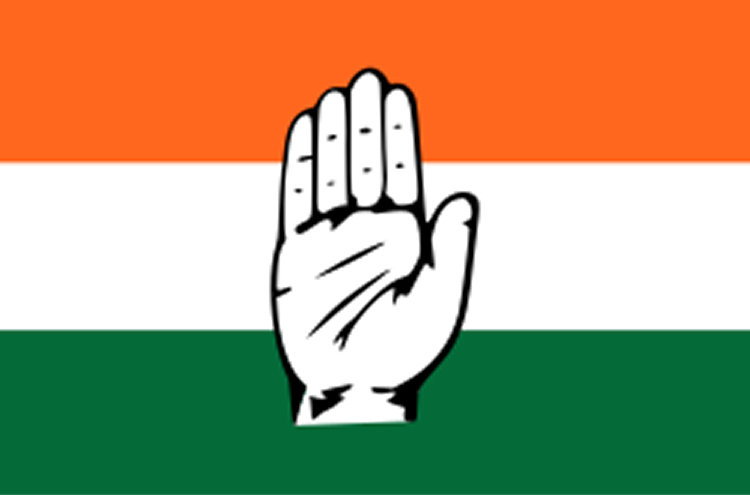
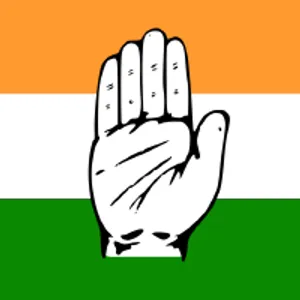
Party Flag
Indian National Congress
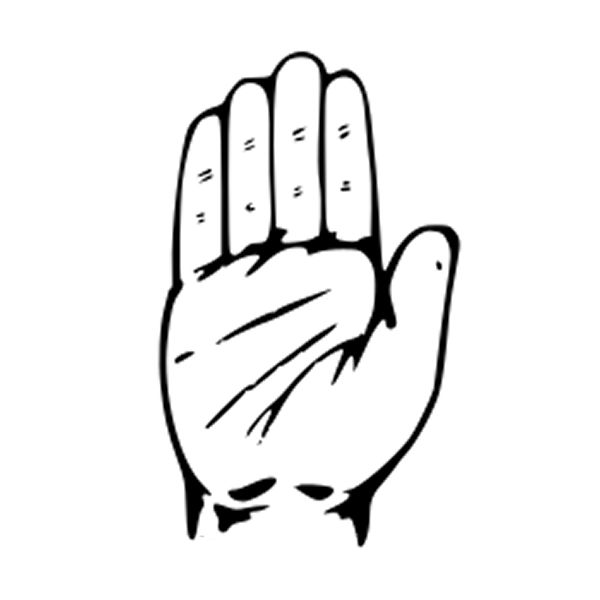
Party Symbol
Hand
 Hand
Founder A.O. Hume W.C. Bonnerjee S.N. Banerjee Monomohun Ghose William Wedderburn Dadabhai Naoroji Badruddin Tyabji Pherozeshah Mehta Dinshaw Wacha Mahadev Ranade
Party Founded Date 28 Dec 1885
No. of MPs Loksabha : 101
Rajyasabha : 27
Party Headquarters

Indira Bhawan, 9 A, Kotla Marg, New Delhi-110001

Party President Mallikarjun Kharge
Presidium All India Congress Committee
General Secretary Avinash Pandey; Bhupesh Baghel; Deepa Dasmunsi; Ghulam Ahmad Mir; Jairam Ramesh; Jitendra Singh; K. C. Venugopal; Kumari Selja; Mukul Wasnik; Priyanka Gandhi; Randeep Singh Surjewala; Sachin Pilot; Syed Naseer Hussain
Parliamentary Chairperson Sonia Gandhi
Loksabha Leader Rahul Gandhi
Rajya Sabha Leader Mallikarjun Kharge
Treasurer Ajay Maken
Newspaper Congress Sandesh National Herald
Student Wing National Students' Union of India
Youth Wing Indian Youth Congress
Women's Wing All India Mahila Congress
Labour Wing Indian National Trade Union Congress
Peasants Wing Kisan and Khet Mazdoor Congress
Political Position Centre
International Affiliation Progressive Alliance Socialist International
Website www.inc.in
Social Handles
facebook
x

Indian National Congress (INC) Flag

The Election Commission of India reserves the Hand symbol for the Indian National Congress. The Indian National Congress election symbol is an open palm facing forward. It appears on ballots and EVMs in elections. Candidates and materials display the party logo to signal political identity.

The Indian National Congress flag is used in rallies and offices. It features a horizontal tricolour of saffron, white, and green, with the Hand emblem centered. The Election Commission of India does not allot flags; it regulates symbols and names. Alliance seatsharing does not change the Hand on ballots or EVMs.

INC: Symbol allocation, alliances, and usage

INC contests under the Hand in national and state elections. This remained unchanged in 2009, 2014, 2019, and 2024 Lok Sabha elections. During alliances, including UPA and the INDIA bloc, INC candidates filed nominations with the Hand. Partners used their own symbols as allotted by the Election Commission of India.

Where disputes arise, the Commission adjudicates symbol claims under the Election Symbols Order. Only the recognized INC retains the Hand; breakaway groups receive new symbols. On EVMs, the Hand is printed beside the candidate name. Publicity materials may add the party logo and INC abbreviation for political identity.

Read More

Indian National Congress (INC) Ideology

The Indian National Congress (INC) ideology is rooted in secularism, democracy, and social justice. Emphasizing a governance model focused on inclusivity, the party advocates for equal opportunities across diverse socio-economic groups. Its principles underscore economic development with a commitment to reducing regional disparities and uplifting marginalized communities, aligned with a liberal political philosophy.

The Indian National Congress principles center around progressive taxation, equitable education systems, and healthcare access for all. The party agenda highlights strengthening grassroots democracy and empowering local governance units. Additionally, INC emphasizes bridging urban-rural divides, promoting sustainable agriculture, and fostering industrial innovation through public-private collaboration to advance the nation’s economic resilience.

INC's Governance Model and Democratic Philosophy

The INC governance model emphasizes constitutional integrity, harmonious coexistence, and protection of fundamental rights. Upholding its long-standing political philosophy, INC strives for a secular state structure, ensuring all religious and cultural communities prosper equally. Economic policies reflect support for poverty alleviation programs and employment generation schemes led by welfare-driven reforms.

Driven by its ideology, the INC advocates robust environmental sustainability policies. Encouraging renewable energy investments, the party agenda aims to combat climate change while balancing industrial growth. Furthermore, INC consistently calls for enhancing social justice through affirmative action, minority rights protection, and focused gender equity initiatives. These align with the party’s commitment to socio-political equity.

Read More

Indian National Congress (INC) Principles

The Indian National Congress (INC) principles are deeply rooted in democratic values, secularism, and social justice. Emphasizing inclusivity, the party’s ideology prioritizes equality, national integration, and welfare for marginalized communities. Its governance model underscores the protection of minorities, support for underprivileged groups, and transparency in administration. The INC advocates for unifying India's diverse population under shared values while safeguarding constitutional rights.

Economic justice forms a core pillar of the party values. The Indian National Congress envisions sustainable development through industrial growth, agricultural reforms, and equitable resource allocation. Recognizing the importance of education and healthcare, the party supports policies aimed at promoting universal literacy and accessible medical facilities. Its political beliefs align with fostering balanced regional progress and implementing welfare-centric governance models in national development.

Key Principles of the INC: Secularism and Inclusivity

INC ideology firmly opposes communalism and promotes secular governance to ensure equal rights for all religious groups. Party values emphasize protecting India's multicultural fabric by fostering harmony among varied communities. The Indian National Congress principles stand for safeguarding liberty, democracy, and pluralism to uphold the country's diverse heritage.

Environmental sustainability also features in the INC governance model. The party promotes policies addressing climate change, sustainable agricultural practices, and renewable energy usage. Its political beliefs align with championing international cooperation to tackle global environmental challenges and ensuring India’s equitable role in global diplomacy.

Read More
Indian National Congress (INC) Organisation Structure

The Indian National Congress (INC) is one of India’s oldest political parties, with a comprehensive organizational structure. Its organizational framework allows for vertical and horizontal integration of decision-making processes across leadership hierarchies. The party operates under a well-defined constitution, ensuring centralized coordination while promoting grassroots participation. This structure has evolved since its inception, adapting to political and administrative needs throughout its history.

At the top, the INC has a President who acts as the primary representative and governing authority. The President directly oversees decision-making processes and provides leadership on key national issues. Below the President, there are multiple vice-presidents and general secretaries responsible for managing party affairs and initiatives. These positions ensure smooth coordination across state and national levels under the overarching framework of the INC.

Leadership Hierarchy within the INC

The INC leadership hierarchy demonstrates a balanced political framework for effective administration. The Congress Working Committee (CWC) is the party's highest decision-making body. It comprises senior leaders, including the President, permanent members, and special invitees. The CWC guides strategic decisions, including alliances, electoral strategies, and policy formation. This governing body ensures alignment with the party organization and overall goals.

The All India Congress Committee (AICC) plays a crucial intermediary role beneath the CWC. It serves as the bridge between the leadership at the national level and local units. The AICC handles state-level coordination and electoral campaigns while supporting the CWC in implementing resolutions. The INC structure allows the AICC to adapt its approach to the party's goals for each state or region.

Grassroots Structure and Regional Units

The INC maintains a grassroots-oriented political framework by delegating responsibilities to Pradesh Congress Committees (PCCs). Each PCC corresponds to an individual state or Union Territory and ensures localized representation of the party’s goals. PCC members elect office-bearers, ensuring democratic participation within state-level party units. State units are empowered to coordinate directly with district and block levels, maintaining cohesion within party organization.

District Congress Committees (DCCs) and Block Congress Committees (BCCs) form the next structural level. DCCs manage political activities across districts, while BCCs focus at the block level to mobilize local support. This comprehensive hierarchy ensures that the INC leadership can receive constant feedback from lower tiers. It strengthens the party's decision-making process through well-organized communication channels.

Specialized Departments and Organizational Cells

A key feature of the INC is its specialized departments and organization-affiliated fronts. These departments oversee various sectors, such as youth, labor, and women’s welfare. Examples include the Indian Youth Congress (IYC) and the All India Mahila Congress (AIMC). Such structures provide platforms for targeted policymaking and societal engagement, broadening the party’s electoral base. These departments work under the guidance of AICC office-bearers.

Below is a simple table summarizing the organizational roles within the INC hierarchy:

LevelPrimary BodyResponsibilities
NationalCongress Working Committee (CWC)Strategic decision-making, policy guidance
StatePradesh Congress Committee (PCC)State-level coordination, election strategies
DistrictDistrict Congress Committee (DCC)Managing district-level activities
LocalBlock Congress Committee (BCC)Mobilizing grassroots support

The clear hierarchy, decision-making processes, and diverse organizational units give the INC both flexibility and coherence. This structure ensures that the party remains effective in bridging the gap between leadership and grassroots representation. The INC continuously evolves its framework to address challenges and maintain relevance in India's dynamic political landscape.

Read More

Indian National Congress (INC) Timeline

2019

Following another defeat in the general elections, Rahul Gandhi resigned as INC President, and Sonia Gandhi assumed the role once again.
2014

The INC faced a significant defeat in the general elections, securing only 44 seats in the Lok Sabha.

2004

The INC, leading the United Progressive Alliance (UPA), won the 2004 general elections and formed the central government with Dr. Manmohan Singh as Prime Minister.

1998

Sonia Gandhi, widow of Rajiv Gandhi, became the President of the Indian National Congress, reviving the party’s leadership.

1991

Rajiv Gandhi was assassinated during an election campaign, marking a tragic event in the history of the INC.

1984

Prime Minister and INC leader Indira Gandhi was assassinated, leading to widespread unrest in the country.

1984

Following the assassination of Indira Gandhi, her son Rajiv Gandhi assumed the role of Prime Minister and the INC leader.

1971

Under Indira Gandhi’s leadership, the INC initiated the ‘Garibi Hatao’ (Remove Poverty) campaign, which became a central theme of the 1971 elections.

1951

The INC formally adopted its new role as the leading electoral political party in independent India, contesting the first general elections.

1947

After decades of struggle led by the INC and other leaders, India attained independence from British rule.

1942

The INC launched the Quit India Movement under Mahatma Gandhi’s leadership, demanding an end to British rule in India.

1930

The INC declared complete independence (Purna Swaraj) as its goal during the Lahore session, and the date was celebrated as Independence Day.

1920

Under Mahatma Gandhi\'s leadership, the INC launched the Non-Cooperation Movement, encouraging Indians to boycott British goods and institutions.

1916

The INC and the Muslim League signed the Lucknow Pact, marking an agreement on joint action against British rule.

1907

The Congress split into moderates (led by Gopal Krishna Gokhale) and extremists (led by Bal Gangadhar Tilak) during the Surat session due to ideological differences.

1905

INC leaders opposed the Partition of Bengal, and the Swadeshi movement emerged under its guidance, promoting the boycott of British goods.

1886

The second session of the Congress was presided over by Dadabhai Naoroji in Calcutta, gaining further support and prominence in Indian political circles.

1885

The Indian National Congress (INC) was founded by A.O. Hume with the aim of creating a platform for civic and political dialogue among educated Indians.

Disclaimer:The information provided on this page is sourced from various publicly available platforms including https://en.wikipedia.org/, https://sansad.in/ls, https://sansad.in/rs, https://pib.gov.in/, https://affidavit.eci.gov.in/ and the official websites of state assemblies respectively. While we make every effort to maintain the accuracy, comprehensiveness and timeliness of the information provided, we cannot guarantee the absolute accuracy or reliability of the content. The data presented here has been compiled without consideration of the objectives or opinions of individuals who may access it.

Notifications
Settings
Clear Notifications
Notifications
Use the toggle to switch on notifications
  • Block for 8 hours
  • Block for 12 hours
  • Block for 24 hours
  • Don't block
Gender
Select your Gender
  • Male
  • Female
  • Others
Age
Select your Age Range
  • Under 18
  • 18 to 25
  • 26 to 35
  • 36 to 45
  • 45 to 55
  • 55+