



Get Updates
Get notified of breaking news, exclusive insights, and must-see stories!
Home | Political Parties | All India Trinamool Congress

All India Trinamool Congress

The All India Trinamool Congress (AITC), a prominent political party in India, was founded by Mamata Banerjee in 1998. Known for its significant influence in West Bengal, the party has actively participated in shaping the state's political landscape. AITC focuses on social justice, economic development, and regional empowerment, appealing to diverse voter bases. As a key player in Indian politics, the All India Trinamool Congress champions democracy and secularism.

Under Mamata Banerjee's leadership, AITC has expanded its reach beyond West Bengal, aiming for a stronger national presence. The party's commitment to grassroots activism and inclusive governance resonates with many citizens. With its strategic alliances and robust campaigning, AITC continues to strengthen its position in Indian politics. As political dynamics evolve, the All India Trinamool Congress remains dedicated to addressing pressing issues through progressive policies. The party's influence extends to various sectors, reflecting its adaptability and resilience.

Read More

By Administrator

Time Square

Sunday, March 22, 2026, 11:20:05 AM [IST]

`

All India Trinamool Congress (AITC) Information

Party Name All India Trinamool Congress
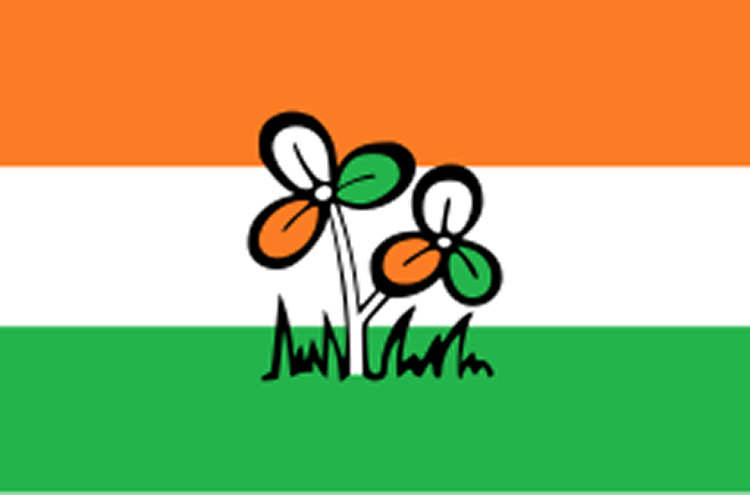
Party Flag
All India Trinamool Congress
Party Symbol
Two Flowers with Grass
 Two Flowers with Grass
Party Founded Date 01 Jan 1998
Split From Indian National Congress
No. of MPs Loksabha : 28
Rajyasabha : 12
Party Headquarters 30B Harish Chatterjee Street, Kolkata 700026
General Secretary Abhishek Banerjee
Parliamentary Chairperson Sudip Bandyopadhyay
Loksabha Leader Abhishek Banerjee
Rajya Sabha Leader Derek O' Brien
Newspaper Jago Bangla (Bengali)
Student Wing Trinamool Chaatra Parishad
Youth Wing All India Trinamool Youth Congress
Women's Wing Trinamool Mahila Congress
Labour Wing Indian National Trinamool Trade Union Congress
Peasants Wing Trinamool Kisan Khet Majdur Congress
Political Position Centre
Social Handles
facebook
x

All India Trinamool Congress (AITC) Flag

The Election Commission of India reserves AITCs symbol as Flowers and Grass. The All India Trinamool Congress election symbol appears on ballots and EVMs nationwide. Under the Symbols Order, recognized candidates retain exclusive use of this mark. The emblem, popularly called Jora Ghas Phul, anchors the partys political identity. AITC and TMC abbreviations identify candidates alongside the symbol during campaign materials. The emblem is printed on EVMs nationwide.

The All India Trinamool Congress flag is defined by the party constitution. It features saffron, white, and green horizontal bands with the symbol in blue. The flag is specified to be made of certified khadi fabric. The Election Commission of India regulates symbols, not party flags, in elections. Campaign banners often pair the flag and party logo with the reserved symbol.

AITC: Election Symbol and Flag

In seatsharing with the Indian National Congress, AITC candidates continued using Flowers and Grass. This applied in the 2009 Lok Sabha polls and the 2011 West Bengal Assembly. Alliances do not alter symbol allocation, which follows Election Commission of India rules. When contesting outside strongholds, candidates may claim the mark under the Symbols Order. Consistent symbol display reinforces the party abbreviation and strengthens statewide political identity.

Read More

All India Trinamool Congress (AITC) Ideology

The All India Trinamool Congress ideology emphasizes social justice, secularism, and economic empowerment. Founded by Mamata Banerjee, the party champions inclusive growth and equitable resource distribution. Its political philosophy focuses on grassroots development and strengthening democratic institutions. The party agenda includes prioritizing education, healthcare, and infrastructure development to uplift marginalized communities.

The Trinamool Congress principles advocate for regional autonomy and federal governance. This governance model aims to balance state powers with central oversight. The party opposes communal politics and promotes religious harmony. It seeks to empower women and minorities through affirmative action policies. Environmental sustainability is another key aspect of the All India Trinamool Congress ideology.

TMC: Economic Policies and Social Welfare

The All India Trinamool Congress (TMC) supports economic policies that stimulate growth while ensuring social welfare. It encourages investments in agriculture and small industries to boost local economies. The political philosophy of TMC includes opposing privatization of public assets, emphasizing a mixed economy model. The party agenda also includes initiatives for job creation through skill development programs.

TMC’s governance model incorporates transparent administration with a focus on e-governance to reduce corruption. Their principles highlight maintaining law and order while safeguarding civil liberties. Education reform is a priority under the All India Trinamool Congress principles, aiming for universal literacy. The party’s commitment to secularism remains steadfast amidst changing political landscapes in India.

Read More

All India Trinamool Congress (AITC) Principles

The All India Trinamool Congress principles emphasize social justice and inclusive development. The party values focus on empowering marginalized communities through various welfare schemes. It advocates for federalism and decentralization, promoting regional autonomy and local governance. These political beliefs are rooted in the need for equitable resource distribution across all states.

The All India Trinamool Congress ideology includes a commitment to secularism and communal harmony. The party's governance model aims to protect cultural diversity while fostering national unity. Environmental sustainability is another core principle, with policies aimed at balancing economic growth and ecological preservation. This approach ensures long-term resource management.

AITC: Commitment to Social Welfare and Economic Policies

AITC’s political beliefs extend to economic policies that prioritize agriculture and rural development. By implementing farmer-friendly initiatives, the party seeks to enhance agricultural productivity and rural livelihoods. Additionally, it advocates for industrial growth through small and medium enterprises, boosting employment opportunities across sectors.

The party values transparency and accountability in governance, striving to eliminate corruption at all levels. AITC principles also focus on education reforms, aiming to improve access to quality education for all children. Healthcare is another priority, with efforts directed toward expanding affordable medical services. These comprehensive strategies reflect AITC's dedication to holistic societal progress.

Read More
All India Trinamool Congress (AITC) Organisation Structure

The All India Trinamool Congress (AITC) has a distinct organizational structure. Its leadership is centralized, yet allows for grassroots participation. The party’s decision-making process involves a combination of top-down directives and local inputs.

The AITC's governing body, the Working Committee, is pivotal in strategy formulation. It comprises senior leaders who guide policy decisions. This committee ensures the party hierarchy remains aligned with its political framework.

AITC Leadership and Governing Body

The leadership of AITC is spearheaded by the party president. This role is crucial for maintaining the political framework. The president, currently Mamata Banerjee, is instrumental in steering the party's vision.

Below the president are vice-presidents and general secretaries. They assist in executing strategies formulated by the governing body. Their role strengthens the party organization by facilitating communication across levels.

Party Hierarchy and Decision-Making Process

At the state level, AITC has presidents for each region. They ensure implementation aligns with the central leadership’s goals. This decentralized approach aids in accommodating regional diversity within a unified party structure.

District-level committees are vital to AITC's decision-making process. These bodies gather local insights and report to state presidents. Their feedback influences policy adjustments at higher echelons.

PositionRole
PresidentLeads and represents AITC nationally
Vice-PresidentAssists in strategic planning
General SecretaryCoordinates between various levels of party organization
State PresidentOversees regional activities
District Committee MemberReports local issues to state level
Regional Committees and Political Framework

The AITC’s political framework emphasizes grassroots involvement through regional committees. These committees are crucial for mobilizing support at local levels. They play a significant role in election strategies and campaign execution.

The regional committees collaborate with district units to coordinate electoral efforts. This ensures that local priorities are integrated into broader party objectives, enhancing electoral performance.

The Role of Youth and Women's Wings in AITC Structure

Youth and women’s wings are integral to AITC’s organizational structure. They focus on engaging young voters and women, addressing their unique concerns within the party's agenda.

The youth wing nurtures future leaders, ensuring continuity within the party hierarchy. Similarly, the women's wing champions gender-related issues, influencing policy direction through active participation.

AITC's Organizational Adaptability and Challenges

A significant strength of AITC lies in its adaptability to changing political landscapes. Its organizational structure allows swift responses to emerging challenges.

This adaptability is facilitated by regular consultations among various levels of leadership. Such interactions ensure that the decision-making process remains dynamic yet coherent across all tiers of the organization.

The organizational structure of All India Trinamool Congress emphasizes both central authority and regional autonomy. This dual approach enhances its effectiveness as a political entity within India's diverse landscape.

Read More

All India Trinamool Congress (AITC) Status in India 2026

S.No States MLAs CM Name
1 West Bengal 213 Mamata Banerjee

All India Trinamool Congress (AITC) Timeline

2021

Despite challenges from opposition parties, Trinamool Congress won a third consecutive term in the state elections.

2016

The party secured a second consecutive term in the West Bengal Legislative Assembly elections under Mamata Banerjee's leadership.

2014

In the 2014 general elections, Trinamool Congress won 34 out of 42 seats in West Bengal, becoming a major political force at the national level.

2011

Trinamool Congress won the West Bengal Legislative Assembly election, ending 34 years of Left Front rule. Mamata Banerjee became the Chief Minister.

2006

Trinamool played a key role in the Nandigram protests against land acquisition by the state government, boosting its popularity.

2001

The party contested the West Bengal state elections and emerged as the principal opposition party.

1999

Trinamool Congress contested in the 1999 Lok Sabha elections and won 8 seats, marking its entry into national politics.

1998

The All India Trinamool Congress (AITC) was founded by Mamata Banerjee after splitting from the Indian National Congress.

Disclaimer:The information provided on this page is sourced from various publicly available platforms including https://en.wikipedia.org/, https://sansad.in/ls, https://sansad.in/rs, https://pib.gov.in/, https://affidavit.eci.gov.in/ and the official websites of state assemblies respectively. While we make every effort to maintain the accuracy, comprehensiveness and timeliness of the information provided, we cannot guarantee the absolute accuracy or reliability of the content. The data presented here has been compiled without consideration of the objectives or opinions of individuals who may access it.

Notifications
Settings
Clear Notifications
Notifications
Use the toggle to switch on notifications
  • Block for 8 hours
  • Block for 12 hours
  • Block for 24 hours
  • Don't block
Gender
Select your Gender
  • Male
  • Female
  • Others
Age
Select your Age Range
  • Under 18
  • 18 to 25
  • 26 to 35
  • 36 to 45
  • 45 to 55
  • 55+