Get Updates
Get notified of breaking news, exclusive insights, and must-see stories!
Home | Political Parties | Guru Chand Mukti Morcha

Guru Chand Mukti Morcha

Guru Chand Mukti Morcha is an emerging political party in India, known for advocating social justice and economic equality. The party has rapidly gained recognition for its commitment to addressing pressing societal issues through progressive policies. Established with the vision of empowering marginalized communities, Guru Chand Mukti Morcha emphasizes inclusivity and grassroots participation in the political process.

The party's agenda focuses on sustainable development, education reform, and healthcare accessibility, ensuring all citizens receive equitable opportunities. As a result, Guru Chand Mukti Morcha has become a significant player in India's political landscape, attracting a diverse following from urban and rural areas alike.

With a strong emphasis on transparency and accountability, the party aims to reshape traditional governance models. By fostering collaboration among diverse groups, Guru Chand Mukti Morcha aspires to create a more just society. Its strategic approach resonates with voters seeking meaningful change, positioning the party as a catalyst for transformative progress within Indian politics.

Read More

By Rashmi

Time Square

Friday, March 6, 2026, 01:07:35 PM [IST]

`

Guru Chand Mukti Morcha (GMM) Information

Party Name Guru Chand Mukti Morcha
Party Flag
Guru Chand Mukti Morcha
Party Symbol
--
 --
Party Headquarters

--

Party President --

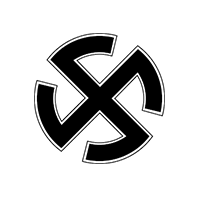
Guru Chand Mukti Morcha (GMM) Flag

Guru Chand Mukti Morcha's election symbol is not listed by the Election Commission of India. No official record confirms a reserved emblem for this name. Without recognition, there is no exclusive party logo on ballots. Candidates, if any, would receive a free symbol for that contest under the Symbols Order. This influences political identity in campaign materials and on EVM displays. This status applies as of October 14, 2025, based on current ECI materials.

Guru Chand Mukti Morcha flag is likewise undocumented in official election records. The Election Commission of India assigns symbols; it does not certify party flags. No entry for a party abbreviation under this exact name appears in accessible listings. Nor in recent delisting updates. Therefore, verified flag details are unavailable for voter education or compliance materials. Public records show no certified flag imagery anywhere.

GCMM: Symbol listing and flag status

In India, unregistered or unrecognized outfits often contest through allies' symbols during seat-sharing. For example, in Tamil Nadu 2021, MMK and KMDK contested on DMK's Rising Sun. Should Guru Chand Mukti Morcha field nominees through an alliance, they would use the partner's symbol. Not a separate party logo. Any allocation would follow the Election Commission of India procedures at the nomination and allotment stages.

Read More

Guru Chand Mukti Morcha (GMM) Ideology

The Guru Chand Mukti Morcha draws its ideological inspiration from the social reformist teachings of Guruchand Thakur, a prominent leader associated with the Matua Mahasangha. The organisation’s ideological orientation emphasises social equality, dignity for marginalised communities, and the political empowerment of historically disadvantaged groups, particularly within the Matua community.

Social Justice and Community Empowerment

Ideologically, the organisation promotes social justice, community representation, and the protection of democratic rights within the constitutional framework of India. It advocates policies aimed at improving the socio-economic conditions of marginalised communities through access to education, welfare programmes, and political participation. Rather than following a rigid ideological doctrine, the Morcha’s outlook reflects a community-driven reformist approach focused on equality, social dignity, and democratic engagement.

Read More

Guru Chand Mukti Morcha (GMM) Principles

The Guru Chand Mukti Morcha is guided by principles centred on social equality, community empowerment, and democratic participation. Inspired by the reformist legacy of Guruchand Thakur, the organisation emphasises the upliftment of marginalised communities, particularly those associated with the Matua social movement. Its principles highlight the importance of social dignity, access to welfare programmes, and inclusive development within the constitutional framework of India.

Democratic Representation and Governance

A central principle of the organisation is the promotion of democratic representation through peaceful political engagement and participation in electoral processes. It advocates policies that support education, social welfare, and economic opportunities for disadvantaged communities. The Morcha also emphasises community solidarity and grassroots mobilisation, positioning itself as a platform to raise social and political issues affecting the Matua population and other marginalised groups in West Bengal.

Read More
Guru Chand Mukti Morcha (GMM) Organisation Structure

Organisational Structure

The organisational structure of the Guru Chand Mukti Morcha reflects a community-oriented political framework built around grassroots mobilisation and leadership coordination in West Bengal. The organisation operates through a leadership-led structure designed to promote community participation, organise outreach activities, and coordinate social and political initiatives linked to the Matua movement.

Compared with major political parties, the Morcha functions with a relatively compact organisational network, relying on community leaders and local organisers to coordinate activities and mobilisation.

Party Leadership and Central Organisation

At the top of the organisational framework is the Party President or Central Convenor, who serves as the principal leader responsible for guiding the organisation’s political direction and representing it in public forums. The leader is supported by a central committee or executive body, consisting of senior members responsible for coordination, outreach, and organisational management.

The central leadership typically oversees strategic decisions, community initiatives, and coordination of activities across different districts.

Party Hierarchy

The organisational hierarchy follows a simplified tiered structure designed to maintain coordination between leadership and grassroots supporters:

  • President/Central Convenor- Overall leadership and political guidance

  • Central Executive Committee- Strategy formulation and organisational coordination

  • District Committees- Oversight of district-level organisational work

  • Block or Local Units- Community mobilisation and local activities

  • Community Volunteers- Grassroots outreach and support programmes

These organisational levels help the Morcha maintain contact with supporters and organise social and political events.

Decision-Making Process

Decision-making within the organisation is generally centralised, with major decisions taken by the president or central leadership in consultation with senior members of the executive committee. Local units may provide feedback regarding community concerns and local political developments, which can influence organisational initiatives.

This structure allows the Morcha to coordinate activities efficiently while remaining responsive to grassroots issues.

Political Framework

The organisational framework supports the Morcha’s focus on social justice, community empowerment, and democratic participation.

PositionResponsibilities
President / Central ConvenorOverall leadership and representation
Central Executive MembersOrganisational planning and coordination
General SecretaryAdministrative management and communication
District ConvenorsSupervision of district-level activities
Local CoordinatorsGrassroots mobilisation and community outreach

Organisational Presence as of 2026

As of 2026, the Guru Chand Mukti Morcha continues to operate as a community-oriented socio-political organisation primarily active in parts of West Bengal. Its organisational structure remains focused on grassroots mobilisation and advocacy related to community issues and social representation.

Read More

Guru Chand Mukti Morcha (GMM) Timeline

2026

As of 2026, the Guru Chand Mukti Morcha exists as a small regional political organisation with limited electoral impact.
2025

GCMM maintained a small organisational presence in parts of West Bengal.

2023

The party continued to focus on limited political activity focused on community representation.

2022

GCMM functioned primarily as a small regional political organisation.

2021

The party had minimal presence during the West Bengal Assembly elections compared with larger regional parties.

2020

Celebrated 20 years since its founding, highlighting achievements and future goals.

2015

Achieved a notable victory in regional elections, increasing its influence and presence in local governance.

2010

The party gained recognition for advocating significant policy changes to improve social justice and equality.

2005

The party participated in its first state elections, marking its entry into the political arena.

2000

Guru Chand Mukti Morcha was founded in the year 2000 as a political party with the aim of advocating for the rights and welfare of marginalized communities.

Disclaimer:The information provided on this page is sourced from various publicly available platforms including https://en.wikipedia.org/, https://sansad.in/ls, https://sansad.in/rs, https://pib.gov.in/, https://affidavit.eci.gov.in/ and the official websites of state assemblies respectively. While we make every effort to maintain the accuracy, comprehensiveness and timeliness of the information provided, we cannot guarantee the absolute accuracy or reliability of the content. The data presented here has been compiled without consideration of the objectives or opinions of individuals who may access it.

Notifications
Settings
Clear Notifications
Notifications
Use the toggle to switch on notifications
  • Block for 8 hours
  • Block for 12 hours
  • Block for 24 hours
  • Don't block
Gender
Select your Gender
  • Male
  • Female
  • Others
Age
Select your Age Range
  • Under 18
  • 18 to 25
  • 26 to 35
  • 36 to 45
  • 45 to 55
  • 55+