

Get Updates
Get notified of breaking news, exclusive insights, and must-see stories!
Home | Political Parties | All India Anna Dravida Munnetra Kazhagam

All India Anna Dravida Munnetra Kazhagam

The All India Anna Dravida Munnetra Kazhagam (AIADMK) is a prominent political party in India. Established in 1972 by M.G. Ramachandran, AIADMK primarily operates in Tamil Nadu and Puducherry. Known for its commitment to Tamil regionalism, the party emphasizes social welfare, women’s rights, and economic growth. Since its inception, AIADMK has played a significant role in shaping Tamil Nadu’s political and cultural landscape. Its leaders, including J. Jayalalithaa, have left lasting legacies in Indian politics.

AIADMK’s policies focus on development, governance, and promoting state autonomy. The party has maintained strong grassroots support through welfare initiatives and public schemes. Competing against rival political parties such as the DMK, AIADMK continues to influence Indian political discourse. Its role in coalition governments underscores its importance at the national level. With decades of political experience, AIADMK remains a key force in Tamil Nadu and Indian politics.

Read More

By Administrator

Time Square

Monday, October 13, 2025, 03:28:48 PM [IST]

`

All India Anna Dravida Munnetra Kazhagam (AIADMK) Information

Party Name All India Anna Dravida Munnetra Kazhagam
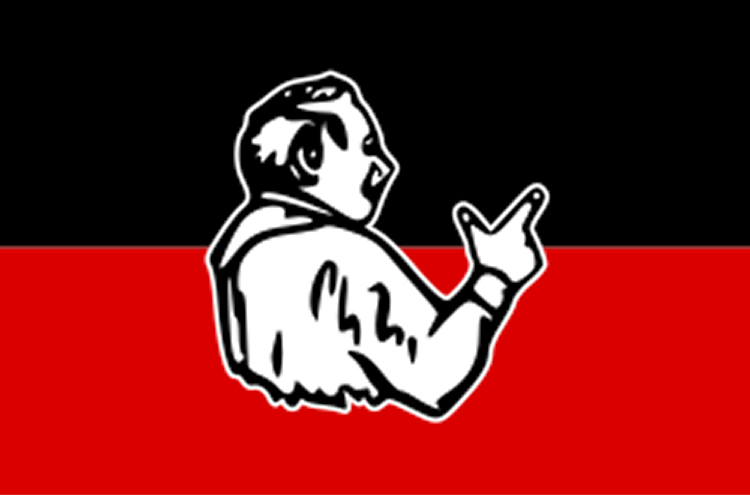
Party Flag
All India Anna Dravida Munnetra Kazhagam
Party Symbol
Two Leaves
 Two Leaves
Founder M. G. Ramachandran
Party Founded Date 17 Oct 1972
Split From Dravida Munnetra Kazhagam
No. of MPs Loksabha : 0
Rajyasabha : 4
Party Headquarters

Puratchi Thalaivar M.G.R. Maaligai, 226, V.P. Raman Salai, Royapettah, Chennai - 600014, Tamil Nadu, India.

Party President NA
General Secretary Edappadi K. Palaniswami
Parliamentary Chairperson M. Thambidurai
Rajya Sabha Leader M. Thambidurai
Treasurer Dindigul C. Sreenivasan
Newspaper Namadhu Amma
Student Wing AIADMK Students' Wing
Youth Wing M.G.R.
Women's Wing AIADMK
Labour Wing Anna Thozhirsanga Peravai
Peasants Wing AIADMK Agriculture Wing
Political Position Centre to centre-left
Website aiadmk.com

All India Anna Dravida Munnetra Kazhagam (AIADMK) Flag

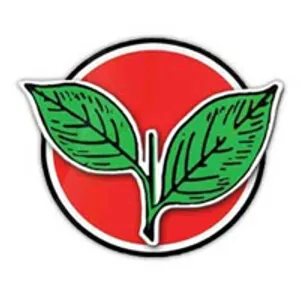
Indias Election Commission recognizes 'Two Leaves' as the All India Anna Dravida Munnetra Kazhagam election symbol. The reserved symbol identifies AIADMK candidates on official ballots across assembly contests. This emblem functions as the party logo in electoral contexts. It anchors voter recall and political identity without implying ideological meaning.

In March 2017, during a split, the Election Commission of India froze 'Two Leaves'. It gave temporary symbols to AIADMK factions. After adjudication in November 2017, the party regained the reservation. In 2019 Lok Sabha and 2021 Tamil Nadu Assembly, AIADMK nominees contested on 'Two Leaves'. This occurred within alliance seatsharing.

AIADMK: Symbol and Flag

Party flags are not allocated by the Election Commission of India. References to the All India Anna Dravida Munnetra Kazhagam flag concern organizational identity outside ballots. In elections, the party logo against candidates remains the 'Two Leaves' symbol. It is recorded in Commissions list of reserved symbols.

In alliance seatsharing, AIADMK negotiates constituencies while retaining its symbol. In 2021 Tamil Nadu Assembly elections, AIADMK contested with partners. It fielded nominees under 'Two Leaves' in allotted seats. Allies used their own symbols per Election Commission of India rules. This preserved each partys political identity across the coalition.

Read More

All India Anna Dravida Munnetra Kazhagam (AIADMK) Ideology

The ideology of the All India Anna Dravida Munnetra Kazhagam (AIADMK) is rooted in Dravidian principles. It reflects an emphasis on social justice, self-respect, and upliftment of marginalized communities. Inspired by Periyar's rationalist philosophy and C.N. Annadurai's vision, the AIADMK promotes progressive reforms and regional pride. The party's agenda revolves around empowering Tamil Nadu’s populace, preserving cultural identity, and establishing egalitarian governance models.

The AIADMK principles advocate welfare-oriented governance that prioritizes poverty alleviation, education, and healthcare accessibility. Known for its populist initiatives, the party supports expansive social welfare schemes such as free housing, school materials, and subsidized essentials. By blending Dravidian nationalism with pragmatic policy strategies, the AIADMK political philosophy emphasizes a balanced economic development, catering to rural and urban demands equally.

AIADMK’s Political Philosophy and Governance Model

The AIADMK governance model underlines decentralization and inclusive growth, striving for greater state autonomy within India's federal structure. True to its ideology, the party safeguards Tamil Nadu’s regional interests while ensuring harmonious national integration. Its political philosophy reflects a commitment to secularism and social harmony, resisting caste barriers and communal divisions.

The All India Anna Dravida Munnetra Kazhagam ideology strongly embodies pro-poor policies, striving to address systemic inequalities. The party agenda consistently promotes industrial growth, infrastructure expansion, and agricultural modernization. By combining Dravidian principles with pragmatic policymaking, AIADMK continues to shape political discourse and governance in Tamil Nadu.

Read More

All India Anna Dravida Munnetra Kazhagam (AIADMK) Principles

The principles of the All India Anna Dravida Munnetra Kazhagam (AIADMK) emphasize social welfare and regional development. Rooted in Dravidian ideology, the party advocates for the upliftment of marginalized communities and underprivileged sections of society. AIADMK principles prioritize inclusive growth through equitable distribution of resources and opportunities across Tamil Nadu, ensuring regional progress alongside national interests.

AIADMK ideology underscores a governance model that promotes secularism, equality, and justice for all citizens. The party focuses on empowering women, fostering education, and strengthening rural development initiatives. Core political beliefs of AIADMK include creating employment opportunities, improving infrastructure, and safeguarding the Tamil language and culture. Additionally, their policy framework aims to address poverty alleviation and healthcare accessibility.

Core Governance Model Advocated by AIADMK

The governance model of AIADMK emphasizes transparent policymaking, financial accountability, and anti-corruption measures. Ensuring efficient public service delivery is central to their administrative approach. Their party values also include prioritizing agricultural sustainability and industrial development. AIADMK principles integrate welfare programs like free education, subsidized healthcare, and housing schemes for the economically weaker sections.

AIADMK political beliefs are strongly aligned with safeguarding state autonomy within the federal framework. Advocating for fiscal federalism and resisting undue central intervention are critical aspects of their ideology. The party's commitment to Tamil Nadu’s development continues to shape its policies and governance strategies, staying consistent with its foundational principles.

Read More
All India Anna Dravida Munnetra Kazhagam (AIADMK) Organisation Structure

The organization and structure of the All India Anna Dravida Munnetra Kazhagam (AIADMK) reflect a centralized leadership model with decentralized operational roles. The party hierarchy is designed to ensure strong leadership combined with grassroots engagement, fostering effective decision-making processes at multiple levels.

The AIADMK leadership rests primarily with the General Secretary, the highest authority within the organization. Alongside this, there is a Governing Council, which comprises senior members responsible for formulating and directing the party’s political framework and overall strategy.

Leadership Structure of AIADMK

AIADMK’s leadership structure is defined by its unique chain of command. The General Secretary oversees all key decisions regarding elections, policy directions, and alliances. This role is supported by a Deputy General Secretary, tasked with specific administrative and coordination duties.

Standing Committees assist top leaders in shaping the party's ideology and executing strategies. Members of these committees are experienced leaders selected for their expertise in policymaking and constituency management. This ensures AIADMK’s structure is optimized for localized decision-making processes.

AIADMK’s Organizational Framework

The organizational framework of AIADMK operates at multiple levels. At the state level, AIADMK maintains State Executive Committees that implement the policies decided by the party's central leadership. These committees play a critical role in coordinating efforts between the top leadership and district-level units.

AIADMK has district-level units functioning as the operational backbone of the party. Each district unit manages campaigns, membership drives, and interactions with local voters. These units consist of District Secretary, Deputy Secretaries, and committee members, ensuring a clear chain of command at the grassroots.

Role of the Governing Council in AIADMK

The Governing Council is pivotal in AIADMK’s decision-making structure. This body comprises senior party members who convene to discuss policy directions, electoral strategies, and long-term objectives. Their primary focus is on overseeing large-scale operations and electoral readiness.

Policy-related resolutions are typically initiated by the council and further implemented by subordinate committees. Their decisions influence AIADMK’s ability to respond to political challenges and align strategies with prevailing socio-political currents in Tamil Nadu.

Functioning and Decision-Making Processes

AIADMK harbors a participative decision-making process with district-level representatives relaying feedback to the central leadership. This approach enables adaptability and responsiveness across all levels of governance. Subcommittees address specific concerns such as welfare programs or electoral outreach.

The General Council, consisting of key members representing various constituencies, also plays a major role. Its collective input assists in refining legislative agendas and aligning the party’s objectives with grassroots demands. Frequent council discussions ensure seamless collaboration across the hierarchy.

AIADMK Membership and Community Engagement

The AIADMK structure actively encourages public participation through its extensive membership drives. Registered members contribute at multiple levels, including local campaigns, policy advocacy, and party programs. These efforts solidify AIADMK’s status as a people-oriented political party.

Community engagement is another priority, with AIADMK leaders addressing the concerns of citizens through public meetings and party events. District units act as intermediaries to address grievances and build voter confidence, adding significant strength to its grassroots network.

PositionRole
General SecretaryTop leadership, policy formulation, alliance decisions.
Deputy General SecretaryAdministrative support, strategic coordination.
Governing CouncilPolicy planning, decision approvals, strategic oversight.
State CommitteesPolicy implementation at the state level.
District SecretariesCampaign management, grassroots operations.

The structure of AIADMK ensures operational clarity, effective leadership, and robust grassroots reach, cementing its influence across Tamil Nadu. Strategic hierarchies empower the party to maintain internal discipline while adapting to political challenges.

Read More

All India Anna Dravida Munnetra Kazhagam (AIADMK) Timeline

2021

The AIADMK lost to the DMK in the Tamil Nadu Assembly Elections amid leadership challenges.

2019

AIADMK joined the National Democratic Alliance (NDA) coalition for the 2019 Lok Sabha elections.

2017

The AIADMK experienced a split into two factions led by O. Panneerselvam and Edappadi K. Palaniswami following Jayalalithaa\'s death.

2016

Chief Minister and prominent AIADMK leader J. Jayalalithaa passed away, leading to a leadership vacuum in the party.

2011

The AIADMK achieved a resounding victory in the Tamil Nadu Assembly Elections, cementing its political dominance.

2001

The AIADMK won the Tamil Nadu Assembly Elections under Jayalalithaa\'s leadership and returned to power.

1996

The AIADMK suffered a massive defeat in the Tamil Nadu Assembly Elections amid allegations of corruption.

1991

The AIADMK, led by J. Jayalalithaa, won the Tamil Nadu Assembly Elections and formed the government.

1989

Following MGR’s death, the AIADMK split into two factions, one led by Janaki Ramachandran and the other by J. Jayalalithaa.

1989

After the electoral defeat in 1989, the party reunited under Jayalalithaa\'s leadership.

1987

AIADMK founder and Tamil Nadu Chief Minister M.G. Ramachandran passed away, leading to a leadership crisis within the party.

1984

Despite M.G. Ramachandran\'s critical health issues, the AIADMK retained power in the Tamil Nadu Assembly Elections.

1980

The AIADMK suffered a setback when it lost its influence in the Tamil Nadu Lok Sabha elections.

1977

The AIADMK led by M.G. Ramachandran won the Tamil Nadu Assembly Elections, forming the government.

1972

The All India Anna Dravida Munnetra Kazhagam (AIADMK) was founded by M.G. Ramachandran (MGR), following a split from the DMK.

Disclaimer:The information provided on this page is sourced from various publicly available platforms including https://en.wikipedia.org/, https://sansad.in/ls, https://sansad.in/rs, https://pib.gov.in/, https://affidavit.eci.gov.in/ and the official websites of state assemblies respectively. While we make every effort to maintain the accuracy, comprehensiveness and timeliness of the information provided, we cannot guarantee the absolute accuracy or reliability of the content. The data presented here has been compiled without consideration of the objectives or opinions of individuals who may access it.

Notifications
Settings
Clear Notifications
Notifications
Use the toggle to switch on notifications
  • Block for 8 hours
  • Block for 12 hours
  • Block for 24 hours
  • Don't block
Gender
Select your Gender
  • Male
  • Female
  • Others
Age
Select your Age Range
  • Under 18
  • 18 to 25
  • 26 to 35
  • 36 to 45
  • 45 to 55
  • 55+