
Get Updates
Get notified of breaking news, exclusive insights, and must-see stories!
Home | Political Parties | Dravida Munetra Kazhagam

Dravida Munetra Kazhagam

The Dravida Munnetra Kazhagam (DMK) is a prominent political party in Tamil Nadu, India. Founded in 1949 by C.N. Annadurai, the party champions social justice, federalism, and Dravidian ideology. As a key player in Tamil Nadu's political landscape, the DMK has contributed significantly to the state's cultural and economic development.

With a deep focus on regional identity, the DMK advocates policies promoting Tamil language and Dravidian heritage. Its governance emphasizes inclusive growth, educational reforms, and welfare initiatives. The party maintains a strong presence in both state and national politics, with legislative victories shaping its dynamic role in Indian democracy.

Led today by M.K. Stalin, the Dravida Munnetra Kazhagam remains pivotal in advancing Tamil Nadu's progressive agenda and resisting centralization. The DMK's enduring legacy and proactive measures make it a steadfast force in contemporary Indian politics.

Read More

By Administrator

Time Square

Tuesday, October 14, 2025, 09:58:41 AM [IST]

`

Dravida Munetra Kazhagam (DMK) Information

Party Name Dravida Munetra Kazhagam
Party Flag
Dravida Munetra Kazhagam
Party Symbol
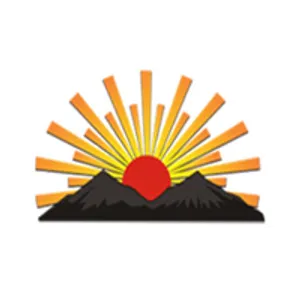
Rising Sun
 Rising Sun
Founder C. N. Annadurai
Party Founded Date 17 Sep 1949
Split From Dravidar Kazhagam
No. of MPs Loksabha : 22
Rajyasabha : 10
Party Headquarters

Anna Arivalayam, 367-369, Anna Salai, Teynampet, Chennai - 600018, Tamil Nadu, India

Party President M. K. Stalin
General Secretary Duraimurugan
Parliamentary Chairperson Kanimozhi Karunanidhi
Loksabha Leader T. R. Baalu
Rajya Sabha Leader Tiruchi Siva
Treasurer T. R. Baalu
Student Wing Maanavar Ani
Youth Wing Ilaignar Ani
Women's Wing Magalir Ani
Labour Wing Labour Progressive Federation
Political Position Left-wing
Website www.dmk.in

Dravida Munetra Kazhagam (DMK) Flag

Dravida Munnetra Kazhagams reserved election symbol is the Rising Sun. The Election Commission of India recognizes it for the party in Tamil Nadu. It appears on ballots and EVMs as a sun between mountains. It is DMKs reserved identifier in Lok Sabha and Assembly contests. Voters search for the Dravida Munetra Kazhagam election symbol during polls.

The party flag is a red and black bicolour, often bearing the Rising Sun. It is used at rallies and offices, complementing the DMK logo. The Election Commission of India regulates symbols, not internal party flags. Supporters widely display the Dravida Munetra Kazhagam flag during campaigns.

DMK: Symbol Use and Alliance Arrangements

Allies have occasionally contested using the Rising Sun under seat-sharing. In 2019, VCKs D. Ravikumar ran on the DMK symbol in Villupuram. In 2021, MDMK, KMDK, and others fielded candidates on the DMK symbol. The Election Commission of India records then counted such winners as DMK MLAs.

The Rising Sun became reserved for DMK after ECI recognition in 1958. It has remained the partys reserved symbol in subsequent elections. Alliances may choose independent symbols, based on ECI rules and negotiations. These arrangements do not alter the core political identity of the DMK.

Read More

Dravida Munetra Kazhagam (DMK) Ideology

The ideology of Dravida Munnetra Kazhagam (DMK) is rooted in social justice, secularism, and equality. Highlighting its anti-caste stance, the party advocates for the upliftment of marginalized communities and equality among all citizens. The DMK ideology emphasizes inclusivity and strives to eliminate socio-economic disparities through progressive reforms and welfare-oriented governance models.

Dravida Munnetra Kazhagam principles focus heavily on linguistic and cultural preservation, promoting the rights of Tamil speakers. The party firmly supports federalism, often voicing the need for state autonomy within India’s political framework. Through its political philosophy, the DMK has consistently opposed any form of imposition of a singular cultural or religious identity on the diverse Indian population.

Key Governance Strategies of DMK’s Political Philosophy

The party agenda highlights economic growth alongside welfare schemes, focusing on healthcare, education, and employment opportunities. Proposals within the Dravida Munnetra Kazhagam ideology often center on equitable resource distribution to tackle poverty and strengthen Tamil Nadu’s economy. The DMK governance model promotes social infrastructure and inclusive policies as a foundation for state development.

Dravida Munnetra Kazhagam principles also advance gender equality and women’s empowerment within administrative, economic, and social frameworks. The party’s political philosophy demonstrates a commitment to rationalism, emphasizing evidence-driven policymaking. Furthermore, DMK strongly supports secular governance, ensuring all communities coexist without prejudice or discrimination within the state apparatus.

Read More

Dravida Munetra Kazhagam (DMK) Principles

The principles of Dravida Munnetra Kazhagam (DMK) focus on social justice, equality, and inclusive governance. The party upholds secularism and strongly advocates for the elimination of caste discrimination. Promoting federalism, DMK emphasizes empowering states with greater autonomy in governance and decision-making. These core values shape the party's manifesto and guide its policies at both state and national levels.

DMK's ideology is rooted in the Dravidian movement, aiming to uplift marginalized communities. The party prioritizes education, believing that knowledge is fundamental for societal growth. Its governance model emphasizes welfare policies, including healthcare and women's empowerment. DMK also supports linguistic and cultural rights, ensuring the preservation of regional diversity. Economic policies focus on equitable development and reducing income inequality.

Key Political Beliefs of DMK

The Dravida Munnetra Kazhagam strongly supports social welfare programs as a cornerstone of its political beliefs. Through years of governance in Tamil Nadu, the party has implemented schemes for public health, housing, and education. These initiatives align with its value of improving the quality of life for underprivileged communities. Party values also emphasize gender equality by promoting laws and policies that benefit women and children.

DMK’s commitment to secularism keeps religion and politics separate while ensuring unity within diversity. The party values Tamil identity and advocates self-respect, opposing authoritarianism and central dominance. These principles of Dravida Munnetra Kazhagam guide its political actions and contribute to its sustained relevance in Indian politics.

Read More
Dravida Munetra Kazhagam (DMK) Organisation Structure

The Dravida Munnetra Kazhagam (DMK) follows a well-defined organizational and structural framework. It ensures efficient functioning through clear roles and responsibilities. The party operates with a multi-tiered system of leadership, emphasizing decentralized decision-making and grassroots involvement, reflective of its political ideology. This approach strengthens its ability to connect with various sections of society, staying consistent with Tamil Nadu's sociopolitical aspirations.

DMK’s organizational structure includes a central governing body, state committees, district units, and local-level cadres. The Central Executive Committee, chaired by the party president, is the supreme decision-making authority. Below this, state-level committees address region-specific concerns while adhering to the top-level leadership’s directives. Collectively, the framework ensures coordination from the top leadership to grassroots members.

DMK Leadership and Central Governing Body

The Dravida Munnetra Kazhagam structure places immense significance on leadership positions. The party president plays a pivotal role as the principal authority, supported by senior members in advisory capacities. The general secretary oversees key departmental activities and supervises inter-departmental collaboration. Additionally, the treasurer manages the party’s financial resources, ensuring transparency in operations.

The Central Executive Committee is DMK’s highest governing body. Its members include the president, general secretary, and other senior office bearers. This committee designs the party’s political framework and guides policy implementation at various levels. Decisions related to election strategies, alliances, and policymaking are finalized here, ensuring a unified political vision across all party operations.

Party Hierarchy and Decentralized Decision-Making

DMK functions on a tiered hierarchy that involves state, district, and local units. State committees, comprising ministers, legislators, and regional heads, align with central directives while implementing welfare programs tailored to local needs. Each district unit is led by a secretary, who coordinates between state-level leadership and grassroots workers.

District-level secretaries handle recruitment and mobilization of cadres, ensuring an active local presence. At the village and town levels, committees engage with residents to identify issues and foster party reach. This decentralized political framework helps the DMK respond effectively to the population's concerns, strengthening its electoral base.

Organizational Structure Supporting Grassroots Engagement

Grassroots engagement forms the backbone of DMK’s party organization strategy. Local representatives, including ward secretaries, play a critical role in maintaining regular contact with citizens. These representatives present community concerns to higher-level leaders, ensuring systematic issue resolution. This system facilitates real-time feedback, enhancing the party’s accountability.

Younger members are inducted through the DMK Youth Wing, fostering leadership development and sustained growth. The Youth Wing contributes to mobilizing voters during campaigns, often targeting first-time voters. Furthermore, the All India Anna Dravida Munnetra Kalagam (AIADMK), despite being a rival faction, shares certain structural similarities with DMK’s decentralized practices.

Functional Coordination Across Departments

Various departments within DMK perform specialized functions. These include departments for education, health, and economic policy. Such sectionalization helps the party refine its governance strategies and tailor its political framework to address specific challenges. Constant coordination between departments ensures coherence in the decision-making process.

Women leaders play an integral role in DMK. The Women’s Wing focuses on gender-specific social initiatives and policy advocacy. Similarly, labor and agricultural wings address sectoral demands, providing inputs for state governance. This balanced division of responsibilities amplifies effectiveness in both governance and electoral strategies.

In conclusion, the Dravida Munnetra Kazhagam leadership and organizational structure ensure operational efficiency. Its political framework, built on decentralized decision-making and grassroots involvement, underscores cohesive management. The hierarchical yet participatory structure empowers the party to remain a dominant force in Tamil Nadu politics while adapting to evolving socio-political landscapes.

Read More

Dravida Munetra Kazhagam (DMK) Timeline

2021

DMK returned to power in Tamil Nadu, and M. K. Stalin, Karunanidhi\'s son, became the Chief Minister of Tamil Nadu.

2018

M. Karunanidhi, the long-serving DMK leader and five-time Chief Minister of Tamil Nadu, passed away, marking the end of an era.

2011

DMK lost the Tamil Nadu assembly elections to AIADMK, amid allegations of corruption such as the 2G spectrum scandal.

2006

Under M. Karunanidhi\'s leadership, DMK introduced programs like free color televisions and rice distribution for Tamil Nadu citizens.

2004

DMK aligned with the United Progressive Alliance (UPA) in the Lok Sabha elections and became part of the central coalition government.

1996

DMK won a massive mandate in the Tamil Nadu elections during a period marked by anti-incumbency against AIADMK.

1989

DMK returned to power in Tamil Nadu, and M. Karunanidhi became the Chief Minister, focusing on social welfare programs.

1980

The DMK gained prominence again in Tamil Nadu politics but faced electoral challenges from AIADMK.

1974

DMK organized large-scale celebrations to honor the centenary of Periyar E. V. Ramasamy, a major influence on the party\'s ideology.

1972

M. G. Ramachandran (MGR) split from DMK and formed the AIADMK after disagreements with M. Karunanidhi.

1969

Following the death of C. N. Annadurai, M. Karunanidhi was appointed as the Chief Minister of Tamil Nadu.

1967

DMK won the state elections, and C. N. Annadurai became the Chief Minister of Tamil Nadu, ending Congress\'s dominance in the state.

1957

The DMK participated in Tamil Nadu legislative assembly elections and won 15 seats, marking its entry into electoral politics.

1949

DMK was founded by C. N. Annadurai after splitting from the Dravidar Kazhagam, emphasizing Dravidian identity and self-respect.

Disclaimer:The information provided on this page is sourced from various publicly available platforms including https://en.wikipedia.org/, https://sansad.in/ls, https://sansad.in/rs, https://pib.gov.in/, https://affidavit.eci.gov.in/ and the official websites of state assemblies respectively. While we make every effort to maintain the accuracy, comprehensiveness and timeliness of the information provided, we cannot guarantee the absolute accuracy or reliability of the content. The data presented here has been compiled without consideration of the objectives or opinions of individuals who may access it.

Notifications
Settings
Clear Notifications
Notifications
Use the toggle to switch on notifications
  • Block for 8 hours
  • Block for 12 hours
  • Block for 24 hours
  • Don't block
Gender
Select your Gender
  • Male
  • Female
  • Others
Age
Select your Age Range
  • Under 18
  • 18 to 25
  • 26 to 35
  • 36 to 45
  • 45 to 55
  • 55+