Maharajganj Lok Sabha Election Result 2024
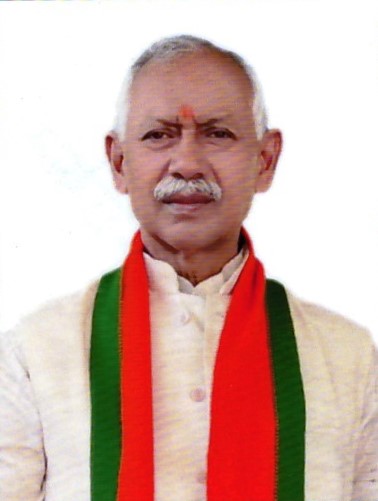
For this constituency, the election was successfully held on May 25th. The voter turnout was 50.97 percent.Maharajganj Lok Sabha Constituency in Bihar is a political powerhouse renowned for its significant influence in Indian politics. Maharajganj reflects a diverse demographic and remains a crucial constituency of Bihar. Now in 2024, the electorate is even more enthusiastic to show the power of their vote. As for the 2024 candidates list in Maharajganj Lok Sabha Constituency, Janardan Singh Sigriwal from Bharatiya Janta Party and Akash Prasad Singh from Indian National Congress are the prominent candidates. Keep watching this page to get the latest updates about the Maharajganj Lok Sabha elections.
Maharajganj Lok Sabha Elections
Maharajganj Candidates List


Akash Prasad Singh
Indian National Congress
Maharajganj Lok Sabha Elections Results 2024 to 1957
Browse By Year
| Candidate's Name | Votes | Vote Share | |
|---|---|---|---|
|
Janardan Singh Sigriwal
Winner
|
Bharatiya Janata Party |
5,29,533
Lead: 1,02,651
|
52.22% |
| Akash Prasad Singh | Indian National Congress | 4,26,882 | 42.09% |
| Nota | None Of The Above | 21,687 | 2.14% |
| Tribhuwan Ram | Peoples Party Of India (democratic) | 14,838 | 1.46% |
| Madhusudan Singh | Bahujan Samaj Party | 13,402 | 1.32% |
| Akhileshwar Prasad Singh | All India Majlis-e-ittehadul Muslimeen | 7,767 | 0.77% |
Strike Rate
Assembly Constituencies in Maharajganj
| Assembly Constituencies | Winner | Votes | Vote Share |
|---|---|---|---|
| Goriakothi |
Devesh Kant Singh
BJP
|
105,909 | 49.64% |
| Maharajganj |
Hem Narayan Sah
JDU
|
86,813 | 46.22% |
| Manjhi |
Randhir Singh
JDU
|
68,455 | 38.53% |
| Taraiya |
Janak Singh
BJP
|
85,564 | 44.21% |
| Baniapur |
Kedar Nath Singh
BJP
|
95,606 | 47.70% |
| Ekma |
Dhoomal Singh
JDU
|
84,077 | 49.16% |
Maharajganj Past Election Results
| Year | Candidate's Name | Party | Votes | Vote Share |
|---|---|---|---|---|
| 2024 | Janardan Singh Sigriwal | BJP |
529,533
(Lead:
102,651)
|
52% |
| Akash Prasad Singh | INC | 426,882 | 42% | |
| 2019 | Janardan Singh \'sigriwal\" | BJP |
546,352
(Lead:
230,772)
|
56% |
| Randhir Kumar Singh | RJD | 315,580 | 32% | |
| 2014 | Janardan Singh Sigriwal | BJP |
320,753
(Lead:
38,415)
|
39% |
| Prabhu Nath Singh | RJD | 282,338 | 34% | |
| 2009 | Uma Shanaker Singh | RJD |
211,610
(Lead:
2,797)
|
35% |
| Prabhu Nath Singh | JD(U) | 208,813 | 35% | |
| 2004 | Prabhunath Singh | JD(U) |
283,506
(Lead:
46,465)
|
43% |
| Jitendra Swami | RJD | 237,041 | 36% | |
| 1999 | Prabhunath Singh | JD(U) |
398,475
(Lead:
104,063)
|
57% |
| Mahachandra Prasad Singh | INC | 294,412 | 42% | |
| 1998 | Prabhunath Singh | SAP |
360,265
(Lead:
205,553)
|
54% |
| Mahachandra Prasad Singh | INC | 154,712 | 23% | |
| 1996 | Ram Bahadur Singh | SAP |
325,577
(Lead:
152,854)
|
54% |
| Girija Devi | JD | 172,723 | 29% | |
| 1991 | Girija Devi (w) | JD |
239,700
(Lead:
24,335)
|
38% |
| Ram Bahadur Singh | JP | 215,365 | 34% | |
| 1989 | Chanrasbekhar | JD |
382,488
(Lead:
217,318)
|
65% |
| Krishna Pratap | INC | 165,170 | 28% | |
| 1984 | Krishnapratap Singh | INC |
255,462
(Lead:
133,904)
|
63% |
| Ram Deo Singh | JNP | 121,558 | 30% | |
| 1980 | Krishna Pratap Singh | INC(I) |
144,744
(Lead:
30,932)
|
44% |
| Ramdeo Singh | JNP | 113,812 | 35% | |
| 1977 | Ram Deo Singh | BLD |
345,781
(Lead:
251,898)
|
78% |
| Daroga Prasad Roy | INC | 93,883 | 21% | |
| 1971 | Ramdeo Singh | SSP |
98,386
(Lead:
1,008)
|
34% |
| Indra Deep Singh | CPI | 97,378 | 33% | |
| 1967 | M. P. Singh | INC |
96,212
(Lead:
17,244)
|
35% |
| I. Sinha | CPI | 78,968 | 29% | |
| 1962 | Krishnakanta Singh | INC |
73,670
(Lead:
13,527)
|
45% |
| Yamuna Prasad Singh | PSP | 60,143 | 37% | |
| 1957 | Mahendra Nath Singh | INC |
71,718
(Lead:
20,945)
|
49% |
| Tara Rani | PSP | 50,773 | 34% |
Near By Constituency
FAQs
Who is the MP of Maharajganj?
from , is the MP of Maharajganj.
What is the Maharajganj polling percentage in 2024?
The polling percentage for Maharajganj in 2024 was 50.97 %.
Candidates list of Maharajganj?
- Janardan Singh Sigriwal(Bharatiya Janta Party)
- Akash Prasad Singh(Indian National Congress)
The information provided on this page about the current and previous elections in the constituency is sourced from various publicly available platforms including https://old.eci.gov.in/statistical-report/statistical-reports/ and https://affidavit.eci.gov.in/. The ECI is the authoritative source for election-related data in India, and we rely on their official records for the content presented here. However, due to the complexity of electoral processes and potential data discrepancies, there may be occasional inaccuracies or omissions in the information provided.





Political Parties in India







Major Parties Candidate List
Speaker List
Lok Sabha Links
List Of Popular Leaders In India
State-wise Politicians List
Politicians By Age And Professions
-
 Sign in with Google
-
Block for 8 hours
-
Block for 12 hours
-
Block for 24 hours
-
Don't block


 Click it and Unblock the Notifications
Informed.
- Male
- Female
- Others
- Under 18
- 18 to 25
- 26 to 35
- 36 to 45
- 45 to 55
- 55+