


2019
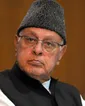
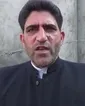
The Indian government abrogated Article 370, reducing Jammu & Kashmir\'s autonomy. The National Conference opposed the move and its leadership, including Farooq and Omar Abdullah, were detained.

Monday, October 13, 2025, 02:25:04 PM [IST]
Jammu & Kashmir National Conference (JKN) Information
| Party Name | Jammu & Kashmir National Conference |
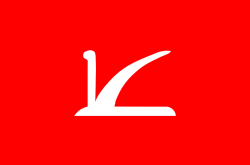
| Party Flag |
|
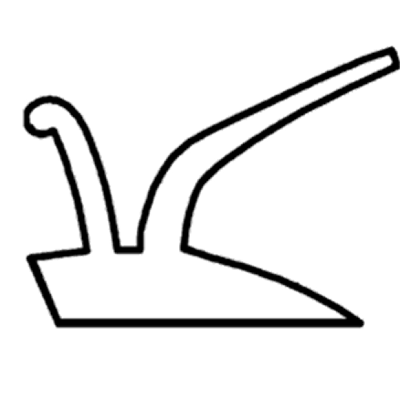
| Party Symbol |
|
| Founder | Sheikh Abdullah & Chaudhry Ghulam Abbas |
| Party Founded Date | 15 Oct 1932 |
| No. of MPs |
Loksabha : 2 Rajyasabha : 0 |
| Party Headquarters | Nawa-e-sueb, Srinagar, Jammu and Kashmir |
| Party President | Farooq Abdullah |
| Loksabha Leader | Aga Syed Ruhullah Mehdi |
| Rajya Sabha Leader | Farooq Abdullah |
| Student Wing | National Conference Students' Union |
| Youth Wing | Youth National Conference |
| Political Position | Centre-left |
| Website | www.jknc.co.in |
Jammu & Kashmir National Conference (JKN) Flag
Jammu & Kashmir National Conference (JKN) Ideology
Jammu & Kashmir National Conference (JKN) Principles
Jammu & Kashmir National Conference (JKN) Top Leaders
Jammu & Kashmir National Conference (JKN) Timeline
The Indian government abrogated Article 370, reducing Jammu & Kashmir\'s autonomy. The National Conference opposed the move and its leadership, including Farooq and Omar Abdullah, were detained.
Omar Abdullah, son of Farooq Abdullah, became the Chief Minister of Jammu and Kashmir after the National Conference formed a coalition government with the Indian National Congress.
The National Conference lost power in the 2002 state elections, marking the end of its dominance in the state\'s politics.
After a period of political instability and separatist violence, the National Conference returned to power, with Farooq Abdullah becoming the Chief Minister.
The National Conference allied with the Indian National Congress for the 1987 elections, which were marred by allegations of rigging, fueling unrest in the region.
Following Sheikh Abdullah\'s death, his son Farooq Abdullah took over the leadership of the National Conference and became the Chief Minister of Jammu and Kashmir.
The National Conference, led by Sheikh Abdullah, entered into an accord with the Indian government, resulting in Sheikh Abdullah resuming office as Chief Minister of Jammu and Kashmir.
Sheikh Abdullah was dismissed from the position of Prime Minister and imprisoned, leading to a period of political turmoil in Jammu and Kashmir.
The National Conference swept the first Constituent Assembly elections, ushering in a new era of governance in the state.
Sheikh Abdullah was appointed the Prime Minister of Jammu and Kashmir under the special provisions of Article 370, which granted the state a significant degree of autonomy.
The party played a significant role in advocating for Jammu and Kashmir\'s accession to India, with Sheikh Abdullah actively engaging with Indian leaders during the partition period.
The National Conference was founded by Sheikh Mohammed Abdullah and others in 1932. It evolved from the Jammu and Kashmir Muslim Conference to represent broader political aspirations in the region.
Disclaimer:The information provided on this page is sourced from various publicly available platforms including https://en.wikipedia.org/, https://sansad.in/ls, https://sansad.in/rs, https://pib.gov.in/, https://affidavit.eci.gov.in/ and the official websites of state assemblies respectively. While we make every effort to maintain the accuracy, comprehensiveness and timeliness of the information provided, we cannot guarantee the absolute accuracy or reliability of the content. The data presented here has been compiled without consideration of the objectives or opinions of individuals who may access it.
 Sign in with Google



 Click it and Unblock the Notifications