


Get Updates
Get notified of breaking news, exclusive insights, and must-see stories!
Home | Political Parties | Samajwadi Party

Samajwadi Party

The Samajwadi Party, founded in 1992, is a prominent regional political party in India. Established by Mulayam Singh Yadav, it predominantly operates in Uttar Pradesh while influencing national politics significantly. Known for its strong socialist ideology, the party advocates for social justice, secularism, and the empowerment of marginalized communities. The Samajwadi Party focuses on farmers' rights, economic development, and uplifting the rural population. Over decades, it has consistently played a key role in state-level governance.

As a dynamic political entity, the Samajwadi Party prioritizes inclusive growth and policies addressing education, healthcare, and employment. Renowned for its grassroots connect, the party enjoys substantial support among minority groups, backward classes, and the youth. Its competitive positioning often shapes Uttar Pradesh's political landscape during elections. Through a blend of traditional values and progressive goals, the Samajwadi Party continues to influence key discussions on India's socio-economic and political framework.

Read More

By Administrator

Time Square

Monday, October 13, 2025, 02:00:07 PM [IST]

`

Samajwadi Party (SP) Information

Party Name Samajwadi Party
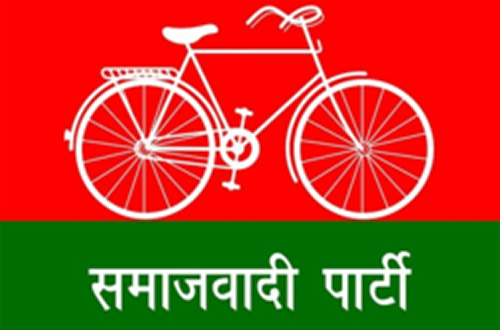
Party Flag
Samajwadi Party
Party Symbol
Bicycle
 Bicycle
Founder Mulayam Singh Yadav
Party Founded Date 04 Oct 1992
Split From Janata Dal
No. of MPs Loksabha : 37
Rajyasabha : 4
Party Headquarters 18 Copernicus Lane, New Delhi
Party President Akhilesh Yadav
General Secretary Ram Gopal Yadav; Azam Khan; Shivpal Singh Yadav; Indrajit Saroj; Lalji Verma; Awadhesh Prasad; Ram Achal Rajbhar; Balram Yadav; Vishambhar Prasad Nishad; Ram Ji Lal Suman; Harendra Singh Malik
Loksabha Leader Akhilesh Yadav
Rajya Sabha Leader Ram Gopal Yadav
Newspaper Samajwadi Bulletin
Student Wing Samajwadi Chatra Sabha
Youth Wing Samajwadi Prahari Samajwadi Yuvjan Sabha Lohiya Vahini
Women's Wing Samajwadi Mahila Sabha
Political Position Left-wing
International Affiliation Progressive Alliance
Website www.samajwadiparty.in

Samajwadi Party (SP) Flag

Samajwadi Party election symbol is the Bicycle, reserved by the Election Commission of India. The symbol appears on ballot papers, EVMs, and campaign materials. It identifies party candidates in Uttar Pradesh and elsewhere. Party Abbreviation: SP. The Party Logo mirrors the Bicycle device, reinforcing consistent political identity across elections.

ECI allocates symbols, not flags, for polling purposes. The Samajwadi Party flag is a redandgreen banner displaying the Bicycle emblem in organizational use. It is used at rallies, offices, and publications, but not on ballots. This distinction guides voters and workers while maintaining the partys visual continuity during campaigns.

SP: Symbol and Flag Usage

During alliances and seatsharing, SP fields candidates on the Bicycle symbol in its allotted seats. Allies contest on their respective symbols under ECI rules. No alternative allocation has replaced the Bicycle for SP in recent state or general elections. Voter education materials consistently depict the Bicycle to prevent confusion.

ECI records list the Samajwadi Party as a Recognized State Party in Uttar Pradesh. The Bicycle remains its reserved symbol across notifications. Party guidelines align the Party Logo, Samajwadi Party flag, and symbol for clear political identity. These elements aid candidate recognition across multilingual electorates and diverse constituencies.

Read More

Samajwadi Party (SP) Ideology

The Samajwadi Party ideology is rooted in socialism, emphasizing equality, justice, and the welfare of marginalized groups. It upholds secularism and aims to address social and economic inequalities through inclusive policies. The party prioritizes the empowerment of underprivileged communities, including farmers, laborers, and minorities, as a core part of its political philosophy.

The Samajwadi Party principles emphasize regional development and the importance of strengthening rural economies. Its governance model focuses on improving education, healthcare, and employment opportunities for all sections of society. Additionally, the party's agenda places significant importance on women’s empowerment and social justice, promoting policies to protect their rights and welfare.

Samajwadi Party’s Governance Model for Inclusive Development

A key element of the Samajwadi Party ideology is decentralized governance, empowering local administrative bodies. By endorsing people-centric initiatives, the party seeks to make government services more accessible and accountable. Economic policies, like subsidies for farmers and small-scale industries, align with its grassroots development agenda.

The political philosophy of the Samajwadi Party also supports free and fair electoral practices to uphold democracy. Advocating for the needs of the socially disadvantaged remains an integral part of its vision for equitable growth. Moreover, the party’s agenda includes fostering communal harmony and cultural unity across diverse communities.

Read More

Samajwadi Party (SP) Principles

The principles of the Samajwadi Party reflect its commitment to socialism, secularism, and democratic governance. The party ideology emphasizes equality and social justice, focusing on marginalized communities and ensuring their upliftment. Through its governance model, the Samajwadi Party strives to provide opportunities for economic development while preserving socio-cultural harmony.

Samajwadi Party principles include advocating for economic policies that prioritize rural development and the agricultural sector. The party values inclusivity, aiming to bridge gaps in education and healthcare accessibility across all sections of society. Its political beliefs emphasize empowering weaker sections, including women and laborers, through progressive legislation and welfare initiatives.

Samajwadi Party (SP) and Its Core Political Beliefs

The Samajwadi Party ideology is rooted in Dr. Ram Manohar Lohia’s principles of socialism, focusing on eradicating inequality. Core party values include ensuring equitable resource distribution, opposing monopolies, and supporting small and medium enterprises. The SP governance model also promotes environmental sustainability alongside economic development.

Secularism remains a foundational aspect of Samajwadi Party principles, promoting harmony among diverse religious and cultural groups. The party advocates for transparent, participatory policymaking, ensuring public accountability in governance. Social reform and development, centered on equity and justice, remain central to the Samajwadi Party ideology.

Overall, Samajwadi Party principles underline inclusive growth, decentralization, and progressive reforms to address socio-economic disparities effectively.

Read More
Samajwadi Party (SP) Organisation Structure

The Samajwadi Party (SP) operates through a well-defined party organization and hierarchy, ensuring smooth functioning. Its structure reflects a grassroots-oriented framework designed to mobilize supporters and influence policymaking. The party is led by its National President, who holds the highest authority and oversees decision-making processes within the organization. Other prominent roles include the Parliamentary Board, General Secretaries, and State Presidents, each handling specific responsibilities under the leadership framework.

At the heart of the Samajwadi Party structure lies its National Executive, the principal governing body. It functions as the central decision-making authority, formulating policies, election strategies, and overseeing internal affairs. Members chosen for this executive represent varied backgrounds, ensuring inclusivity and regional representation. The decision-making process within the executive is well-documented, involving democratic deliberation and collective participation across the leadership hierarchy.

Leadership Roles in Samajwadi Party (SP) Framework

The National President leads the SP's leadership hierarchy with control over major strategic and policy directions. Supporting roles are managed by Vice Presidents, General Secretaries, and Treasurers, who ensure organizational functionality. The SP assigns specific portfolios to its leaders, such as outreach initiatives, financial management, and election campaigning. State-level Presidents represent the party in their respective regions, ensuring grassroots integration into the national structure.

The Parliamentary Board of the SP is a crucial component of its political framework. It finalizes decisions on candidate selection for elections and leads policymaking for legislative agendas. This body, composed of senior leaders and decision-makers, reflects the party's dedication to streamlined governance and accountability. Clear delineation of power within the leadership ensures representative functioning among all levels of the organization.

Regional Units and Grassroots Organization in SP Structure

The state units play an indispensable role in the Samajwadi Party organization, bridging national leadership and local supporters. State units operate autonomously in regional decision-making, adhering to the principles laid out by the central body. State Presidents manage the organizational infrastructure, while district-level leaders focus on mobilizing local communities. This system ensures effective communication and political activity within grassroots networks.

Additionally, the youth and women’s wings of the Samajwadi Party hold significant influence within its hierarchical framework. These wings encourage engagement from diverse societal groups and build new leadership pipelines for the party. Their coordination with the primary organization enables growth while contributing to vote-bank appeal among younger demographics and women-friendly constituencies.

Internal Decision-Making Processes in SP Organization

Decision-making within the SP framework occurs through structured dialogues and consultative processes at different organizational levels. Policies and strategies are initially discussed by working committees before higher authorities formalize them. This ensures collective decision-making while avoiding any autocratic tendencies. The party's commitment to decentralized power enhances transparency across its governing body.

Election strategy is another domain where the SP structure demonstrates its organizational efficiency. Candidate selection, campaigning, and alliance decisions are predominantly monitored by the Parliamentary Board and vetted by the National Executive. Political alliances made by the party reflect calculated choices, taking state-level dynamics into consideration. This structured alignment optimizes electoral success while leveraging party strengths.

Strengthening Organizational Stability in Samajwadi Party

The SP's hierarchical structure emphasizes continuous member training, resource allocation, and financial management to sustain functionality. Regional leaders are regularly briefed by the central leadership to ensure cohesive objectives. Moreover, periodic reshuffles within the governing body help address emerging challenges and maintain organizational stability.

This structured framework allows the Samajwadi Party to expand its political presence across India while staying grounded in grassroots connectivity. The coordination between leadership roles, governing bodies, and state units reflects its dynamic yet cohesive political organization.

Read More

Samajwadi Party (SP) Timeline

2019

Samajwadi Party entered a political alliance with the Bahujan Samaj Party (BSP) to contest the 2019 General Elections but performed below expectations.

2019

Samajwadi Party\'s founder and former Chief Minister of Uttar Pradesh, Mulayam Singh Yadav, passed away, marking the end of a significant era in the party\'s history.

2017

Internal conflicts within the party caused a split between Akhilesh Yadav and Mulayam Singh Yadav during the Uttar Pradesh Assembly elections, leading to electoral defeat.

2014

Samajwadi Party faced a setback in the national Lok Sabha elections, winning only 5 seats in Uttar Pradesh.

2012

Akhilesh Yadav, son of Mulayam Singh Yadav, became the youngest Chief Minister of Uttar Pradesh after the Samajwadi Party won a significant majority in the Assembly elections.

2007

Samajwadi Party lost the Uttar Pradesh Assembly elections to the Bahujan Samaj Party under Mayawati\'s leadership.

2003

Mulayam Singh Yadav became the Chief Minister of Uttar Pradesh for the third time after forming a government with support from smaller parties.

1999

Samajwadi Party played a significant role in supporting and participating in the United Front Alliance during the late 1990s.

1996

Samajwadi Party gained prominence at the national level by winning 16 seats in the Lok Sabha elections.

1993

Samajwadi Party formed its first government in Uttar Pradesh under the leadership of Mulayam Singh Yadav after an alliance with the Bahujan Samaj Party.

1992

Samajwadi Party was founded by Mulayam Singh Yadav in Uttar Pradesh, India, emerging from the Janata Dal.

Disclaimer:The information provided on this page is sourced from various publicly available platforms including https://en.wikipedia.org/, https://sansad.in/ls, https://sansad.in/rs, https://pib.gov.in/, https://affidavit.eci.gov.in/ and the official websites of state assemblies respectively. While we make every effort to maintain the accuracy, comprehensiveness and timeliness of the information provided, we cannot guarantee the absolute accuracy or reliability of the content. The data presented here has been compiled without consideration of the objectives or opinions of individuals who may access it.

Notifications
Settings
Clear Notifications
Notifications
Use the toggle to switch on notifications
  • Block for 8 hours
  • Block for 12 hours
  • Block for 24 hours
  • Don't block
Gender
Select your Gender
  • Male
  • Female
  • Others
Age
Select your Age Range
  • Under 18
  • 18 to 25
  • 26 to 35
  • 36 to 45
  • 45 to 55
  • 55+