Get Updates
Get notified of breaking news, exclusive insights, and must-see stories!
Home | Political Parties | Peace Party

Peace Party

The Peace Party of India, a prominent political party, is committed to promoting harmony, social justice, and inclusive governance across the nation. Established with the aim of addressing pressing social issues, the party works to represent marginalized communities and champion equality within India’s diverse societal framework.

Known for its staunch advocacy of secularism and unity, the Peace Party of India emphasizes the need for cooperation among different faiths and cultures. Its policies often highlight education reforms, economic equity, and healthcare accessibility, resonating with voters seeking solutions to India’s socio-political challenges.

Operating in key states across India, the Peace Party actively participates in state and national elections, striving to shape policies toward equitable development. With a slogan rooted in peace and democracy, the party endeavors to bridge social divides and foster a progressive, inclusive India.

The Peace Party of India envisions a harmonious nation where diversity is celebrated and opportunities are accessible to all.

Read More

By Administrator

Time Square

Monday, October 13, 2025, 04:15:05 PM [IST]

`

Peace Party (PECP) Information

Party Name Peace Party
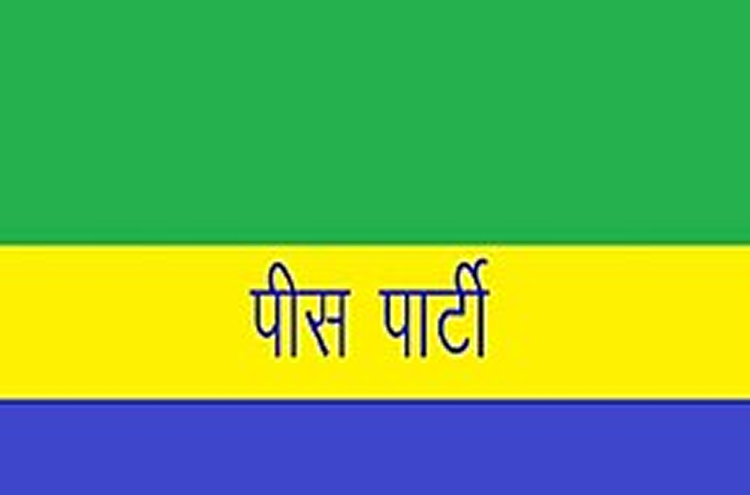
Party Flag
Peace Party
Party Symbol
Glass of Water
 Glass of Water
Founder Mohamed Ayub
Party Founded Date 01 Feb 2008
Party Headquarters Johra Complex, Barhalganj, Gorakhpur - 273402 (U.P.)
Party President Mohamed Ayub

Peace Party (PECP) Flag

Peace Party election symbol is allotted by the Election Commission of India. Allocation follows the Symbols Order, 1968. In 2012, party papers referenced the ceiling fan symbol during Uttar Pradesh election filings. Such allocations are common symbols, not permanent marks. Peace Party logo on ballots appears as the approved symbol.

In 2022, the party aligned with the Rashtriya Ulama Council under the United Democratic Alliance. Seatsharing agreements determined where PECP fielded nominees. Candidates used Election Commission of India allotted common symbols in their constituencies. Peace Party flag and Peace Party election symbol were communicated on candidate forms and ballots.

PECP: Symbol Allocation and Flag Status

The Election Commission of India does not register party flags. Therefore, there is no ECIrecognized Peace Party flag. Any Peace Party logo or flag used in rallies or social media reflects political identity. It is not part of official ballot design. Voters see only the approved symbol beside the candidate.

Since January 2025, the glass tumbler symbol was reserved for Jana Sena. The Election Commission of India issued the formal order. Consequently, PECP cannot receive that symbol where reservation applies. Candidates must choose from available common symbols in future polls, subject to Returning Officer approvals.

Read More

Peace Party (PECP) Ideology

The Peace Party of India ideology revolves around promoting communal harmony, social justice, and inclusive governance. It emphasizes creating a balanced society that values equality, pluralism, and sustainable development. The party principles aim to bridge societal divides by fostering cooperation among diverse communities while addressing socio-economic disparities. Their political philosophy advocates for the welfare of marginalized groups by prioritizing education, healthcare, and employment opportunities.

The Peace Party of India’s governance model focuses on ethical and transparent administration. Their agenda includes reforms in rural development, women empowerment, and minority welfare. The party prioritizes uplifting underrepresented sections of society by ensuring equitable resource distribution. The Peace Party ideologically condemns sectarian politics, seeking solutions through dialogue and democratic frameworks. It advocates for inclusive participation in governance while upholding constitutional values.

Key Pillars of the Peace Party of India (PPI) Agenda

The Peace Party of India principles advocate peaceful coexistence and mutual respect among all communities. Its political philosophy strongly opposes any form of discrimination or extremism. The party agenda also calls for environmental sustainability through policies promoting renewable energy and green infrastructure initiatives. By addressing grassroots challenges through equitable governance, their initiatives aim to build a unified, progressive nation.

The Peace Party of India ideology combines traditional Indian values with modern socio-economic policies. Their governance model ensures accountability, prioritizing citizen-centric reforms. Through this approach, the party aspires to foster trust in democratic institutions while delivering results-oriented governance that benefits all citizens of India.

Read More

Peace Party (PECP) Principles

The Peace Party of India principles prioritize equality, inclusivity, and unity as core ideological foundations. The party underscores its commitment to justice, advocating for social harmony among diverse communities in India. Its governance model relies on fostering community-driven political participation, ensuring that minority voices are actively represented in policymaking. The Peace Party’s ideology promotes peaceful coexistence while addressing historical grievances based on data-driven reforms.

Focused on constitutional values, the Peace Party of India emphasizes secularism and democratic governance. The party values transparency in public administration, advocating for corruption-free systems. Its political beliefs stress education and healthcare reforms, with a vision to provide equal access for all citizens. Additionally, sustainable development and environmental protection remain critical to the party's ideological framework for creating long-term equitable growth.

Peace Party of India (PPI): Policy Framework and Governance

The Peace Party ideology includes progressive economic policies aimed at reducing poverty and unemployment. It supports welfare-driven development that balances economic growth with societal well-being. The Peace Party's governance model champions decentralization, empowering local governments to create region-specific solutions. Upholding fundamental rights, the party’s principles focus on protecting marginalized groups from discrimination.

The Peace Party values youth and women’s empowerment, urging inclusive political representation. It believes in fostering international diplomacy based on mutual respect and peaceful negotiations. Upholding the rights of farmers, laborers, and small businesses further strengthens its political beliefs. Guided by its principles, the Peace Party of India aims for sustainable, equitable governance.

Read More
Peace Party (PECP) Organisation Structure

The Peace Party of India operates with a well-organized structure designed to support its political objectives. The party follows a hierarchical framework that aligns with its vision of promoting equality and peace. Decision-making processes are formally structured under the leadership of its governing bodies, ensuring transparency. Each level of the party contributes to shaping its political framework, which integrates grassroots involvement with centralized leadership.

The governing body of the Peace Party of India consists of a central committee that oversees key decisions. This central committee includes senior members responsible for policy development, strategy formation, and organizational governance. Working under the central body are state-level committees that implement party policies regionally while addressing localized challenges. These decentralized units follow directives from the central committee to ensure unity within the party structure.

Leadership Roles Within the Peace Party of India (PPI)

The Peace Party of India leadership is led by the party president, who is the highest-ranking official in the hierarchy. The president is supported by a general secretary, who handles the day-to-day administration and coordination across various organizational levels. Vice-presidents and secretaries are appointed to assist in managing specific departments, such as membership drives, media relations, and internal audit processes.

The party’s hierarchical structure emphasizes collective accountability. Senior leaders mentor district and regional coordinators to foster efficiency. These coordinators act as liaisons between the state committees and grassroots workers. This layered leadership arrangement enables effective communication across all levels, further enhancing decision-making processes within the political framework of the Peace Party of India.

Committees and Functional Units in the PPI

To execute its agenda systematically, the Peace Party of India organizes specialized committees. The Policy and Research Committee drafts policy proposals and conducts issue-specific research. The Financial Committee manages budgets, resource allocation, and fundraising initiatives. The Election Strategy Committee focuses on candidate selection strategies, alliances, and campaign management.

Other integral functional units include Media Relations, Public Outreach, and Membership Recruitment. These committees collaborate to ensure the party stays connected with its supporters while expanding its voter base. A robust organizational structure ensures that these departments operate efficiently and align with the party's overarching goals.

Grassroots Involvement and Decision-Making Processes

The Peace Party of India relies heavily on grassroots involvement to maintain its political relevance. Local units at the block and district levels play a crucial role. These levels are primarily responsible for gauging public opinion and implementing initiatives aligned with the needs of their constituencies. Regular consultations are held between grassroots leaders and higher-level officials to address community concerns.

The decision-making process within the party combines democratic principles with centralized leadership. Members at various levels can propose resolutions through state committees. These proposals are deliberated upon by the central committee, which retains the final authority. This structured decision-making ensures coherence while incorporating diverse perspectives from party members.

Party Membership and Internal Elections in the PPI

Membership in the Peace Party of India is open to any individual agreeing with the party’s principles. Members are categorized into active and associate members. Active members are eligible to hold internal positions and vote in the party’s internal elections. These elections are conducted periodically to maintain democratic processes and promote fresh leadership within the hierarchy.

The election process within the Peace Party of India serves as a critical component of the organization. Positions like that of the president, general secretary, and committee heads are elected through voting among eligible members. This process strengthens accountability while empowering members to participate actively in party governance.

Read More

Peace Party (PECP) Timeline

2022

The Peace Party remained active in promoting its agenda of communal harmony and minority rights, participating in the 2022 Uttar Pradesh Legislative Assembly elections but with limited impact.

2017

The Peace Party\'s influence declined in the 2017 Uttar Pradesh Assembly elections, where it failed to win any seats.

2012

The Peace Party gained notable success in the 2012 Uttar Pradesh Legislative Assembly elections, securing four seats. This marked its emergence as a political force.

2012

The Peace Party participated in the 2014 Indian general elections, focusing on minority welfare and justice. However, it did not win any Lok Sabha seats.

2008

The Peace Party of India was founded with the aim of promoting communal harmony, justice, and equal opportunities. It seeks to represent marginalized communities and minorities.

Disclaimer:The information provided on this page is sourced from various publicly available platforms including https://en.wikipedia.org/, https://sansad.in/ls, https://sansad.in/rs, https://pib.gov.in/, https://affidavit.eci.gov.in/ and the official websites of state assemblies respectively. While we make every effort to maintain the accuracy, comprehensiveness and timeliness of the information provided, we cannot guarantee the absolute accuracy or reliability of the content. The data presented here has been compiled without consideration of the objectives or opinions of individuals who may access it.

Notifications
Settings
Clear Notifications
Notifications
Use the toggle to switch on notifications
  • Block for 8 hours
  • Block for 12 hours
  • Block for 24 hours
  • Don't block
Gender
Select your Gender
  • Male
  • Female
  • Others
Age
Select your Age Range
  • Under 18
  • 18 to 25
  • 26 to 35
  • 36 to 45
  • 45 to 55
  • 55+