Get Updates
Get notified of breaking news, exclusive insights, and must-see stories!
Home | Political Parties | Jharkhand Vikas Morcha (prajatantrik)

Jharkhand Vikas Morcha (prajatantrik)

The Jharkhand Vikas Morcha (Prajatantrik) is a significant political party in India. Founded in 2006 by Babulal Marandi, the party focuses on the development of Jharkhand. As a regional political entity, it aims to address issues specific to the state, such as tribal welfare and economic growth. The Jharkhand Vikas Morcha (Prajatantrik) seeks to represent marginalized communities and promote transparency in governance. Its commitment to social justice and equitable resource distribution resonates with many voters. Over the years, the party has played a crucial role in shaping Jharkhand’s political landscape.

By advocating for improved education and healthcare systems, the Jharkhand Vikas Morcha (Prajatantrik) prioritizes human development. It emphasizes sustainable development policies to ensure long-term prosperity for Jharkhand's citizens. With an eye on future elections, the party continues to expand its influence and address pressing local issues. Through strategic alliances and grassroots engagement, it remains a key player in state politics.

Read More

By Rashmi

Time Square

Tuesday, March 3, 2026, 05:08:24 PM [IST]

`

Jharkhand Vikas Morcha (prajatantrik) (JVM) Information

Party Name Jharkhand Vikas Morcha (prajatantrik)
Party Flag
Jharkhand Vikas Morcha (prajatantrik)
Party Symbol
Comb
 Comb
Party Headquarters

 Ranchi, Jharkhand

Party President --
Social Handles
facebook

Jharkhand Vikas Morcha (prajatantrik) (JVM) Flag

Jharkhand Vikas Morcha (Prajatantrik) election symbol was the Comb allotted by the Election Commission of India. On March 68, 2020, the Commission recognized its merger with the Bharatiya Janata Party. JVM(P) then ceased to exist as a separate entity in Commission records. The order froze the Comb symbol until further orders and removed JVM(P) from listings.

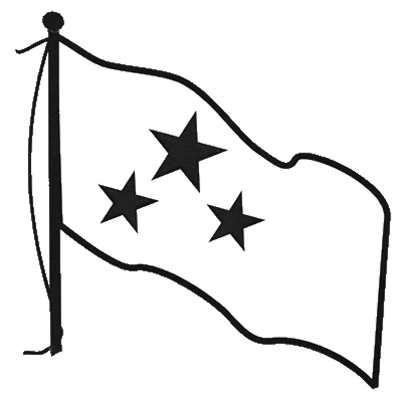
There is no officially recognized Jharkhand Vikas Morcha (Prajatantrik) flag in Commission symbol records. Under the Election Symbols Order, the Commission allocates symbols, not flags or banners. References to a Party Logo or flags denote campaign materials, not official allocations. In 2019, reports sought restrictions on using the JVM(P) symbol and flags.

JVM(P): Symbol status and flag references

Before dissolution, JVM(P) candidates campaigned and appeared on ballots with the Comb symbol. This ensured recognition and political identity across Assembly and parliamentary contests. Alliances, including United Progressive Alliance and Mahagathbandhan phases, did not change symbol allocation. Candidates retained the Election Commissions allotted symbol under applicable rules.

After March 2020, JVM(P) ceased independent operations; the Comb symbol remains frozen. No separate party logo or polling symbol of Jharkhand Vikas Morcha (Prajatantrik) is active. Any future use would require explicit allocation by the Election Commission of India.

Read More

Jharkhand Vikas Morcha (prajatantrik) (JVM) Ideology

The Jharkhand Vikas Morcha (Prajatantrik) (JVM(P)) espoused a regional development-oriented and reform-driven political ideology centred on good governance, tribal welfare, and administrative accountability. Founded in 2006 by Babulal Marandi, the party positioned itself as a pragmatic alternative to both national parties and established regional formations in Jharkhand.

Governance-Centred and Regional Focus

Ideologically, JVM(P) emphasised clean governance, anti-corruption measures, and institutional stability in a state frequently marked by political instability. The party advocated balanced regional development, improved infrastructure, and equitable distribution of state resources, particularly for tribal and rural communities.

Rather than promoting a rigid ideological doctrine, JVM(P) adopted a moderate, policy-driven stance combining regional identity concerns with constitutional democratic principles. Its political outlook blended administrative reform, social justice, and economic development within India’s federal framework.

Until its merger with the Bharatiya Janata Party in 2020, the party’s ideology remained rooted in pragmatic governance and state-specific development priorities rather than broader national ideological movements.

Read More

Jharkhand Vikas Morcha (prajatantrik) (JVM) Principles

The Jharkhand Vikas Morcha (Prajatantrik) (JVM(P)) was guided by principles centred on clean governance, regional empowerment, and inclusive development. Established in 2006 under the leadership of Babulal Marandi, the party sought to promote political stability and administrative transparency in Jharkhand’s evolving state structure.

Governance, Stability and Social Equity

A core principle of JVM(P) was the promotion of corruption-free administration and accountable leadership. The party emphasised institutional strengthening, the rule of law, and policy continuity in a state often affected by frequent government changes.

JVM(P) also upheld the principle of equitable development, particularly focusing on tribal welfare, rural infrastructure, employment generation, and fair distribution of natural resource benefits. It advocated democratic participation, decentralised governance, and constitutional methods to address regional aspirations.

Read More
Jharkhand Vikas Morcha (prajatantrik) (JVM) Organisation Structure

The Jharkhand Vikas Morcha (Prajatantrik) (JVM(P)) operated with a structured, cadre-supported organisational framework designed to function as a full-fledged regional political party in Jharkhand. Founded in 2006 by Babulal Marandi, the party adopted a hierarchical model combining central leadership authority with district-level mobilisation and legislative coordination.

The organisational structure was intended to support statewide electoral participation, policy articulation, and sustained political presence until its merger in 2020.

Leadership Structure in JVM(P)

Leadership was centralised around the President, a position held by Babulal Marandi throughout the party’s independent existence. The President functioned as the chief strategist, public face, and final authority in political and organisational matters.

Supporting the President were senior office-bearers including a General Secretary, state-level secretaries, and members of a Central Executive Committee. This leadership body oversaw electoral strategy, membership expansion, policy formulation, and alliance decisions.

Party Hierarchy in Jharkhand Vikas Morcha (Prajatantrik)

The party followed a tiered structure extending from the state level to local units:

President – Overall leadership and strategic direction

Central Executive Committee – Policy formulation and organisational oversight

State Secretaries – Coordination of departmental and regional functions

District Presidents – District-level administration and mobilisation

Block and Constituency Units – Grassroots outreach and campaign execution

District and block units played a significant role in building organisational depth, particularly during the 2009 and 2014 Assembly election cycles.

JVM(P) Decision-Making Process

Decision-making within the party was leader-centric but consultative. Major strategic decisions were taken by the President in consultation with the Central Executive Committee and senior state leaders. Legislative strategies were coordinated with elected Members of the Legislative Assembly (MLAs) when the party held representation.

This structure allowed the party to maintain coherence while adapting to Jharkhand’s coalition-driven political environment.

JVM(P) Political Framework

The organisational framework of JVM(P) supported its emphasis on governance reform, regional development, and administrative accountability. The structure facilitated statewide election campaigning, policy communication, and coordination between legislative and organisational wings.


PositionResponsibilities
PresidentOverall political leadership and strategy
General SecretaryOrganisational coordination and internal administration
Central Executive MembersPolicy planning and election oversight
District PresidentsDistrict-level management and mobilisation
Block/Constituency UnitsGrassroots outreach and campaign operations

Organisational Continuity and Dissolution

Between 2006 and 2020, JVM(P) maintained an active statewide organisational presence. However, following its merger with the Bharatiya Janata Party in 2020, the party ceased to function as an independent entity.

Until its dissolution, Jharkhand Vikas Morcha (Prajatantrik) operated as a structured regional party with a leadership-driven but institutionally organised framework across Jharkhand.

Read More

Jharkhand Vikas Morcha (prajatantrik) (JVM) Timeline

2020

The party merged back into the Bharatiya Janata Party, marking the end of its independent political journey.

2014

Jharkhand Vikas Morcha (Prajatantrik) won its first Lok Sabha seat with Babulal Marandi being elected as a Member of Parliament from Koderma constituency.

2009

The party contested in the 2009 Jharkhand Legislative Assembly elections, securing several seats and establishing itself as a regional political force.

2006

Jharkhand Vikas Morcha (Prajatantrik) was founded by Babulal Marandi after splitting from the Bharatiya Janata Party.

Disclaimer:The information provided on this page is sourced from various publicly available platforms including https://en.wikipedia.org/, https://sansad.in/ls, https://sansad.in/rs, https://pib.gov.in/, https://affidavit.eci.gov.in/ and the official websites of state assemblies respectively. While we make every effort to maintain the accuracy, comprehensiveness and timeliness of the information provided, we cannot guarantee the absolute accuracy or reliability of the content. The data presented here has been compiled without consideration of the objectives or opinions of individuals who may access it.

Notifications
Settings
Clear Notifications
Notifications
Use the toggle to switch on notifications
  • Block for 8 hours
  • Block for 12 hours
  • Block for 24 hours
  • Don't block
Gender
Select your Gender
  • Male
  • Female
  • Others
Age
Select your Age Range
  • Under 18
  • 18 to 25
  • 26 to 35
  • 36 to 45
  • 45 to 55
  • 55+