Get Updates
Get notified of breaking news, exclusive insights, and must-see stories!
Home | Political Parties | Janata Dal (United)

Janata Dal (United)

Janata Dal (United), commonly abbreviated as JD(U), is a prominent regional political party in India. Founded in 1999, it primarily operates in Bihar and Jharkhand, advocating for social justice, secularism, and economic development. With its secular ideology, JD(U) plays a significant role in shaping Indian politics through alliances and coalition strategies. The party's emphasis on caste-based inclusivity resonates with a broad voter base seeking equitable governance.

JD(U) emerged from various political realignments, holding influence through its strong grassroots presence and development-focused initiatives. Its leadership ensures active participation in state and national elections, addressing key civic and social issues. Known for its alliance with other major political entities, JD(U) consistently emphasizes rural upliftment, education reforms, and women’s empowerment. With its standing firmly rooted in local and national political frameworks, JD(U) continues to remain a vital force in Indian democracy.

Read More

By Administrator

Time Square

Monday, March 9, 2026, 12:10:17 PM [IST]

`

Janata Dal (United) (JDU) Information

Party Name Janata Dal (United)
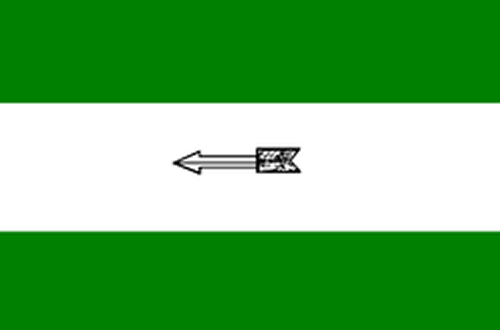
Party Flag
Janata Dal (United)
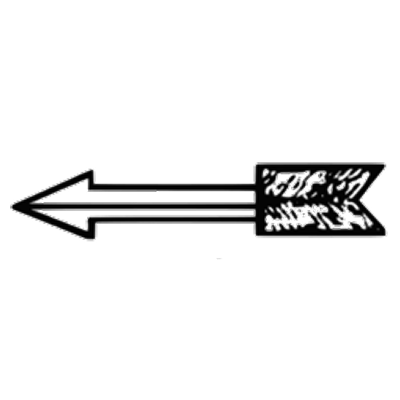
Party Symbol
Arrow
 Arrow
Founder Sharad Yadav, George Fernandes, Nitish Kumar
Party Founded Date 30 Oct 2003
No. of MPs Loksabha : 12
Rajyasabha : 4
Party Headquarters

7, Jantar Mantar Road, New Delhi, India-110001

Party President Sanjay Kumar Jha
Loksabha Leader Dileshwar Kamait
Rajya Sabha Leader Sanjay Kumar Jha
Newspaper JD Sandesh
Student Wing Chhatra JDU
Youth Wing Yuva JDU
Women's Wing Mahila JDU
Political Position Centre
Website jdu.org.in

Janata Dal (United) (JDU) Flag

Janata Dal (United) election symbol is the Arrow, reserved in Bihar. The Election Commission of India allocates this symbol for ballots and EVM displays. It represents the partys political identity during polls. Candidates use the Arrow on campaign materials. The Party Abbreviation, JD(U), commonly appears beside candidate names. Voter education graphics often show the Arrow for clarity in Bihar contests. Ballot units display the Arrow with the candidates name and photo.

In Bihar, JD(U) is a recognised state party with a reserved symbol. The Election Commission of India lists Arrow for the partys candidates in notified elections. Under alliances and seatsharing arrangements, candidates ordinarily retain the Arrow on EVMs in Bihar. Outside Bihar, symbol use follows ECI rules and authorizations, or candidates may contest on ally tickets.

JD(U): Flag Status, Party Logo, and Visual Identity Elements

Janata Dal (United) flag is not officially recognized by the Election Commission of India. Campaigns may display organizational banners bearing the Party Logo and JD(U) name. Such banners do not confer legal status and may vary by unit guidelines. The Party Abbreviation aids ballot recognition alongside the Arrow. References to the Janata Dal (United) flag should note its informal use within permissible campaign norms.

Read More

Janata Dal (United) (JDU) Ideology

The Janata Dal (United) ideology centers on a commitment to social justice, secularism, and inclusive governance. It emphasizes empowering marginalized communities through welfare-driven policies. Rooted in socialist political philosophy, the party advocates for reducing economic disparities and promoting equality. Highlighting its focus on federalism, the party calls for decentralization of power and autonomy for states in managing local governance.

Janata Dal (United) principles underscore the importance of communal harmony and secular values to strengthen India's democracy. The party agenda consistently champions accessible education and healthcare for all, while pushing for land reforms to support rural development. Its governance model prioritizes holistic socio-economic growth, balancing infrastructure projects with ground-level welfare schemes to uplift neglected regions and underrepresented groups.

Focus on Welfare in JD(U)’s Political Philosophy

Janata Dal (United) ideology also integrates environmental sustainability into its agenda, reflecting its long-term vision for inclusive development. It opposes divisive politics and advocates an inclusive governance model to bridge societal divides. JD(U)’s political philosophy promotes coalition-building, emphasizing democratic cooperation to achieve nationwide progress. This has shaped the party's strategies in both state and national politics over the years.

Additionally, Janata Dal (United) principles support gender equity through policies promoting female education, healthcare, and representation. Advocating for economic advancements like job creation and youth empowerment, the party is committed to fostering a self-reliant India. Its grassroots-driven governance model continues to evolve to meet the aspirations of the nation's diverse population.

Read More

Janata Dal (United) (JDU) Principles

Janata Dal (United) principles emphasize social justice, inclusive growth, and equitable development for all communities. The party’s ideology revolves around promoting secularism and fostering harmony among different ethnic, religious, and linguistic groups. By advocating federalism, JD(U) seeks to strengthen state autonomy within the constitutional framework.

The governance model of Janata Dal (United) is rooted in transparency, accountability, and participatory decision-making. Its political beliefs prioritize policies benefiting marginalized groups, including Scheduled Castes, Scheduled Tribes, and Other Backward Classes. JD(U) principles also stress the importance of implementing rural development schemes to bridge urban-rural divides.

Key Ideology of JD(U): Social Justice and Economic Development

Among Janata Dal (United) principles, addressing unemployment and poverty is a fundamental pursuit. The party strongly advocates land reforms, empowering farmers, and achieving sustainable agricultural growth. JD(U) ideology includes fostering women’s empowerment through reservations in governance and various welfare policies targeted at gender equity.

As a regional party, JD(U)’s political beliefs support national integrity while ensuring regional aspirations are respected. Its governance model emphasizes maintaining law and order while combating corruption and crime. By upholding democratic values, JD(U) ensures that its policies align with grassroots needs and national priorities.

Janata Dal (United) principles aim to provide an inclusive socio-political framework for a progressive and united society in India.

Read More
Janata Dal (United) (JDU) Organisation Structure

The organizational structure of Janata Dal (United) [JD(U)] is marked by its clearly defined hierarchy. This political party has developed a systematic framework to manage both national and regional political strategies. The party operates under a centralized authority led by its national president, who oversees all decision-making processes within JD(U).

JD(U)’s leadership structure ensures smooth coordination between state-level units and the central governing body. The party is structured into three primary tiers: the national unit, state units, and grassroots-level workers. Each level plays a distinct role in executing the overall party vision, policies, and political campaigns.

National Leadership and Decision-Making in JD(U)

The national president of JD(U) holds the supreme authority within the political hierarchy. This role involves guiding the party's vision, formulating key strategies, and speaking on behalf of the party. The national executive committee functions as the primary decision-making unit, comprising senior leaders and elected representatives. This governing body ensures coordination across various regions.

The general secretary is a critical component of the organization, charged with implementing directives from the national leadership. Additionally, the secretary-general focuses on administrative efficiency and party organization. Each leader is accountable for their assigned portfolios, making the leadership structure transparent and effective.

State-Level Organization in JD(U)

JD(U) state units operate semi-autonomously but under the guidance of the national leadership. State presidents oversee regional strategies to address local governance and electoral agendas. The hierarchical structure ensures seamless alignment between national priorities and state-specific political dynamics. These units also include vice presidents and secretaries responsible for managing local constituencies.

State units regularly report to the national governing body to ensure a unified political framework. This decentralized yet interlinked structure helps JD(U) effectively respond to region-specific political needs while maintaining its consistent ideological stance across the country.

Grassroots Workers and Operational Hierarchy

At the local level, JD(U) functions through a vast network of grassroots workers. Booth committees and local representatives form the backbone of the party organization, connecting it with voters directly. These committees play a crucial role in electoral campaigns and public engagement, ensuring the party's message reaches its intended audience.

District-level leaders maintain coordination between the grassroots workers and state units. They assist in executing regional programs and identifying potential challenges. This layered approach strengthens JD(U)’s presence at every organizational tier, enabling effective policy implementation and mass mobilization.

Role of Specialized Committees within JD(U)

JD(U) has several specialized committees to streamline its operations. Key examples include finance, electoral strategy, and social outreach committees. These committees are staffed by experienced party members and designed to handle specific responsibilities. The finance committee manages party funds transparently, adhering to governance standards.

The electoral strategy committee crafts detailed frameworks for elections, helping candidates with constituency-level campaigns. Meanwhile, the social outreach committee focuses on community engagement, aligning JD(U) with grassroots concerns. These specialized groups enhance the overall organizational efficiency of JD(U).

This multi-tiered structure, spanning national, state, and grassroots levels, exemplifies the robust organization of JD(U). The hierarchical decision-making process and localized units work complementarily, ensuring the party remains efficient and responsive across diverse political landscapes.

Read More

Janata Dal (United) (JDU) Timeline

2022

Nitish Kumar announced the end of JD(U)’s alliance with NDA and formed the government with RJD and other parties, accusing BJP of trying to weaken his party.
2017

Nitish Kumar resigned from the Grand Alliance citing differences with RJD and formed a new government by joining hands with BJP again.

2017

Nitish Kumar was sworn in as Chief Minister of Bihar for his 7th term after the NDA\'s narrow victory in the 2020 Bihar Assembly elections.

2013

JD(U) broke its 17-year-old alliance with NDA due to BJP\'s announcement of Narendra Modi as its PM candidate for the 2014 elections.

2013

JD(U) formed the \'Mahagathbandhan\' (Grand Alliance) with Rashtriya Janata Dal (RJD) and Congress to contest the Bihar Assembly elections.

2013

Nitish Kumar was re-elected as Chief Minister of Bihar after the Grand Alliance\'s victory in the 2015 Assembly elections.

2009

During the 2009 Lok Sabha elections, JD(U) openly opposed Narendra Modi’s involvement in NDA to maintain secular stand.

2005

Nitish Kumar took charge as the Chief Minister of Bihar after the JD(U)-BJP alliance won the state elections.

2003

The Samata Party, led by George Fernandes, formally merged into Janata Dal (United).

2000

Nitish Kumar became the Chief Minister of Bihar for the first time but resigned within seven days due to a lack of majority support.

1999

Janata Dal (United) was formed with the merger of the Sharad Yadav-led Janata Dal, Lokshakti Party, and Samata Party.

1999

Janata Dal (United) joined the BJP-led National Democratic Alliance (NDA) for the 1999 Indian general election.

Disclaimer:The information provided on this page is sourced from various publicly available platforms including https://en.wikipedia.org/, https://sansad.in/ls, https://sansad.in/rs, https://pib.gov.in/, https://affidavit.eci.gov.in/ and the official websites of state assemblies respectively. While we make every effort to maintain the accuracy, comprehensiveness and timeliness of the information provided, we cannot guarantee the absolute accuracy or reliability of the content. The data presented here has been compiled without consideration of the objectives or opinions of individuals who may access it.

Notifications
Settings
Clear Notifications
Notifications
Use the toggle to switch on notifications
  • Block for 8 hours
  • Block for 12 hours
  • Block for 24 hours
  • Don't block
Gender
Select your Gender
  • Male
  • Female
  • Others
Age
Select your Age Range
  • Under 18
  • 18 to 25
  • 26 to 35
  • 36 to 45
  • 45 to 55
  • 55+