
Get Updates
Get notified of breaking news, exclusive insights, and must-see stories!
Home | Political Parties | Janata Dal (Secular)

Janata Dal (Secular)

Janata Dal (Secular), commonly known as JD(S), is a prominent political party in India. Founded in 1999, it has significant influence, particularly in Karnataka. The party's core philosophy revolves around promoting secularism and social justice. Led by H.D. Deve Gowda, a former Prime Minister of India, JD(S) plays a crucial role in the state's political landscape. Its policies focus on agrarian reforms and rural development.

JD(S) consistently advocates for the rights of marginalized communities, emphasizing inclusive growth. The party's stronghold lies in southern Karnataka, where it frequently contests state assembly elections. Known for its coalition strategies, JD(S) often collaborates with other regional and national parties to form government alliances.

In recent years, Janata Dal (Secular) has aimed to expand its presence beyond Karnataka, eyeing opportunities in other states. With a focus on grassroots mobilization, JD(S) strives to enhance its electoral performance and policy impact across India. The party remains committed to fostering equitable development and maintaining secular values in Indian politics.

Read More

By Administrator

Time Square

Monday, October 13, 2025, 05:17:52 PM [IST]

`

Janata Dal (Secular) (JDS) Information

Party Name Janata Dal (Secular)
Party Flag
Janata Dal (Secular)
Party Symbol
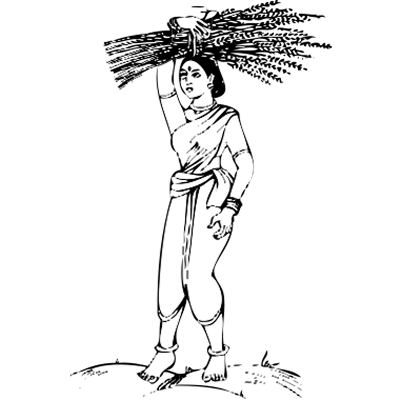
A Lady Farmer carrying Paddy on her head
 A Lady Farmer carrying Paddy on her head
Founder H. D. Deve Gowda
Party Founded Date 01 Jul 1999
No. of MPs Loksabha : 2
Rajyasabha : 1
Party Headquarters

JP Bhavan, 19/1, Platform Road, Seshadripuram, Bengaluru, Karnataka-560020

Party President H. D. Deve Gowda
Parliamentary Chairperson H. D. Deve Gowda
Loksabha Leader H. D. Kumaraswamy
Rajya Sabha Leader H. D. Deve Gowda
Student Wing Student Janata Dal (Secular)
Youth Wing Yuva Janata Dal (Secular)
Women's Wing Mahila Janata Dal (Secular)
Labour Wing Karmikara Janata Dal (Secular)
Political Position Centre-left
Website jds.ind.in

Janata Dal (Secular) (JDS) Flag

The Election Commission of India reserves the Janata Dal (Secular) election symbol as a lady farmer carrying paddy on her head. The symbol appears on EVMs and ballots for recognised state units. JD(S) originally used a farmer driving a tractor, later changed with ECI approval in 2001. The reserved symbol is exclusive to JD(S) in its recognised states.

ECI allocates symbols under the Election Symbols Order, 1968; it does not allot flags. Any Janata Dal (Secular) flag is a party emblem for rallies and publicity, not an ECIcontrolled device. The party logo mirrors the female farmer symbol used on ballots in Karnataka and Kerala.

JD(S): Symbol Use and Alliances

In 2024, JD(S) joined the BJP-led NDA and accepted seat-sharing in Karnataka. Candidates in Mandya and Kolar contested on the JD(S) symbol; both seats were won. In Bangalore Rural, CN Manjunath contested under the BJP lotus symbol as part of the arrangement.

Ahead of the polls, reports also noted possible symbol exchanges in parts of Old Mysore. The parties discussed allowing nominees to switch symbols where beneficial, subject to ECI notifications. Such arrangements do not change the Janata Dal (Secular) flag or the partys political identity. All such uses are notified by returning officers during elections.

Read More

Janata Dal (Secular) (JDS) Ideology

The Janata Dal (Secular) ideology centers on secularism and social justice. The party's principles emphasize inclusive growth and equitable resource distribution. It advocates for a governance model prioritizing the welfare of marginalized communities. JD(S) political philosophy underscores the importance of agricultural development, given India's agrarian economy. The party agenda includes policies aimed at improving rural infrastructure and farmer welfare.

JD(S) principles focus on regional autonomy and empowerment of state governments. This political party believes in decentralization to enhance local governance efficiency. Its ideology supports sustainable development, aligning with environmental conservation efforts. The governance model proposed by JD(S) includes transparent decision-making processes, ensuring accountability at all administrative levels. The party agenda stresses education and healthcare improvements.

JD(S): Commitment to Secularism

Janata Dal (Secular) ideology champions a secular state, advocating religious harmony across communities. Its political philosophy promotes equal opportunities irrespective of caste or religion. JD(S) principles are deeply rooted in democratic values, seeking to uphold constitutional rights. Party agenda initiatives include electoral reforms to ensure fair representation of all societal sections.

The governance model emphasizes participatory democracy, encouraging citizen involvement in policymaking processes. JD(S) ideology supports economic policies that reduce disparities between urban and rural areas. Party principles aim to protect cultural diversity while fostering national unity. The political philosophy of JD(S) reflects a commitment to addressing social inequities through legislative measures.

Read More

Janata Dal (Secular) (JDS) Principles

Janata Dal (Secular) principles emphasize secularism and social justice. This political party's ideology centers around promoting inclusive growth and harmony. JD(S) believes in uplifting marginalized communities, ensuring their equal participation in the governance model. The party values are deeply rooted in democratic processes, advocating for transparency and accountability within the political framework.

The governance model of Janata Dal (Secular) prioritizes rural development and agriculture. As part of their political beliefs, JD(S) focuses on empowering farmers with sustainable agricultural practices. They advocate for policies that enhance farmers' income and improve infrastructure in rural areas. Ensuring food security is a significant aspect of their governance approach, reflecting their commitment to grassroots-level development.

JD(S): Commitment to Social Welfare

Janata Dal (Secular) ideology includes a strong focus on education and healthcare. The party believes in accessible education for all, aiming to bridge educational disparities across regions. Their principles also encompass affordable healthcare services, striving for improved public health facilities. JD(S) political beliefs emphasize reducing healthcare inequalities to ensure better living standards.

JD(S) principles promote regional autonomy and federalism. They advocate for decentralization of power to strengthen local governance structures. By empowering regional administrations, Janata Dal (Secular) aims to address local issues more effectively. These party values reflect a commitment to balanced regional development, ensuring equitable resource distribution across states.

Read More
Janata Dal (Secular) (JDS) Organisation Structure

The organizational structure of Janata Dal (Secular) is designed to ensure effective political engagement and decision-making processes. The party's leadership hierarchy is pivotal to its functioning, with a clear chain of command. At the apex is the National President, who holds significant influence over the party's strategic direction and policy formulation.

The National President is supported by a team of senior leaders comprising Vice Presidents and General Secretaries. These roles are critical in maintaining party discipline and coherence. They coordinate various activities and ensure alignment with the overarching goals set by the leadership. This governing body plays an essential role in shaping the political framework of Janata Dal (Secular).

JD(S) Leadership and Governing Body

The Janata Dal (Secular) leadership structure includes a Parliamentary Board, which acts as a key decision-making entity within the party. This board comprises experienced members who deliberate on legislative agendas and electoral strategies. The Parliamentary Board's decisions are instrumental in guiding the party's political campaigns and public outreach.

Furthermore, the Executive Committee forms another crucial component of JD(S)'s organization. This committee oversees administrative functions and ensures that operational tasks align with strategic objectives. It also manages day-to-day affairs, facilitating smooth execution of party initiatives across different regions.

JD(S) Party Hierarchy and Political Framework

At the state level, Janata Dal (Secular) maintains a structured hierarchy to manage regional political activities effectively. State Presidents lead these units, supported by committees responsible for specific domains such as youth affairs, women's empowerment, and minority issues. These state bodies enhance grassroots connectivity.

The district-level organization further refines JD(S)'s political framework. District Presidents work closely with local leaders to address constituency-specific concerns. This decentralized approach enables rapid responses to local challenges while ensuring adherence to national policies set by central leadership.

PositionRole
National PresidentTop leadership; policy formulation
Vice PresidentsSupport strategic direction; maintain discipline
General SecretariesCoordinate activities; ensure alignment with goals
Parliamentary BoardDecision-making on legislative agendas
Executive CommitteeOversees administrative functions; aligns operational tasks
State PresidentsLead state-level units; manage regional activities
District PresidentsAddress local concerns; implement national policies locally
Decision-Making Process within JD(S)

The decision-making process in JD(S) involves extensive consultations across different levels of its hierarchy. The leadership encourages feedback from grassroots members to refine strategies and policies. This inclusive approach strengthens internal cohesion and ensures that diverse perspectives shape important decisions.

The party utilizes regular meetings, conferences, and digital platforms to foster communication among its members. These interactions facilitate transparent discussions on emerging issues and policy proposals, reinforcing JD(S)'s commitment to participatory governance.

Conclusion: Structural Efficiency in JD(S)

The organizational structure of Janata Dal (Secular) emphasizes efficiency through its well-defined hierarchy and decision-making processes. By integrating national directives with regional execution capabilities, the party maintains both strategic vision and local relevance.

This structural efficiency underpins JD(S)'s ability to navigate India's complex political landscape while remaining responsive to its constituencies' needs. The synergy between central leadership and grassroots activists ensures that Janata Dal (Secular) remains a dynamic force in Indian politics.

Read More

Janata Dal (Secular) (JDS) Timeline

2019

H.D. Kumaraswamy became Chief Minister of Karnataka after JD(S) formed a coalition government with the Indian National Congress.
2018

H.D. Kumaraswamy became Chief Minister of Karnataka after JD(S) formed a coalition government with the Indian National Congress.

2013

JD(S) emerged as the third-largest party in the Karnataka Assembly elections, failing to gain significant power.

2008

JD(S) lost power in Karnataka following the state elections, and Bharatiya Janata Party emerged as the single largest party.

2006

JD(S) broke its alliance with Congress and partnered with Bharatiya Janata Party to form a government in Karnataka, with H.D. Kumaraswamy as Chief Minister.

2004

The Janata Dal (Secular) formed a coalition government in Karnataka with the Indian National Congress, with Dharam Singh as Chief Minister.

1999

The Janata Dal (Secular) was formed after a split in the Janata Dal party, with H.D. Deve Gowda taking leadership of the new faction.

Disclaimer:The information provided on this page is sourced from various publicly available platforms including https://en.wikipedia.org/, https://sansad.in/ls, https://sansad.in/rs, https://pib.gov.in/, https://affidavit.eci.gov.in/ and the official websites of state assemblies respectively. While we make every effort to maintain the accuracy, comprehensiveness and timeliness of the information provided, we cannot guarantee the absolute accuracy or reliability of the content. The data presented here has been compiled without consideration of the objectives or opinions of individuals who may access it.

Notifications
Settings
Clear Notifications
Notifications
Use the toggle to switch on notifications
  • Block for 8 hours
  • Block for 12 hours
  • Block for 24 hours
  • Don't block
Gender
Select your Gender
  • Male
  • Female
  • Others
Age
Select your Age Range
  • Under 18
  • 18 to 25
  • 26 to 35
  • 36 to 45
  • 45 to 55
  • 55+