Get Updates
Get notified of breaking news, exclusive insights, and must-see stories!
Home | Political Parties | Gorkha National Liberation Front

Gorkha National Liberation Front

The Gorkha National Liberation Front (GNLF) is a prominent political party in India, primarily advocating for the rights and identity of the Gorkha community. Established in 1980, the GNLF gained significant recognition for its role in the movement demanding a separate state of Gorkhaland within India. The party's focus keywords include "Gorkha rights," "GNLF," "Indian political party," "Gorkhaland demand," and "Darjeeling politics."

Under the leadership of Subhash Ghisingh, the GNLF spearheaded protests in Darjeeling, emphasizing regional autonomy. The party's influence is notable in West Bengal, especially within the hills of Darjeeling. Its advocacy extends to cultural preservation and economic development for Gorkhas. Despite fluctuations in its political prominence, the GNLF remains a key player in regional politics, continuing to engage with local issues and national governance.

Understanding the GNLF’s history is crucial for comprehending the socio-political dynamics in India's northeastern region. The party’s ongoing efforts reflect its commitment to addressing community grievances and fostering representation at governmental levels.

Read More

By Rashmi

Time Square

Monday, March 2, 2026, 03:22:36 PM [IST]

`

Gorkha National Liberation Front (GNLF) Information

Party Name Gorkha National Liberation Front
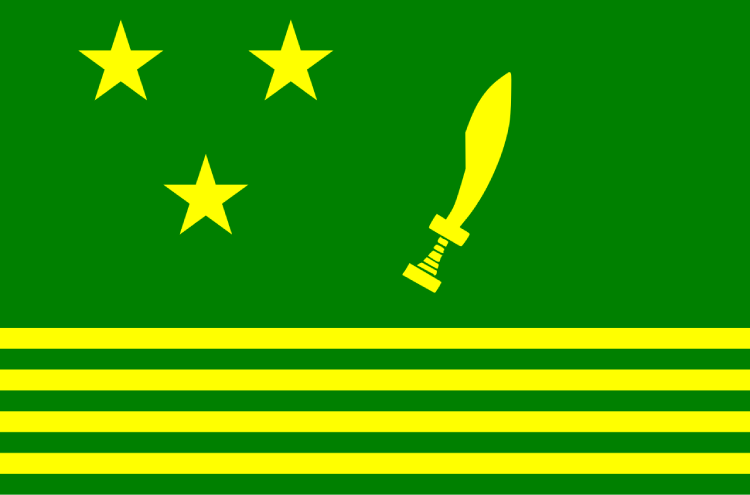
Party Flag
Gorkha National Liberation Front
Party Symbol
--
 --
Party Founded Date 05 Apr 1980
Party Headquarters

Dr. Zakir Hussain Road, Darjeeling (West Bengal)

Party President --
Secretary Neeraj Zimba
Parliamentary Chairperson Mann Ghising
Social Handles
facebook

Gorkha National Liberation Front (GNLF) Flag

The Gorkha National Liberation Front flag is green with a khukuri and stars. Several sources also depict thin yellow stripes near the base. This emblem conveys a stable political identity for supporters. Contemporary reporting in 2009 recorded the green flag with a khukuri and stars.

Gorkha National Liberation Front's election symbol is not permanently reserved with the Election Commission of India. As a registered unrecognised party, it uses allotted or ally symbols. In the 2019 Darjeeling bypoll, its nominee contested on the BJP lotus. In 2021, Neeraj Zimba retained Darjeeling on the BJP symbol.

GNLF: Symbol Use and Flag Status

Alliance arrangements shaped symbol use in the hills. In 2019, the United Gorkha Alliance fielded Neeraj Zimba. GJM (Gurung), GNLF, and BJP backed him on the BJP symbol. In 2021, GNLF backed the BJP-led NDA. The BJP won Darjeeling and Kurseong, while GJM (Tamang) took Kalimpong. Seat-sharing reflected alliance choices across Darjeeling and Kurseong. Symbol selection followed Election Commission guidelines.

On September 19, 2025, the Election Commission of India delisted GNLF for prolonged non-participation. Delisting ends privileges under the Symbols Order, including common symbol allocation. The party logo references the khukuri-and-stars motif on the flag. These steps do not bar activity, but confirm loss of ECI recognition.

Read More

Gorkha National Liberation Front (GNLF) Ideology

The Gorkha National Liberation Front ideology emphasizes the cultural and political rights of the Gorkha community. The party's principles are rooted in advocating for a separate state, Gorkhaland, within India. This governance model aims to address the unique needs and aspirations of the Gorkhas. By focusing on regional autonomy, the party agenda seeks to preserve cultural heritage while improving socio-economic conditions.

GNLF's political philosophy revolves around empowering marginalized communities. Their agenda highlights educational reforms and infrastructural development as key priorities. The party believes that economic growth should be inclusive, benefiting all sections of society. GNLF's governance model advocates for transparent administration and public accountability, ensuring citizens' voices are heard in decision-making processes.

GNLF: Focus on Cultural Identity

The Gorkha National Liberation Front principles emphasize safeguarding linguistic diversity. Language plays a crucial role in their political philosophy, promoting Nepali as a medium of instruction and communication. The party's ideology supports cultural preservation through festivals and traditional practices. This approach strengthens community bonds while fostering unity among diverse ethnic groups.

GNLF's governance model incorporates sustainable development strategies, balancing ecological conservation with infrastructure growth. Environmental protection is integral to their party agenda, aiming to reduce carbon footprints in the region. The GNLF ideology aligns with global sustainability goals, reflecting their commitment to a greener future. Their political philosophy also includes healthcare improvements, striving for accessible medical services.

Read More

Gorkha National Liberation Front (GNLF) Principles

The Gorkha National Liberation Front principles emphasize the pursuit of autonomy for the Gorkha community. Central to the Gorkha National Liberation Front ideology is advocating for a separate state within India to safeguard cultural identity and socio-economic development. The party values encompass promoting peace, unity, and justice within the Gorkha populace.

The governance model of the Gorkha National Liberation Front prioritizes democratic participation and grassroots involvement in decision-making processes. Their political beliefs advocate for equitable resource distribution and enhanced education and healthcare facilities for the marginalized sections of society. The Gorkha National Liberation Front principles also include preserving traditional customs while integrating modern advancements.

GNLF: Advocating for Autonomy and Cultural Preservation

GNLF's principles underscore the importance of regional autonomy to protect the unique cultural heritage of the Gorkha community. The party's ideology supports negotiations with central authorities to achieve its objectives peacefully. They believe in fostering economic growth through sustainable practices and local entrepreneurship.

The party values transparency, accountability, and integrity in governance, reflecting their commitment to ethical leadership. Their governance model includes initiatives for youth empowerment, aiming to engage younger generations in political processes. The political beliefs of GNLF highlight inclusive policies that accommodate diverse ethnic groups within their region.

Read More
Gorkha National Liberation Front (GNLF) Organisation Structure

The Gorkha National Liberation Front (GNLF) operates with a defined party organization structure. The central body, known as the Central Committee, holds the highest decision-making power. It oversees strategic planning and policy formulation. This governing body ensures alignment with the party's goals and objectives.

Leadership within the GNLF structure is pivotal for its operations. The President leads the party hierarchy, supported by senior vice presidents and general secretaries. These leaders manage critical functions and ensure seamless coordination across various levels of the political framework.

GNLF Leadership and Governing Body

The GNLF leadership comprises several key positions to maintain an effective political framework. Alongside the President, multiple vice presidents are focusing on specific regions or issues. They play crucial roles in decision-making processes and implementing party policies at local levels.

The general secretaries are responsible for administrative tasks within the party organization. They manage communications between different branches of the GNLF, ensuring that directives from the top leadership reach grassroots workers effectively. This streamlined communication supports efficient execution of party strategies.

Party Hierarchy and Political Framework of GNLF

In the GNLF structure, district committees form a significant part of its political framework. These committees operate under regional secretaries who report directly to the general secretaries. The district committees focus on local governance issues and electoral strategies.

The block-level committees further decentralize authority within the Gorkha National Liberation Front structure. These units address grassroots concerns, ensuring that community needs align with party objectives. Block presidents lead these committees, facilitating bottom-up feedback to higher authorities.

Decision-Making Process in GNLF Structure

Decision-making within the Gorkha National Liberation Front is a multi-tiered process involving consultation at various levels. The Central Committee deliberates on major policies, while district committees provide localized insights into challenges and opportunities faced by constituents.

Regular meetings at different organizational levels ensure dynamic interaction within the party hierarchy. Feedback loops between block-level leaders and central leadership aid in refining strategies according to changing socio-political dynamics.

PositionRole
PresidentOverall Leadership
Vice-PresidentsRegional Oversight
General SecretariesAdministration & Communication
District SecretariesLocal Governance & Strategy Implementation
Block PresidentsGrassroots Mobilization & Feedback Collection

The Role of Committees in GNLF Organization

The committee system is integral to the Gorkha National Liberation Front's political framework. It enables decentralized governance while maintaining a cohesive party organization across diverse regions.

This approach allows for tailored responses to regional challenges, enhancing responsiveness to constituent needs. Committees serve as essential conduits for policy dissemination from central leadership to local communities.

Sustaining Party Unity in GNLF Structure

The Gorkha National Liberation Front emphasizes unity through consistent communication channels across its organizational structure. Regular training programs for members ensure adherence to party ideology and the effective implementation of policies.

This structured approach fosters loyalty among members, reinforcing commitment to collective goals despite regional differences within its extensive political framework.

Read More

Gorkha National Liberation Front (GNLF) Timeline

2026

As of 2026, GNLF remains a registered political organisation with historical significance in the Gorkhaland movement, allied with the NDA in hill politics, despite reduced electoral contest activity and administrative challenges.
2025

Delisting Notice: In 2025, the Election Commission of India issued show-cause notices and later delisted GNLF for not contesting elections over recent cycles, though the party retains organisational identity and may appeal the decision.

2024

GNLF continued cooperation with the BJP in electoral contexts, sustaining its alliance role in the Darjeeling Lok Sabha and local polls.

2023

The party’s youth wing campaigned for the fulfillment of regional demands from alliance partners ahead of the upcoming elections.

2022

GNLF stayed politically active as a BJP ally in hill politics, advocating Gorkhaland interests and regional development.

2021

GNLF leaders participated through alliance politics; party members, including Neeraj Tamang Zimba, won assembly seats on BJP tickets, reflecting integration with larger coalitions.

2020

The party maintained its registration and continued alliance engagement, though it did not win significant legislative seats.

2019

GNLF allied with the Bharatiya Janata Party (BJP) in the Darjeeling hills, contributing to poll strategies in the region.

2016

2016-2018: GNLF’s electoral relevance continued to diminish, with rival parties like GJM and newer hill outfits gaining ground.

2015

Subhash Ghisingh, GNLF’s founder, passed away, marking the end of an era for the original leadership.

2011

Subhash Ghisingh returned to Darjeeling after a period of exile, attempting to revive the influence of the GNLF amidst new political dynamics.

2007

Bimal Gurung formed the Gorkha Janmukti Morcha (GJM), which quickly gained popularity over GNLF, challenging its dominance in Darjeeling politics.

2004

The influence of the GNLF started to wane as internal conflicts and challenges from emerging political groups began to surface.

1992

Subhash Ghisingh was appointed as the Chairman of the Darjeeling Gorkha Hill Council, giving him significant administrative powers in the region.

1988

The Gorkhaland Accord was signed between the Government of India, the Government of West Bengal, and the GNLF. This accord led to the establishment of the Darjeeling Gorkha Hill Council.

1980

The Gorkha National Liberation Front (GNLF) was founded by Subhash Ghisingh with the primary objective of establishing a separate state of Gorkhaland within India.

Disclaimer:The information provided on this page is sourced from various publicly available platforms including https://en.wikipedia.org/, https://sansad.in/ls, https://sansad.in/rs, https://pib.gov.in/, https://affidavit.eci.gov.in/ and the official websites of state assemblies respectively. While we make every effort to maintain the accuracy, comprehensiveness and timeliness of the information provided, we cannot guarantee the absolute accuracy or reliability of the content. The data presented here has been compiled without consideration of the objectives or opinions of individuals who may access it.

Notifications
Settings
Clear Notifications
Notifications
Use the toggle to switch on notifications
  • Block for 8 hours
  • Block for 12 hours
  • Block for 24 hours
  • Don't block
Gender
Select your Gender
  • Male
  • Female
  • Others
Age
Select your Age Range
  • Under 18
  • 18 to 25
  • 26 to 35
  • 36 to 45
  • 45 to 55
  • 55+