


Get Updates
Get notified of breaking news, exclusive insights, and must-see stories!
Home | Political Parties | Biju Janata Dal

Biju Janata Dal

The Biju Janata Dal (BJD) is a prominent regional political party in India, primarily based in Odisha. Established in 1997 by its founder Naveen Patnaik, the party is named after his father, Biju Patnaik, a celebrated leader in Odisha's political history. Over the years, the Biju Janata Dal has emerged as a significant player in Indian politics, known for its focus on regional development, social security, and economic inclusion.

The BJD's core political ideology emphasizes secularism, regional empowerment, and sustainable growth for all. The party has consistently advocated for issues central to Odisha, such as infrastructure development and disaster management. Under the leadership of Naveen Patnaik, the party has maintained a prolonged majority in the Odisha Legislative Assembly, shaping policies to address both rural and urban challenges. Recognized for its dedicated governance model, the Biju Janata Dal remains a vital force in India's democratic framework.

Read More

By Administrator

Time Square

Monday, October 13, 2025, 05:16:50 PM [IST]

`

Biju Janata Dal (BJD) Information

Party Name Biju Janata Dal
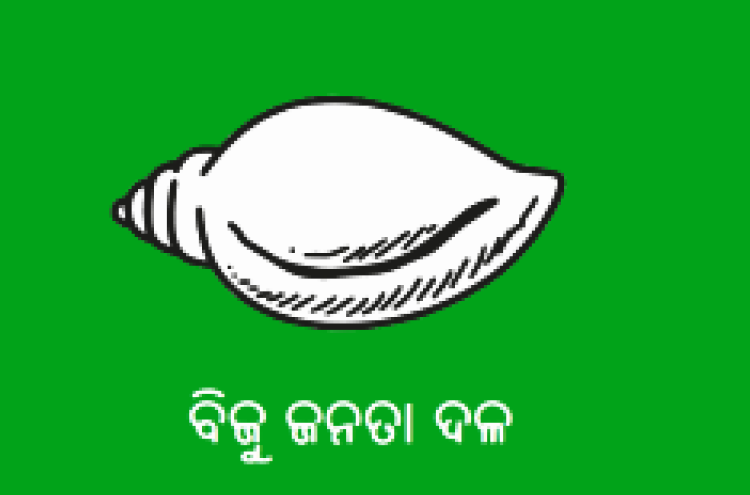
Party Flag
Biju Janata Dal
Party Symbol
Conch
 Conch
Founder Naveen Patnaik
Party Founded Date 26 Dec 1997
Split From Janata Dal
No. of MPs Loksabha : 0
Rajyasabha : 7
Party Headquarters

Sankha Bhawan,Plot No. 798, Unit-VI, Bhubaneswar�751001, Odisha, India

Party President Naveen Patnaik
Rajya Sabha Leader Sasmit Patra
Student Wing Biju Chhatra Janata Dal
Youth Wing Biju Yuva Janata Dal
Women's Wing Biju Mahila Janata Dal
Labour Wing Biju Shramik Samukhya
Peasants Wing Biju Krushak Janata Dal
Political Position Centre-left to Centre-right
Website www.bjdodisha.org.in

Biju Janata Dal (BJD) Flag

Biju Janata Dal election symbol is the Conch. The Election Commission of India reserves it for the recognised state party in Odisha. It appears on EVMs and ballots beside BJD candidates. This anchors the Biju Janata Dal party logo in public recall and political identity.

ECI regulates symbols under its reservation rules, not party flags in elections. Biju Janata Dal flag usage is determined by the organisation for rallies, offices, and campaign materials. Public sources show a flag featuring the conch emblem. Specifications are issued by the party, not the Commission.

BJD: Symbol Use and Flag Practices

Since its founding in 1997, the conch has remained the BJDs official ballot mark in Odisha. From 1998 to 2009, it allied with the National Democratic Alliance. The party contested on its own symbol in Odisha throughout. Ballot papers and EVM displays reflected this continuity. This aided voter recall and branding.

Regulatory oversight remains active. In February 2024, the Election Commission of India sought explanations. It concerned alleged use of the conch in government advertisements. That reinforced rules on neutrality in publicity. Seatsharing arrangements with allies do not alter the symbol for Biju Janata Dal nominees in Odisha. These apply across Lok Sabha contests.

Read More

Biju Janata Dal (BJD) Ideology

The Biju Janata Dal (BJD) ideology revolves around regional development, inclusive politics, and grassroots empowerment. Established in 1997, the party emphasizes fostering Odisha’s cultural identity while promoting sustainable economic growth. Its political philosophy highlights transparency, secularism, and social justice. The BJD integrates regional aspirations with national priorities, advocating development without compromising Odisha’s cultural ethos.

The party’s principles focus on poverty eradication, healthcare enhancement, women empowerment, and disaster management. Known for its pro-people policies, the BJD advocates inclusive development through targeted welfare schemes. Its governance model is centered on decentralization, ensuring local-level participation in decision-making processes. It also emphasizes infrastructure advancements alongside social welfare initiatives.

Focus on Economic Development: BJD’s Core Agenda

The Biju Janata Dal party agenda strongly promotes industrial growth while balancing environmental sustainability. It prioritizes investment in agriculture, irrigation, and renewable energy. The party supports education and skill development to improve employability in Odisha. Its political philosophy also promotes infrastructure development, such as better road connectivity and rural electrification, for broader economic growth.

In governance, the BJD ideology aligns with maintaining federalistic balance, often advocating special category status for Odisha. It consistently addresses local issues through state-focused policies. The Biju Janata Dal principles emphasize integrity and clean politics, avoiding alliance-based confrontations whenever possible. This demonstrates its commitment to stable and inclusive governance models.

Read More

Biju Janata Dal (BJD) Principles

The principles of the Biju Janata Dal (BJD) are rooted in inclusive development and regional empowerment. The party prioritizes the welfare of Odisha's citizens, emphasizing equitable access to resources and sustainable development. These values reflect the BJD's commitment to socioeconomic progress while upholding the state's unique cultural heritage.

BJD's governance model focuses on transparency, accountability, and welfare-based initiatives. The party actively promotes policies improving rural livelihoods, healthcare, and education. These core party values aim to bridge regional inequalities, addressing the diverse needs of Odisha's people through data-driven policymaking and grassroots engagement.

BJD Ideology: Promoting Regional Growth

The Biju Janata Dal ideology emphasizes Odisha's autonomy in managing its resources. BJD consistently advocates federal policies ensuring state-specific financial and developmental autonomy. The party champions issues such as disaster management, rural infrastructure, and empowerment of marginalized communities, aligning governance efforts with grassroots realities.

Biju Janata Dal principles highlight a people-centric approach by blending traditional governance with innovative strategies. Stressing inclusive growth, the BJD actively pursues women’s empowerment through reservation policies and community-driven programs. Environmental conservation remains central, with the BJD addressing climate change challenges through sustainability initiatives.

The political beliefs of the BJD reflect dedication to Odisha’s holistic development. Its policies prioritize citizen welfare, empowerment, and accountability. This unwavering focus on regional progress distinguishes the BJD among India's political landscape, ensuring sustainable and inclusive governance for Odisha’s future generations.

Read More
Biju Janata Dal (BJD) Organisation Structure

The Biju Janata Dal (BJD) is organized with a well-defined political framework that ensures efficient functioning. The party’s structure is hierarchical, with roles outlined across different levels to maintain clarity in operations. This organization facilitates seamless decision-making processes across local, district, and state levels.

The central leadership of the Biju Janata Dal holds the highest authority, driving the party’s policy decisions and strategies. The BJD president leads this governing body and serves as the nucleus of the party's leadership. Supporting the president are senior leaders, including vice-presidents, general secretaries, and key advisors, who oversee administrative functions.

The Leadership Hierarchy of the BJD

The core of the BJD’s leadership rests on its governing body, which formulates the party’s major decisions. Below the president in the hierarchy are working committees and councils responsible for implementing the party's policies. The State Executive Committee is a pivotal group within this structure, featuring state-level officials and key members who govern day-to-day operations.

District-level units coordinate efforts within individual districts, ensuring grassroots representation within the party. Each district committee comprises a president, secretary, and members, helping strengthen the party's outreach. Zonal committees further decentralize governance, reporting issues and developments to higher bodies.

Decentralized Organization of the BJD

The party organization relies on a decentralized model, allowing a stronger connection with regional constituencies. Local-level bodies, such as block and village committees, are essential links that promote direct communication with the grassroots. These units represent citizens' concerns while implementing party programs.

The Biju Janata Dal values inclusiveness, involving members from diverse regional and social backgrounds in its structure. Youth and women’s wings within the party focus on increasing representation and workforce diversity. Specialized organizational bodies ensure targeted efforts to address issues affecting specific demographics.

Decision-Making Processes in the BJD

The decision-making processes in the Biju Janata Dal combine centralized command and grassroots consultation. Major decisions related to electoral strategies and policies pass through the party president and senior leadership. However, recommendations often begin at local levels, moving progressively upward before finalization.

Regular meetings at each organizational tier ensure that the decision-making process integrates feedback from every level. This ensures the party remains aligned with the electorate's needs while retaining leadership control. Organizational discipline is enforced to maintain a smooth workflow across all units.

Key Features of the BJD’s Political Framework

The Biju Janata Dal’s political framework prioritizes efficient operations, transparency, and public engagement. Leadership roles are clearly delineated, with responsibilities distributed across various committees. This structure supports implementing policies and campaign strategies effectively.

The BJD places significant emphasis on grassroots mobilization, leveraging its district and local units to maintain strong voter connections. Coordination between state officials and local representatives enhances synergy and ensures consistent messaging throughout all ranks of the party hierarchy.

Governing Principles: Accountability and Mobilization

The BJD’s accountability mechanisms are rooted in its commitment to aligning with public sentiment. Grassroots leaders are accountable to district heads, who report further to the state leadership. This bottom-up feedback loop strengthens internal governance and improves responsiveness.

The party also excels in electoral preparedness by mobilizing resources through its well-structured hierarchy. Youth and women’s wings play crucial roles in rallying supporters and disseminating information during elections, showcasing a comprehensive organizational strategy.

LevelFocus Area
Central LeadershipPolicy-making and election strategy
State Executive CommitteeGovernance and operational oversight
District CommitteesGrassroots coordination
Block CommitteesLocal outreach
Youth/Women WingsTargeted engagement

Read More

Biju Janata Dal (BJD) Timeline

2023

The BJD remains politically dominant in Odisha, with Naveen Patnaik leading the state as Chief Minister. The party emphasizes development and welfare programs.

2019

The BJD again retained power in Odisha in the 2019 state elections, creating history by winning five consecutive terms, led by Naveen Patnaik.

2014

The BJD won the 2014 Odisha assembly elections with a sweeping majority, further cementing Naveen Patnaik\'s image as a popular leader in the state.

2014

The BJD won 20 out of 21 Lok Sabha seats in Odisha, demonstrating its dominance in the state during the general elections.

2009

Ahead of the 2009 general and state assembly elections, BJD ended its alliance with the BJP over ideological differences, marking a significant shift in Odisha politics.

2009

Winning 103 out of 147 assembly seats, the BJD secured an absolute majority in the Odisha state elections for the first time as an independent party.

2004

The BJD, in coalition with the BJP, retained power in Odisha in the 2004 elections, further solidifying Naveen Patnaik\'s stronghold in the state.

1997

The Biju Janata Dal (BJD) was founded by Naveen Patnaik, named after his father, Biju Patnaik, a prominent leader of Odisha as well as a former CM.

1997

Under Naveen Patnaik\'s leadership, BJD won the Odisha state assembly elections and formed the government in alliance with the BJP, marking the beginning of its political dominance in Odisha.

Disclaimer:The information provided on this page is sourced from various publicly available platforms including https://en.wikipedia.org/, https://sansad.in/ls, https://sansad.in/rs, https://pib.gov.in/, https://affidavit.eci.gov.in/ and the official websites of state assemblies respectively. While we make every effort to maintain the accuracy, comprehensiveness and timeliness of the information provided, we cannot guarantee the absolute accuracy or reliability of the content. The data presented here has been compiled without consideration of the objectives or opinions of individuals who may access it.

Notifications
Settings
Clear Notifications
Notifications
Use the toggle to switch on notifications
  • Block for 8 hours
  • Block for 12 hours
  • Block for 24 hours
  • Don't block
Gender
Select your Gender
  • Male
  • Female
  • Others
Age
Select your Age Range
  • Under 18
  • 18 to 25
  • 26 to 35
  • 36 to 45
  • 45 to 55
  • 55+