Saumitra Khan
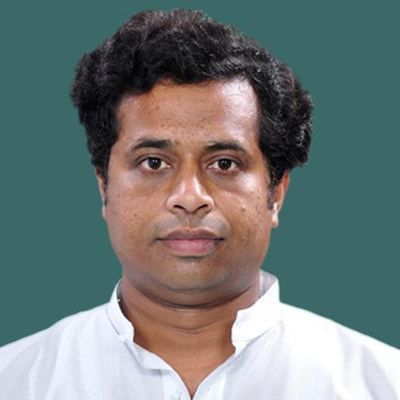
He has been elected to the Lok Sabha for several terms and has, during his political journey, affiliations with both the Trinamool Congress and the Bharatiya Janata Party. Khan became widely known for his work in the organisation, in particular among new voters, and for his bold stance in politics.
He is still, in 2025, a powerful politician whose next steps are eagerly anticipated in the local political scene.
Saumitra Khan Biography
Saumitra Khan was born in West Bengal (his place and date of birth have not been confirmed) and comes from a socially active family of that region. Politically, he made a breakthrough by performing well in local grassroots activism, connecting himself with the community networks, and concentrating on solving the issues of rural and semi-urban constituencies of West Bengal. His later electoral career was mostly based on his local involvement.
He made a debut in national politics when he ran for the Lok Sabha election in his home constituency (at that time it was a reserved seat) on a party ticket. After he was elected, he became a Member of Parliament and started representing his district at the national level. In his first term, he carried out development-oriented work: among other things, he supported the construction of the rural infrastructure, the improvements of education and health systems, and the introduction of welfare schemes for the underprivileged and scheduled caste communities. His work in Parliament was mainly focused on the upliftment of the backward communities and the coming together of those areas which were left behind economically and socially.
One of the major changes in Khan’s political career is when he left the party he was with in the mid-2010s and went to another party after a few disagreements with the leaders of his old one. The switching of the party was the cause of the controversy, and the effect of this was the debate going on not only in his constituency and state politics but also in the town council. Nevertheless, he was able to keep his political base intact and reposition himself under the new party flag, seducing voters with the promises of development and social justice, and also asserting that the change was made just to be able to represent the constituency better.
Besides his political career, Khan is still in touch with social welfare groups and grassroots organisations. Regularly, he directly meets with residents, hears their problems, and conducts public meetings to uncover their concerns. In the course of time, he has been known as a politician who is ready to work with under-communities and take up local issues that may include caste interaction, land access, and welfare distribution.
Even after losing elections, by 2025, Saumitra Khan is still politically vibrant. He continues to be a loudspeaker in state-level debates in West Bengal, mainly on social justice, secularism, and rural development. He has experience from politics for years, which included grassroots activism, national representation, and party realignments, and as a result, he has the insight into constituency-level needs as well as the bigger state politics. Some of the observers view him as a voice of the marginalised, who struggles to find a balance between local needs and broader political dynamics.
Saumitra Khan Personal Life
| Full Name | Saumitra Khan |
| Date of Birth | 08 Dec 1980 (Age 45) |
| Place of Birth | Durlabhpur, Distt. Bankura, West Bengal |
| Party Name | Bharatiya Janata Party |
| Education | 12th Pass |
| Profession | Political and Social Worker |
| Father's Name | Dhananjoy Khan |
| Mother's Name | Chhaya Rani Khan |
| Spouse's Name | Paramita Roy Chowdhury |
| Spouse's Profession | School Teacher (W.B.Govt) |
| Children | 2 Daughter(s) |
Saumitra Khan Net Worth
Interesting Facts about Saumitra Khan
Political Timeline of Saumitra Khan
- 2024: Contested the Lok Sabha election but lost.
- 2020: Since September 13, 2020, he has been a Member of the Standing Committee on Coal, Mines, and Steel. Additionally, he has served as a Member of the Consultative Committee for the Ministry of Social Justice and Empowerment.
- 2019: Re-elected to 17th Lok Sabha for the second term in May 2019. He served as a Member of the Committee on Welfare of Scheduled Castes and Scheduled Tribes. Additionally, since July 24, 2019, holds the position of Member of the Standing Committee on Transport, Tourism, and Culture.
- 2016: He became a Member of Standing Committee on Commerce.
- 2014: He became Member, Consultative Committee, Ministry of Urban Development, Housing and Urban Poverty Alleviation
- 2014: From 1 Sep. 2014 to 31 Aug. 2016 he was the Member of Standing Committee on Energy.
- 2014: He was elected to the 16th Lok Sabha after defeating Susmita Bauri of CPM from Bishnupur constituency.
- 2011: Saumitra Khan won West Bengal Assembly Elections and became a member of Legislative Assembly from Katulpur seat. He fought the election on Congress ticket and defeated Purnima Bagdi of CPM.
Disclaimer:The information provided on this page is sourced from various publicly available platforms including https://en.wikipedia.org/, https://sansad.in/ls, https://sansad.in/rs, https://pib.gov.in/, https://affidavit.eci.gov.in/ and the official websites of state assemblies respectively. While we make every effort to maintain the accuracy, comprehensiveness and timeliness of the information provided, we cannot guarantee the absolute accuracy or reliability of the content. The data presented here has been compiled without consideration of the objectives or opinions of individuals who may access it.

List of Popular Leaders in India





Politicians by Age And Professions
Statewise Politicians List
- Andhra Pradesh Politicians
- Arunachal Pradesh Politicians
- Bihar Politicians
- Goa Politicians
- Gujarat Politicians
- Karnataka Politicians
- Kerala Politicians
- Madhya Pradesh Politicians
- Maharashtra Politicians
- Odisha Politicians
- Puducherry Politicians
- Tamil Nadu Politicians
- Telangana Politicians
- Uttar Pradesh Politicians
- Uttarakhand Politicians
-
 Sign in with Google
-
Block for 8 hours
-
Block for 12 hours
-
Block for 24 hours
-
Don't block


 Click it and Unblock the Notifications
Informed.
- Male
- Female
- Others
- Under 18
- 18 to 25
- 26 to 35
- 36 to 45
- 45 to 55
- 55+