Kapil Sibal
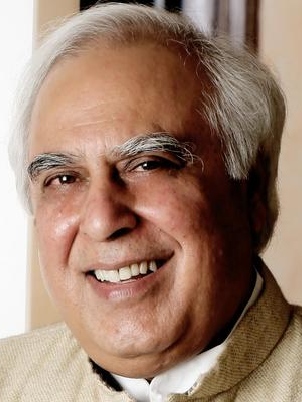
Kapil Sibal Biography
Kapil Sibal was born in Jalandhar, Punjab, to the late Hira Lal Sibal and the late Kailash Rani Sibal. His father, H. L. Sibal, a renowned advocate, and his family migrated to India during the partition in 1947. Kapil Sibal completed his schooling at St. John's High School and moved to Delhi in 1964, where he joined St. Stephen's College at the University of Delhi. He earned his LL.B. degree from the Faculty of Law at the University of Delhi and later completed an M.A. in History.
In 1970, Kapil Sibal began his legal career by joining the bar association. In 1973, he qualified for the Indian Administrative Services and was offered a position, but he chose to establish his own law practice. He attended Harvard Law School, where he completed an LL.M. in 1977. By 1983, he was recognised as a senior lawyer and was appointed Additional Solicitor General of India in 1989.
Kapil Sibal's political career began when he was nominated to the Rajya Sabha in July 1998, representing the Indian National Congress party from Bihar. He served as the Additional Solicitor General of India from December 1989 to December 1990 and was President of the Supreme Court Bar Association on three occasions. In 2004, he contested and won a seat in the Lok Sabha from a constituency in Delhi and was re-elected in 2009.
During the Congress-led UPA coalition government, Sibal held various ministerial roles. His first cabinet-level assignments were in 2006, when he managed the Ministry of Science & Technology and the Ministry of Ocean Development, which was soon renamed the Ministry of Earth Sciences. In 2009, he became the Minister for Human Resource Development, where he championed a law requiring free elementary education for all children aged 6 to 14. In January 2011, he also took on the role of Minister for Communications and Information Technology, continuing in both positions until late 2012. He was then given the additional portfolio of Minister for Law and Justice in May 2013, holding both roles until the UPA government ended in May 2014. Following the electoral defeat, he lost his parliamentary seat but returned to the Rajya Sabha two years later.
Sibal is known for his oratory skills and as an effective troubleshooter for the government. In 2012, he led negotiations on India's first anticorruption bill and worked on modifying the Information Technology Act of 2000, addressing public concerns about internet censorship.
In sports and recreation, he is a member of several clubs and complexes: the Air Force Sports Complex, Delhi Flying Club Limited, Belvedere Club at Oberoi Hotel in New Delhi, India Habitat Centre, and India International Centre, both in New Delhi.
Kapil Sibal married Nina Sibal in 1973, and they had two sons, Amit and Akhil, who are both lawyers. Nina Sibal passed away in 2000 due to breast cancer. In 2005, Kapil Sibal married Promila Sibal. His younger brother, Kanwal Sibal, is a retired senior diplomat and former Foreign Secretary of India.
Kapil Sibal Personal Life
| Full Name | Kapil Sibal |
| Date of Birth | 08 Aug 1948 (Age 77) |
| Place of Birth | Jalandhar (Punjab) |
| Party Name | Indian National Congress |
| Education | Post Graduate |
| Profession | Senior Advocate, Supreme Court of India |
| Father's Name | Late Hira Lal Sibal |
| Mother's Name | Late Kailash Rani Sibal |
| Spouse's Name | Promila Sibal |
| Children | 2 Son(s) |
| Website | kapilsibal.in |
Kapil Sibal Net Worth
Interesting Facts about Kapil Sibal
In 1994, he was the only lawyer to appear in the Parliament, and successfully defended a Supreme Court judge during impeachment proceedings
He has represented India in the Annual Meetings of the World Economic Forum in 2005 and 2009 held at Davos, Switzerland.
He led the Indian delegation to the Annapolis Conference, USA, held to gather International support for establishment of a Palestinian state and the realization of Israeli–Palestinian peace during November 2007.
He led the Indian delegation to the United Nations Framework Convention on Climate Change (UNFCCC) at Bali in December 2007.
Sibal approved the creation of an Indian Institute of Technology Muddenahalli as part of the 11th- 5 year plan.
He is also the person who introduced the Continuous and Comprehensive Evaluation (CCE) system in India for Class IX and Class X and also started the changes in the IIT JEE pattern.
He has laid the foundation stone for IIT Patna.
In 2011 Sibal has also announced a touchscreen tablet computer,co-developed with private partnership, it was available to students for Rs.1,500 .
He Led the Indian Delegation to the Human Rights Commission, Geneva, January 1991.
He investigated cases of arbitrary detentions throughout the world; analysed detention and detention laws in the context of the Universal Declaration of Human Rights and the Covenant for Civil and Political Rights and advised the Government to release individuals from detention if such detention was not in accordance with the above mentioned international instruments; involved in the protection of our national heritage and in particular, archaeological sites which have immense historical and cultural significance.
He was the Member, (i) Working Group on Arbitrary Detentions set up by the Human Rights Commission, Geneva, (ii) Board of International AIDS Vaccine Initiative, 2002-2011 and (iii) Programme Board of the Bill & Melinda Gates Foundation’s India AIDS Initiative, 2003; contributed articles on important issues such as security, nuclear proliferation, terrorism, etc. in national dailies and periodicals.
He represented minorities and minority educational institutions for the last more than two decades
Member of (i) Air Force Sports Complex, (ii) Delhi Flying Club Limited, (iii) Belvedere Club, Oberoi Hotel, New Delhi, (iv) India Habitat Centre, New Delhi and (v) India International Centre, New Delhi
He was the Spokesperson, Congress Party, 1998-2004; Elected as Secretary, Congress Parliamentary Party, 2000-2002; was Member, (i) Board of Management of I.G.N.O.U. and (ii) Governing Body, St. Stephen's College, 1993; Member, (i) Press Council of India, 2001-2004, (ii) Executive Council, I.C.P.S., 2001-2004, (iii) various parliamentary committees, 2001-2004 and (iv) several Group of Ministers under UPA government
He was the Member, Indian Parliamentary delegation to South Africa, Nigeria and Senegal to advocate against Pakistan involvement in cross-border terrorism, 2002; Convenor, International Policy Makers Conference of HIV/AIDS, New Delhi, 2002; participated in the international workshop on “Peaceful Nuclear Use and the Future of Non-Proliferation: Coping with the Diversion of Nuclear Materials and Nuclear Terrorism” organized by Japan Atomic Industrial Forum, Tokyo (Japan), 2002; was the first ever Member of Parliament to have visited the icy continent of Antarctica (2-4 Feb., 2005) and stayed at the Maitri base in sub-zero temperature, for getting a first hand experience about the hardships being faced by the Indian scientists; responsible for setting up an Indian research station at the Arctic in July 2008.
Some of his Books Published:
I-witness (anthology of poems):Partial Observation was published by Roli Books, New Delhi in 2008 and (ii) My World Within (anthology of poems), 2012
He has also written lyrics of the songs "Tere bina" and "Mast hawa" for 2016 Hindi film Shorgul.
In August 2008, he has also contributed several articles on various prominent issues such as security, nuclear proliferation, and terrorism in national dailies.
Political Timeline of Kapil Sibal
- 2022: He was re-elected to the Rajya Sabha for his third term. He served as a member of the Committee on External Affairs and was also a member of the Consultative Committee for the Ministry of Home Affairs from September 2022 to June 2024.
- 2019: He served as a member of the Committee on External Affairs. Additionally, from October 2019 to July 2022, he was a member of the Consultative Committee for the Ministry of Finance.
- 2016: He was a member of the Committee on Commerce and hee was elected to the Rajya Sabha for his second term.
- 2011: He was the Union Cabinet Minister for Communications and Information Technology, January 2011 – May 2014. 2013He held the additional charge as Union Cabinet Minister for Law and Justice, May 2013 – May 2014.
- 2009: He served as the Member of the Fifteenth Lok Sabha (second term), May 2009 – May 2014. He was the Union Cabinet Minister for Human Resource Development, May 2009 – October 2012. In the 2009 general elections, he defeated Vijender Gupta of BJP by 200,710 votes. He was also the Union Cabinet Minister for Science & Technology and Earth Sciences in the Fourteenth Lok Sabha.
- 2008: Responsible for setting up an Indian research station at the Arctic.
- 2007: Led the Indian delegation to the Annapolis Conference in the USA to gather international support for a Palestinian State and Israeli-Palestinian Peace (November). Led the Indian delegation to the U.N. Framework Convention on Climate Change (U.N.F.C.C.C.) in Bali, Indonesia (December).
- 2005: Represented India at the Annual Meeting of the World Economic Forum in Davos, Switzerland, on January 26-27. Became the first Member of Parliament to visit Antarctica (February 2-4), staying at the Maitri base to experience the hardships faced by Indian scientists. Awarded the Jawaharlal Nehru Birth Centenary Award for 2004-05 by the Indian Science Congress Association during the 92nd Indian Science Congress in Ahmedabad, Gujarat (January 3-7).
- 2004: He was a member of the Joint Parliamentary Committee on Stock Market Scam and Matters Relating. In the 2004 general elections, he defeated Smriti Z. Irani of BJP by 79,415 votes.
- 2002: Member of the Indian Parliamentary delegation to South Africa, Nigeria, and Senegal to advocate against Pakistan's involvement in cross-border terrorism. Convenor of the International Policy Makers Conference on HIV/AIDS in New Delhi. Participated in the international workshop on “Peaceful Nuclear Use and the Future of Non-Proliferation” organized by Japan Atomic Industrial Forum in Tokyo.
- 2001: Served as President of the Supreme Court Bar Association. Held several roles including Member of the Press Council of India, the Executive Council of I.C.P.S. He was a member of the Joint Parliamentary Committee on Stock Market Scam and Matters Relating, 2001–2002.
- 2000: Elected Secretary of the Congress Parliamentary Party from 2000 to 2002.
- 1998 : Kapil Sibal was elected to the Rajya Sabha. Spokesperson for the Congress Party from 1998 to 2004.
Kapil Sibal Early Life
- 1997: Served as President of the Supreme Court Bar Association.
- 1995: Served as President of the Supreme Court Bar Association.
- 1994: Addressed Parliament during the historic impeachment proceedings against Justice V. Ramaswamy, a sitting judge of the Supreme Court.
- 1993: Served as a member of the Board of Management of I.G.N.O.U. and the Governing Body of St. Stephen's College.
- 1989: Served as Additional Solicitor General of India, Dec. 1989 – Dec. 1990.
- 1972: Joined the Bar.
Kapil Sibal Achievements
Kapil was awarded Jawaharlal Nehru Birth Centenary Award for the year 2004-05, by the Indian Science Congress Association during the 92nd Indian Science Congress, held at Ahmedabad (Gujarat), 3-7 Jan. 2005.
He was offered honorary degrees of Doctor of Literature (Honoris Causa) at the 55th annual convocation of Punjab University, February 2006.
He was conferred with Lifetime Achievement Award for outstanding contribution and excellence in the legal field by the Legal Era Magazine in 2016.
Disclaimer:The information provided on this page is sourced from various publicly available platforms including https://en.wikipedia.org/, https://sansad.in/ls, https://sansad.in/rs, https://pib.gov.in/, https://affidavit.eci.gov.in/ and the official websites of state assemblies respectively. While we make every effort to maintain the accuracy, comprehensiveness and timeliness of the information provided, we cannot guarantee the absolute accuracy or reliability of the content. The data presented here has been compiled without consideration of the objectives or opinions of individuals who may access it.
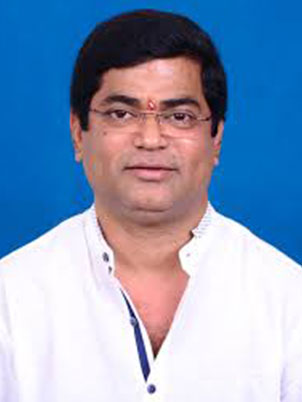
List of Popular Leaders in India





Politicians by Age And Professions
Statewise Politicians List
- Andhra Pradesh Politicians
- Arunachal Pradesh Politicians
- Bihar Politicians
- Goa Politicians
- Gujarat Politicians
- Karnataka Politicians
- Kerala Politicians
- Madhya Pradesh Politicians
- Maharashtra Politicians
- Odisha Politicians
- Puducherry Politicians
- Tamil Nadu Politicians
- Telangana Politicians
- Uttar Pradesh Politicians
- Uttarakhand Politicians
-
 Sign in with Google
-
Block for 8 hours
-
Block for 12 hours
-
Block for 24 hours
-
Don't block


 Click it and Unblock the Notifications
Informed.
- Male
- Female
- Others
- Under 18
- 18 to 25
- 26 to 35
- 36 to 45
- 45 to 55
- 55+