Rajnath Singh
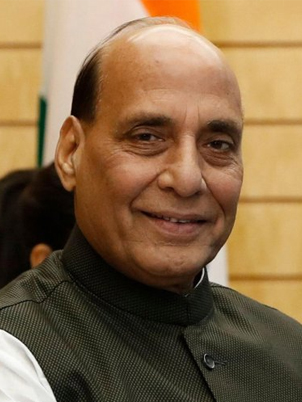
Rajnath Singh Biography
Rajnath Singh's journey from a humble background in Chandauli, Uttar Pradesh, to becoming a pivotal figure in Indian politics is a testament to his resilience, dedication, and commitment to the Bharatiya Janata Party's (BJP) Hindutva ideology. Born on July 10, 1951, Singh's political voyage is marked by significant contributions to the BJP, illustrating the party's democratic essence and its vision for India.
Born to Ram Badan Singh and Gujarati Devi, a farming family in southeastern Uttar Pradesh, his educational pursuit led him to obtain a master's degree in physics from Gorakhpur University. Initially embarking on a teaching career, his life took a political turn inspired by his early involvement with Hindu right-wing organizations. His engagement with the Rashtriya Swayamsevak Sangh (RSS) from a young age laid the foundation for his future in Indian politics.
Rajnath Singh's entry into politics was marked by his association with the Bharatiya Jana Sangh, the RSS's political wing, which later evolved into the BJP. His commitment to political activism was tested during the Emergency period declared by then-Prime Minister Indira Gandhi, culminating in his detention. This period of turmoil, however, did not deter Singh, and he emerged stronger, eventually being elected to the Uttar Pradesh state legislature.
Singh's political acumen led him to various leadership roles within the BJP and its youth wing, the Bharatiya Janata Yuva Morcha (BJYM). His ascent within the party showcased his ability to navigate the complexities of both state and national politics. As Education Minister of Uttar Pradesh, his tenure was marked by efforts to infuse Hindu values into the education system, a move that sparked debate yet underscored his commitment to the Hindutva ideology.
The transition to national politics saw Rajnath Singh taking on significant responsibilities, including a stint as the Minister of Surface Transport, where he launched ambitious plans to enhance India's highway network. His leadership was further exemplified during his tenure as the Chief Minister of Uttar Pradesh, albeit briefly, and later as the Minister of Agriculture and Food Processing.
As President of the BJP, Singh aimed to align the party more closely with Hindutva principles, navigating internal dynamics and steering the party through national elections. His return to the presidency in 2013 highlighted his unwavering focus on religious issues and the promotion of cultural values, reflecting his deep-seated beliefs in the importance of Hindu identity in shaping India's future.
Singh's dedication to public service and his party's ideology culminated in his roles as the Minister of Home Affairs and later, the Minister of Defense in Prime Minister Narendra Modi's cabinet. These positions allowed him to influence India's internal security and defense policies, further cementing his legacy as a key figure in contemporary Indian politics.
From the fields of Uttar Pradesh to the corridors of power in New Delhi, his life reflects the BJP's evolution and its impact on India's political landscape. Singh's contributions to the party and the country underscore the importance of leadership grounded in conviction and the relentless pursuit of one's ideals. As Singh continues to shape India's defence policies, his political journey remains a source of inspiration for many, embodying the spirit of dedicated public service and commitment to national ideals.
Rajnath Singh Personal Life
| Full Name | Rajnath Singh |
| Place of Birth | Bhabhaura |
| Party Name | Bharatiya Janata Party |
| Education | Post Graduate |
| Profession | Agriculture, Politician |
| Father's Name | Ram Badan Singh |
| Mother's Name | Gujarati Devi |
| Spouse's Name | Savitri Singh |
| Spouse's Profession | Homemaker |
| Children | 2 Son(s) 1 Daughter(s) |
| Religion | Hindu |
Rajnath Singh Net Worth
Interesting Facts about Rajnath Singh
During 2014 Lok Sabha election, Rajnath Singh was the national president of the Bharatiya Janta Party when NDA government led by Prime Minister Narendra Modi propelled into power.
As a Union Minister, Rajnath Singh was instrumental in projects like Kisan Call Centre and Farm Income Insurance Scheme.
Political Timeline of Rajnath Singh
- 2024 : Rajnath Singh contested and won from the Lucknow Lok Sabha seat under the BJP banner. He secured the seat by a margin of more than 1.35 lakh votes by defeating Samajwadi Party's Ravidas Mehrotra. Subsequently, he was appointed as the Minister of Defence.
- 2019 : Rajnath Singh again elected MP - Lok Sabha from Lucknow to become the Union Defence Minister in Modi-2 government at centre.
- 2014 : Rajnath Singh elected as an MP - Lok Sabha from Lucknow constituency in UP and appointed the Union Home Minister in the NDA government led by PM Narendra Modi.
- 2009 : Rajnath Singh elected as an MP - Lok Sabha from Ghaziabad constituency in UP.
- 2005 : Rajnath Singh was elected National President of the Bharatiya Janta Party and remained in office from 31 December 2005 to 19 December 2009.
- 2003 : Rajnath Singh became Minister of Agriculture in Prime Miinister Atal Bihari Vajpayee’s cabinet at Centre.
- 2000 : Rajnath Singh became the Chief Minister of Uttar Pradesh
- 1999 : Rajnath Singh was appointed as the Union Minister for Surface Transport in Atal Bihavi Vajpayi led NDA government.
- 1997 : Mr. Singh was elected the State President of the Bharatiya Janta Party for Uttar Pradesh.
- 1991 : Rajnath Singh became Education Minister of Uttar Pradesh.
- 1988 : Rajnath Singh was elected the member of Legislative Council of Uttar Pradesh. The same year he was also appointed as the President of Bharatiya Janta Yuva Morcha, youth wing of the BJP and remained in office till 1990.
- 1977 : Rajnath Singh successfully contested his maiden election and became an MLA from Mirzapur (UP), as a Janta Party candidate.
- 1975 : Rajnath Singh was arrested and detained for participating in JP movement during emergency.
- 1975 : Singh was elevated to the post of District president of Janasangh, Mirzapur in UP.
- 1974 : Rajnath Singh was appointed secretary of the Bharatiya Jana Sangh, Mirzapur (UP) unit.
Rajnath Singh Early Life
- 1973: Member, Bharatiya Jana Sangh
- 1972: Rajnath Singh started working as Shakha Karyavah of RSS in Mirzapur, Uttar Pradesh. He started working as Shakha Karyavah of RSS in Mirzapur, Uttar Pradesh.
- 1969: Organisational Secretary, Akhil Bharatiya Vidyarthi Parishad.
- 1964: Rajnath Singh joined RSS at the age of 13 years
Rajnath Singh Latest News & Updates
-
Defence Minister on two-day visit to Andaman and Nicobar
Rajnath Singh, the Defence Minister of India, is on two-day visit to Andaman and Nicobar.
As per reports, he will review the operational preparedness of ANC or the Andaman and Nicobar Command.
Mr. Singh will also have meeting with the 16th Commander-in-Chief Andaman and Nicobar Command to get the fresh update.
Disclaimer:The information provided on this page is sourced from various publicly available platforms including https://en.wikipedia.org/, https://sansad.in/ls, https://sansad.in/rs, https://pib.gov.in/, https://affidavit.eci.gov.in/ and the official websites of state assemblies respectively. While we make every effort to maintain the accuracy, comprehensiveness and timeliness of the information provided, we cannot guarantee the absolute accuracy or reliability of the content. The data presented here has been compiled without consideration of the objectives or opinions of individuals who may access it.


List of Popular Leaders in India


Politicians by Age And Professions
Statewise Politicians List
- Andhra Pradesh Politicians
- Arunachal Pradesh Politicians
- Bihar Politicians
- Goa Politicians
- Gujarat Politicians
- Karnataka Politicians
- Kerala Politicians
- Madhya Pradesh Politicians
- Maharashtra Politicians
- Odisha Politicians
- Puducherry Politicians
- Tamil Nadu Politicians
- Telangana Politicians
- Uttar Pradesh Politicians
- Uttarakhand Politicians
-
 Sign in with Google
-
Block for 8 hours
-
Block for 12 hours
-
Block for 24 hours
-
Don't block


 Click it and Unblock the Notifications
Informed.
- Male
- Female
- Others
- Under 18
- 18 to 25
- 26 to 35
- 36 to 45
- 45 to 55
- 55+