Lal Bahadur Shastri
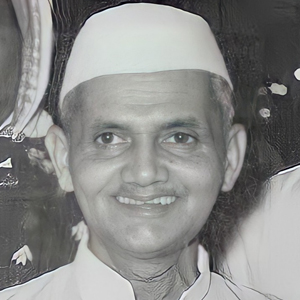
Lal Bahadur Shastri Biography
Lal Bahadur Shastri was the second prime minister of India after Jawaharlal Nehru. He was born on October 2, 1904 in Mughalsarai to Sharada Prasad Srivastava and Ramdulari Devi.
Shastri studied until the sixth standard at the East Central Railway Inter college in Mughalsara. Later, he joined the seventh standard at Harish Chandra High School in Varanasi.
During that time, he decided to drop his surname "Srivastava." Later, he completed his graduation from a nationalist university with the title of shastri which means “learned in the scriptures”.
However, a teacher named Nishkameshwar Prasad Mishra, who gave Shastri financial support by giving him the chance to tutor his children.
On that time, Lal Bahadur took interest in the freedom struggle and began to read its history and the works of several of its noted personalities that includes Swami Vivekananda, Mahatma Gandhi and Annie Besant.
He was a part of Mahatma Gandhi’s noncooperation movement against British government and he was imprisoned for a short time in 1921. Subsequently, he got selected to several positions in the Congress Party.
In 1966, Shastri died due to a heart attack in Uzbekistan within a day of signing a peace treaty to end the 1965 Indo-Pak War.
Lal Bahadur Shastri Personal Life
| Full Name | Lal Bahadur Shastri |
| Date of Birth | 02 Oct 1904 |
| Date of Death | 11 Jan 1966 (Age 61) |
| Place of Birth | Mughalsarai |
| Party Name | Indian National Congress |
| Education | |
| Profession | Politician |
| Father's Name | Sharada Prasad Srivastava |
| Mother's Name | Ramdulari Devi |
| Spouse's Name | Lalita Shastri |
Lal Bahadur Shastri Net Worth
Interesting Facts about Lal Bahadur Shastri
Political Timeline of Lal Bahadur Shastri
- 1964 – 1966 : Lal Bahadur Shastri served as the Prime Minister of India.
- 1964 : Shastri was the Minister of External Affairs.
- 1961 – 1963 : Later he became the Minister of Home Affairs.
- 1952 – 1956 : Lal Bahadur Shastri was the Minister of Railways
Lal Bahadur Shastri Early Life
- 1952: Shastri was appointed as the Railways Minister as part of the First Cabinet of the Republic of India.
- 1951: Prime Minister Nehru appointed Shastri as General Secretary of the All India Congress Committee.
- 1947: Sashtri was appointed as Minister of Police and Transport on 15th August 1947.
- 1930: He participated in the ‘Salt Satyagraha’ movement or the ‘Dandi March’.
- 1925: In 1925 Lal Bahadur Shastri was given the scholar title ‘Shastri’.
Lal Bahadur Shastri Achievements
Disclaimer:The information provided on this page is sourced from various publicly available platforms including https://en.wikipedia.org/, https://sansad.in/ls, https://sansad.in/rs, https://pib.gov.in/, https://affidavit.eci.gov.in/ and the official websites of state assemblies respectively. While we make every effort to maintain the accuracy, comprehensiveness and timeliness of the information provided, we cannot guarantee the absolute accuracy or reliability of the content. The data presented here has been compiled without consideration of the objectives or opinions of individuals who may access it.

List of Popular Leaders in India


Politicians by Age And Professions
Statewise Politicians List
- Andhra Pradesh Politicians
- Arunachal Pradesh Politicians
- Bihar Politicians
- Goa Politicians
- Gujarat Politicians
- Karnataka Politicians
- Kerala Politicians
- Madhya Pradesh Politicians
- Maharashtra Politicians
- Odisha Politicians
- Puducherry Politicians
- Tamil Nadu Politicians
- Telangana Politicians
- Uttar Pradesh Politicians
- Uttarakhand Politicians
-
 Sign in with Google
-
Block for 8 hours
-
Block for 12 hours
-
Block for 24 hours
-
Don't block


 Click it and Unblock the Notifications
Informed.
- Male
- Female
- Others
- Under 18
- 18 to 25
- 26 to 35
- 36 to 45
- 45 to 55
- 55+