


History
Nestled amidst the captivating hills of Karnataka, the Kabini Dam stands as a testament to human ingenuity and its commitment to sustainable development. Built across the Kabini River, a tributary of the sacred Cauvery, the dam serves a multitude of purposes, from ensuring agricultural prosperity to fostering tourism and safeguarding ecological balance. Let's embark on a journey to explore the Kabini Dam's rich history, multifaceted roles, and its significance for Karnataka.
A Dam Steeped in History: Responding to a Growing Need (1974)
The story of the Kabini Dam unfolds in the mid-20th century. Prior to its construction, the regions of Mysore (now Mysuru) and Kodagu (now Coorg) faced challenges due to erratic rainfall patterns. This unpredictability threatened agricultural output and jeopardized the livelihoods of countless farmers. Recognizing this need for water security, the erstwhile Mysore State embarked on the ambitious Kabini Dam project in 1954. Construction began in 1964 and was completed in 1974, marking a significant milestone in the state's water management endeavors.
An Engineering Marvel: A Blend of Strength and Functionality
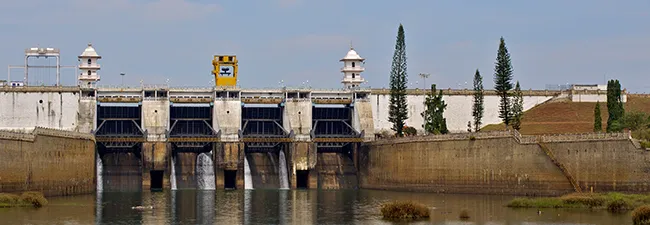
The Kabini Dam is an impressive feat of engineering, showcasing a unique blend of construction techniques. The core structure is a concrete dam with a central spillway designed to manage excess water flow during monsoons. Flanking the central dam are earthen embankments, adding stability and maximizing water storage capacity. The total length of the dam is a remarkable 4,851 meters, and it stands tall at a maximum height of 75 meters. This imposing structure not only serves its utilitarian purposes but also adds a touch of grandeur to the surrounding landscape.
Beyond Irrigation: A Multifaceted Gem
The Kabini Dam's significance extends far beyond irrigation, playing a vital role in the state's development. Here's a glimpse into its diverse functionalities:
Irrigation Lifeline: The dam's expansive reservoir provides a reliable source of water for irrigation canals, nourishing agricultural lands in Mysore and Kodagu districts.
This has transformed the region, enabling cultivation throughout the year and ensuring food security for the state.
Hydropower Generation: The dam harnesses the power of water to generate electricity through a hydroelectric power plant located downstream. This contributes to the region's energy needs and promotes the use of renewable resources.
Tourism Paradise: The Kabini Dam's location, nestled amidst lush greenery and scenic hills, has transformed it into a popular tourist destination. Visitors can revel in breathtaking views of the reservoir, explore nearby forests teeming with wildlife, or enjoy boating activities on the serene waters (regulations permitting).
A Delicate Balance: Preserving Nature's Bounty
The Kabini Dam plays a crucial role in maintaining the ecological balance of the region. The Kabini Reservoir has become a haven for diverse flora and fauna, including a flourishing fish population. The dam also regulates the flow of the Kabini River, preventing floods and soil erosion downstream. However, maintaining this ecological balance requires careful management practices like preventing deforestation and promoting sustainable tourism activities.













 Click it and Unblock the Notifications
 Sign in with Google