


Israel Strikes Hezbollah In Beirut: 6 Killed Following 8 Soldier Deaths Amid Escalating Iran Conflict


In a dramatic escalation of the ongoing Israel-Hezbollah conflict, Israel conducted a targeted airstrike on a Hezbollah rescue facility in central Beirut, resulting in the deaths of at least six individuals.
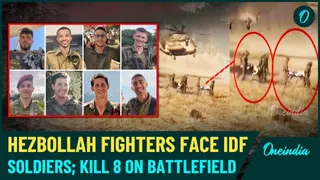
This military action follows the announcement that eight Israeli soldiers were killed in recent clashes, marking the first Israeli military casualties since the commencement of cross-border operations earlier this week.

Background of the Conflict
The latest series of clashes erupted just hours after Iran launched its largest missile attack on Israel to date. Israeli Prime Minister Benjamin Netanyahu condemned Iran's actions, characterizing them as a "big mistake" and warned that the country would face serious repercussions for its aggressive stance.
Recommended Video
This wave of violence follows a year marked by intermittent clashes between Israeli forces and Hezbollah, an Iran-backed militant group. The recent Israeli airstrike represents a significant escalation, as it comes on the heels of Israel's most severe losses on the Lebanese front in over a year.
Details of the Airstrike
The air raid, which targeted a Hezbollah facility in Beirut, was part of Israel's broader military strategy in response to recent provocations from both Hezbollah and Iran. Hezbollah claimed to have repelled an Israeli infiltration attempt into southern Lebanon just a day prior, intensifying the atmosphere of conflict in the region.
Reports indicate that the Israeli military has launched multiple airstrikes against Hezbollah strongholds, particularly in southern Beirut, following the significant blow dealt to the militant group with the death of its leader, Hassan Nasrallah, in a previous Israeli strike.
Iranian Missile Attack
The backdrop to these clashes includes Iran's missile assault on Israel, described as its largest to date. Iranian officials stated that they would intensify their response if Israel retaliates, defying international calls for de-escalation. The conflict has already resulted in over 1,000 casualties in Lebanon, raising concerns about further violence and regional instability.
Casualties and Military Engagements
As tensions rose, the Israeli military confirmed the deaths of eight soldiers in the recent skirmishes, escalating the situation further. Hezbollah responded by asserting that it had inflicted significant losses on Israeli forces, claiming to have destroyed three Merkava tanks during engagements in Maroun al-Ras village. The militant group reported that its forces targeted an Israeli unit with explosives, forcing Israeli soldiers to retreat.
In addition to ground operations, Israeli forces executed brief incursions into Lebanese territory, prompting military orders for residents in over 20 areas to evacuate. The Israeli military has released footage purportedly showing soldiers operating within Lebanese villages and mountainous areas, indicating a concerted effort to establish military presence and control.
Humanitarian Impact
The Lebanese health ministry reported that the recent Israeli strikes have resulted in 46 deaths and 85 injuries over the past 24 hours. The conflict has led to significant civilian casualties, further exacerbating the humanitarian crisis in Lebanon, a nation already grappling with economic challenges and political instability.
The Syrian Observatory for Human Rights, a UK-based war monitor, reported that an Israeli strike in Damascus also resulted in four fatalities, including Hassan Jaafar al-Qasir, the son-in-law of the deceased Hezbollah leader. This highlights the cross-border implications of the ongoing conflict and Iran's integral role in supporting Hezbollah.
Iranian Missile Strikes on Israel
In a dramatic escalation, shortly after announcing ground operations in Lebanon, Iran launched approximately 200 missiles at Israel, including hypersonic variants. This prompted widespread panic among Israeli civilians, who were advised to seek shelter. Israeli defence forces reported intercepting the majority of the missiles; however, there were reports of injuries caused by shrapnel, and damage to a school building was also noted.
Strategic Implications
The rapid succession of military actions underscores the heightened stakes in the region, with Israel firmly retaliating against both Hezbollah and Iran. The ongoing conflict not only affects the immediate parties involved but also poses broader implications for regional stability.
Both Israel and Iran are now locked in a dangerous cycle of retaliation that could potentially spiral out of control, leading to further escalations and military confrontations in the Middle East.
Conclusion
The Israel-Hezbollah conflict continues to intensify, with both sides engaging in retaliatory actions that reflect deep-rooted animosities and strategic objectives. As the situation evolves, international observers remain concerned about the potential for broader regional instability and the humanitarian impact on civilians caught in the crossfire.



 Click it and Unblock the Notifications
 Sign in with Google