


Inside The Iran–Russia–China Weapons Axis That Trump's 50% Tariffs or Sanctions Can’t Break


As Trump threatens a 50% tariff on those supplying weapons to Iran, let's look at who the major arms suppliers to Iran are and how Russia, China and Iran have already built a sanctions-proof war machine.
Decades back, a quiet revolution had already happened - the world's most sanctioned country, Iran, now co-produces weapons with two of the world's most powerful countries, Russia and China.
AI-generated summary, reviewed by editors

Thirty years ago, the story of Iran's military build-up was simple: Russia sold weapons, Iran bought them, and Washington protested. That story became obsolete 20 years ago. What has replaced it is harder to sanction, harder to track, and far more dangerous.
A new analysis by SIPRI (Stockholm International Peace Research Institute) of arms transfer data and sanctions enforcement records shows that Iran, Russia and China have constructed an interlocking supply chain, one that moves drone components, missile parts, satellite navigation modules and rocket fuel ingredients across three continents through a web of front companies, shadow shipping networks and alternative payment systems that bypass the Western financial system entirely.
"Iran retains the ability to rebuild drone stockpiles, sustain missile production, and maintain military modernisation - even under the heaviest sanctions in history," says SIPRI.
How It Started: A Formal Promise Broken

The foundations of today's crisis were laid in a diplomatic failure. In 1995, the United States and Russia signed what became known as the Gore-Chernomyrdin Agreement, a commitment by Moscow to halt new arms transfers to Iran.
In 2000, Russia unilaterally declared the agreement null and void. The decision marked a turning point: from that moment, arms sales to Iran were not just permitted but actively encouraged as a revenue stream for Russia's struggling defence industry and a geopolitical lever against American influence in the Middle East.

How US Sanctions Forced Iran to Make Ballistic Missiles and Drones:
Iran's conventional arms imports tell only half the story - and the less important half. Iran could not afford most of the weapons it wanted. Russia insisted on cash payments. US sanctions on the sale of oil by Iran severely limited Tehran's hard currency reserves.
This financial reality forced a strategic reordering. Rather than maintain a large conventional force, Iran prioritised the programmes that offered the greatest deterrent: ballistic missiles and drones. Russia provided the technical foundation for both.
Russian assistance to Iran's missile programme spans design expertise, guidance system technology, propulsion components and the training of Iranian scientists. The result is a weapon that can strike Israel and every Gulf capital and that Iran can now produce largely without Russian help.

The drones: When client becomes supplier!
Nothing illustrates how radically the relationship has evolved more than the Shahed drone. Iran developed the loitering munition; Russia first bought them, then learned to build them, and is now manufacturing versions domestically at a dedicated facility in the Alabuga special economic zone in Tatarstan.

A weapon that began as an Iranian product, exported to Russia, has now been domesticated and scaled by Russian industry and components are flowing back to Iran. A self-sustaining production loop has emerged between two countries that were supposed to be economically isolated from the global arms market.
The nuclear dimension: civilian cover, strategic risk
Russia remains Iran's sole major nuclear partner. The relationship centres on the Bushehr Nuclear Power Plant, officially a civilian project, built under a 1995 agreement, equipped with a VVER-1000 reactor and staffed in part by Russian-trained Iranian personnel.
- Assembly Elections 2026 LIVE: Voting Continues In Kerala, Assam & Puducherry| Assam Has The Highest Turnout
- Meet Robot Nila: The Friendly Robot Transforming The Voting Experience At Puducherry Polling Station, Watch
- Assam, Kerala & Puducherry Assembly Election 2026: Can’t Find Your Polling Booth? Here’s How To Check
- Vijay Breaks Silence On Divorce With Sangeetha: 'People Around Me Waited...'
- Tamil Nadu Election Result Prediction: Will AIADMK Overpower DMK? JVC Poll Survey Out
The controversy is not what Bushehr does, but what it enables. Training Iranian nuclear scientists at Russian institutions, as has occurred, transfers knowledge that does not stay within civilian boundaries; it can wade into nuclear weapons territory.
Russia is the only country currently building nuclear infrastructure inside Iran. Earlier proposals included supplying 2,000 tonnes of uranium and discussing enrichment technologies - negotiations that were scaled back under intense US pressure but never fully abandoned.
Why sanctions are failing - The China connection

The supply chains are now too distributed, too redundant, and too deeply embedded in non-Western financial systems to be effectively blocked by measures aimed at individual state actors.
Western components still reach Iran via China-based intermediaries. Rocket fuel precursors move through shadow shipping networks and re-export hubs in China. The BeiDou navigation system, China's answer to GPS, is now integrated into Iranian drone guidance packages. None of this requires a single transaction that touches a Western bank.
Trump's proposed 50% tariffs on countries aiding Iran militarily are aimed primarily at Russia's role in arms and missile support, China's supply-chain enablement, and the broader network that connects them. But tariffs applied to state actors (Russia and China), who already operate largely outside the Western trading system, will face little impact.

What this means for the region:
The practical consequence of three decades of Russia-Iran military cooperation is that Tehran now possesses a deterrent capability it could not have developed alone: ballistic missiles that can reach every major population centre in the Middle East; a naval doctrine built around sea denial in the Strait of Hormuz, a chokepoint for roughly 20% of global oil flows; an air defence system anchored by S-300 batteries; and a drone arsenal that has already been battle-tested in two separate war theatres.
What has changed most recently is not the scale of this capability but its resilience. When Iran loses drone stockpiles, the network can resupply them. When specific production lines are identified and targeted, alternatives exist. The cooperation is no longer primarily about hardware transfer. It is about mutual self-sufficiency, a goal that all three countries share for different reasons, and that no tariff regime is well-positioned to reverse.
-
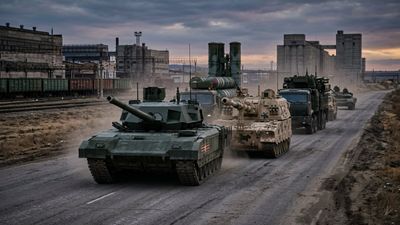 The axis of evasion: How Russia, China and Iran built a sanctions-proof war machine
 -
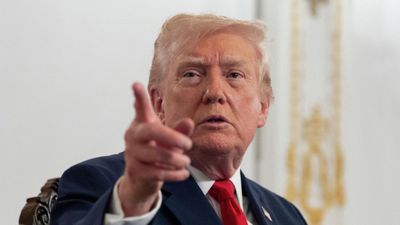 ‘A Whole Civilization Will Die Tonight’: Trump Speaks Out As 48-Hour Ultimatum To Iran Nears End
 -
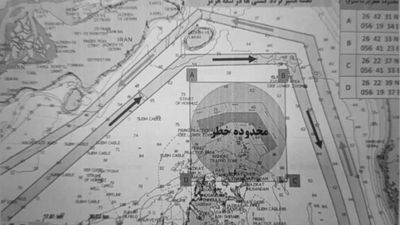 Iran Introduces Alternative Shipping Routes In Strait Of Hormuz As Ceasefire Row Deepens And Regional Tensions
 -
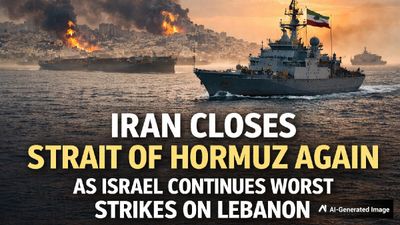 Iran Closes Strait of Hormuz After Israel’s Largest Lebanon Strikes
 -
 US Launches New Wave Of Strikes On Kharg Island, Iran’s Main Oil Export Hub Targeted
 -
 Israel Says US-Iran Ceasefire ‘Does Not Include Lebanon’
 -
 US-Iran Ceasefire: Did Tehran Climb Down From Its Earlier Position? Check 10-Point Proposal
 -
 US-Iran Agree To 2-Week Ceasefire As Tehran Declares Victory
 -
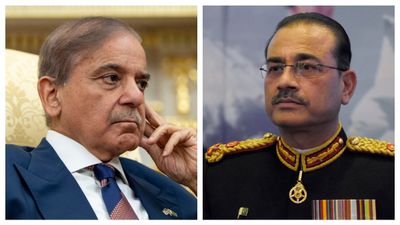 Pakistan Likely To Host US-Iran Talks In Islamabad On Friday
 -
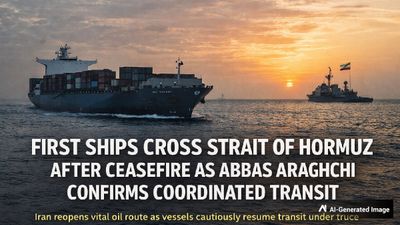 1$ Per Oil Barrel: Iran Proposes Crypto Toll For Tankers As Ships Begin Crossing Strait of Hormuz
 -
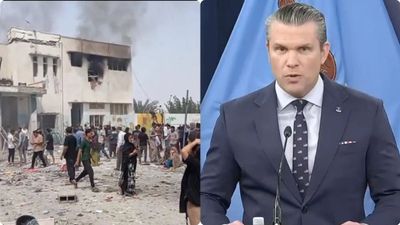 ‘Iran Begged For Ceasefire’: US Defense Secretary Pete Hegseth Calls Operation Epic Fury A Battlefield Victory
 -
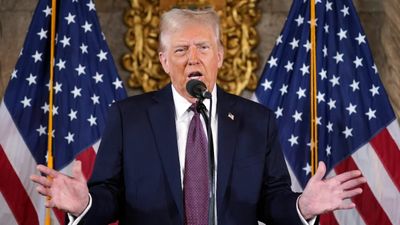 Trump Rules Out Uranium Enrichment In Iran, Says US Open To Tariff And Sanctions Relief



 Click it and Unblock the Notifications
 Sign in with Google