


Bengal lags behind while Gujarat surges ahead


Narendra Modi's long tenure as the CM has given the state the much-needed stability to ensure that the wave of industrialisation continues unfazed. The CM also has a to-the-point approach to governance and dealing with industrial policies. It has unveiled a new land acquisition policy and eyes gigantic special investment regions, many along the Mumbai-Delhi freight corridor, to promote economic activities. Modi said his industrial policy-making is above political consideration and his government is P2G2 (pro-people, pro-active good governance). Institutionalisation of idea, utilisation of technology, emphasis on policy and its transparency and sound delivery are key to Gujarat's industrial success, according to Modi, who also believed that such approach also helped in curbing corruption to a long way.
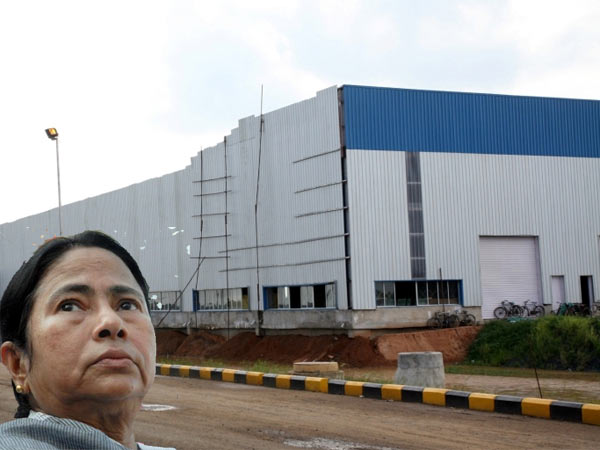
Bengal's ills...
Just opposite to the Gujarat's tale, we have a disheartening story of West Bengal. Traditionally a society more oriented to academic and cultural discourses and not 'money-minded', Bengal failed to keep pace with the speeding time. Socio-political idealism dominated the regular economic life and militant trade unionism crippled whatever industrial base the state had, dating back to the British Era.
The middle-class Bengali section, more as a consequence of its historic closeness to the English culture and language, got more accustomed to clerical ventures and not undertaking business ones, barring a few gentlemen. Bengalis find a great comfort in commemorating Rabindranath Tagore and his literary work rather than Acharya Prafulla Chandra Ray, the great scholar and chemist who had found India's first pharmaceuticals, the Bengal Chemical and Pharmaceuticals Limited, way back in 1901.
Given such a background, Bengal needed to change its mindset to push for economic development and sustenance. But it failed. There are some important reasons for that, besides the partition of 1947 and trade unionism, of course.
One, political influence. Unlike Gujarat, Bengal is a state where politics rules the roost, particularly the Leftist brand. The Leftist brand, sometimes even extremist, has been a serious obstacle to the state's way to economic advancement. Idealist internationalism like protesting the US and supporting China has not proved beneficial to the state apart from regular chaos.
Two, the lack of will shown by the leadership. West Bengal was ruled by the Left Front for 34 long years but little happened in such a long time apart from planned destruction of whatever economic infrastructure was still remaining. The party loyalists made profits but not the common men. Even the post-Left Front leadership has failed to come up with a viable alternative to lead a way to prosperity. Bad economics coupled with disruptive politics have nailed Bengal's hopes.
Third, unlike the pragmatic common Gujaratis, the common Bengalis have not shown much determination to reap good economic fortunes in the past. Content with public sector jobs and academic engagement, the common Bengali has not welcomed the advent of the new economy.
The erstwhile Left Front government once did not entertain entry of computers and English education (the leaders did not deprive their own kin though) in the state, which had crushed the supply line of good, skilled labourers for economic uplift. Realty business and other trade started by local upstarts are perhaps the only booming industry in Bengal.
But that phenomenon is a different story. These traders have made their fortunes mostly through a 'patron-client relationship' with the establishment. A few employment generation avenues are being created through such ventures no doubt but it is never going to cure the state's actual economic woes.
Fourth, the Naxalite disturbance of the late 1960 and 1970s was perhaps the biggest reason which had derailed Bengal's aspirations. An entire generation of bright minds was ruined during the upheaval and the consequent suppression, both of which were politically motivated. Whether it was good or bad is not important, but the fact is that it had left the state's socio-economic future in the rut.
The Modi government's way of functioning is not above criticism and nor there is a dearth of support for the Mamata Banerjee government's 'efforts' to improve the economic conditions in Bengal. But yet, Gujarat is considered a model for development while Bengal is getting increasingly forgotten, despite being home to a rich and cheap source of labour and raw materials.
Modi's success lies in his successful projection of two distinct selves, one as a BJP politician and the other as a proactive CM committed to his state's development. In case of Bengal, neither Buddhadeb Bhattacharjee (who was a prisoner within his own party and also lacked pragmatic views) nor Mamata Banerjee (more concerned about political populism) has been able to do something similar. Even Jyoti Basu, the great Left patriarch who had ruled Bengal for 23 years, did not lay any groundwork apart from rural reforms which, too, stand exhausted today.
Bengal needs a CEO-like CM with a small but super-competitive team and not one surrounded by useless coterie if it hopes for a real turnaround. The problem is it is still living in the past and amid political compulsions created by short-sighted politicians while the world has surged ahead. The Bengal leadership even has not been successful in formulating a viable industrial or agricultural policy. An even bigger worry is that the state, owing to its getting stagnant with each passing day, is being deserted by more and more skilled talents everyday in search of better opportunity to excel. If mediocrity is given a free licence to rule the future of Bengal, then disaster is not far away.



 Click it and Unblock the Notifications
 Sign in with Google