


Sustaining change in Myanmar: Part 2


[This article formed the basis for Col Hariharan's presentation "Political and economic change in Myanmar" at the Federation of Indian Export Organisation (FIEO) seminar "Doing Business with Myanmar" at Chennai on March 16, 2013.]
In the previous part, the author had spoken on the strategic context of change in Myanmar [See Part 1].
Political changes
The country owes much of its new found success to President Thein Sein's prioritized and action-oriented style of governance. Within two years of coming to power, he has managed to overcome his negative image as a handpicked man of the military junta and a former military officer. Clearly he has impressed not only the people of Myanmar but also Aung San Suu Kyi, who led the struggle against military rule.
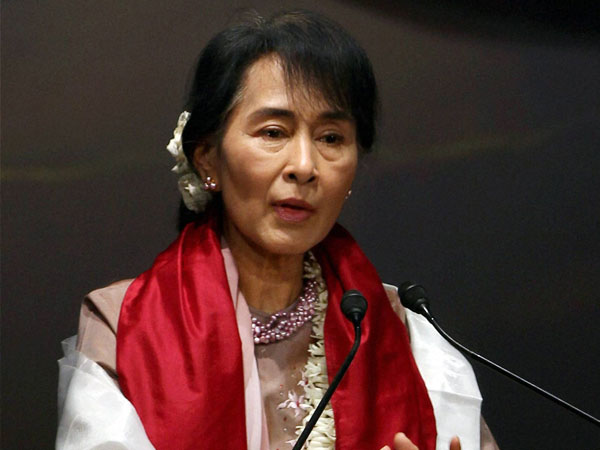
Though the reform process still has a long way to go, President Thein appears to have chosen his priorities right. In the last two years in office in the first stage of the reform process, he took up political reforms to produce visible results. Most of the political prisoners have been released, exiles have returned after a number of irksome military-imposed restrictions were removed, and media is freer than ever before.
Thein not only freed Suu Kyi from house arrest, but persuaded her to bring the NLD back to national political mainstream despite her strong objections to the 2008 Constitution. Electoral laws were amended to enable her and the NLD to contest parliamentary by-elections; now under Ms Suu Kyi the NLD is taking an active part in the parliament as the main opposition party.
In this climate of growing political harmony, Suu Kyi has reciprocated Thein's positive approach. Even in some of the grey areas like ethnic reconciliation, Suu Kyi has chosen to help him than confronting him. Overall, there is a lot of enthusiasm among the people, particularly the youth, who are trying to understand democracy in action. Unless, the government performance matches enthusiasm the danger of the country reverting to army rule and chaos is always there.
The NLD is staging a comeback from two decades of political wilderness. The recently held NLD conclave has shown weaknesses in organisational structure and leadership. The party needs to replace the aging leadership ruling the roost and bring in fresh blood to impart dynamism. Historically the student power had been the catalyst of change in Myanmar.
Though the NLD has planned to bring in younger leadership it may not be an easy task as a popular political party it can become a bandwagon for diverse vested interests. This is the malady that had undermined Mynamar in the early days of independence when political parties gained notoriety rather than fame for schism, power struggle and factionalism.
Fortunately for NLD, Suu Kyi still remains the only charismatic national leader with grass root popularity. However, she appears to be a little hesitant in exercising her leadership clout as demonstrated in her reluctant approach to some of the contentious problems like ethnic conflict and attacks on Rohingya people.
President Thein Sein appears to have cleverly used her as the cat's paw by making her to head the Latpadaung Inquiry Commission after public outcry against a copper mine project destroying their environment. Inevitably in the process, she has courted some unpopularity with her recommendation to go ahead with the project as planned by the government.
The Union Solidarity and Development Party (USDP) now in power is backed by the military. Though this background could be a baggage when it is pitted against the NLD in the elections, as a ruling party it has the advantage of being able to dispense favours. Moreover, Thein Sein's reforms have the potential to improve the quality of life of the people, and win their support to the USDP. Other political parties are yet to establish themselves in the nascent political environment.
However, ethnic parties have established constituencies and their support could become useful in jacking up strong coalitions. In this respect the NLD has a better history while USDP as a party in power has a better opportunity to improve the equation with ethnic communities.
So the future of stability in democracy would depend upon the relative ability of Suu Kyi and President Thein to rally the support of smaller political entities. While President Thein has the advantage of power, Ms Suu Kyi has a record of achieving this during the two decades of her political struggle for democracy. However, to achieve this in the present context, perhaps she needs to evolve a proactive strategy to impart greater political dynamism in the NLD.
(Col R Hariharan, a retired Military Intelligence specialist on South Asia and its neighbourhood, is associated with the Chennai Centre for China Studies and the South Asia Analysis Group. His email address: [email protected])
OneIndia News



 Click it and Unblock the Notifications
 Sign in with Google