


US-Iran Ceasefire: Did Tehran Climb Down From Its Earlier Position? Check 10-Point Proposal


Iran's Supreme National Security Council on Wednesday said it has accepted a two-week ceasefire in the war and that it would negotiate with the US in Islamabad beginning on Friday.
"It is emphasised that this does not signify the termination of the war," the council's statement said. Iranian Foreign Minister Abbas Araghchi said passage through the Strait of Hormuz would be allowed for the next two weeks under Iranian military management.
AI-generated summary, reviewed by editors

In a post on his social media site, US President Donald Trump said that provided Iran agreed "to the COMPLETE, IMMEDIATE, and SAFE OPENING of the Strait of Hormuz" he would "suspend the bombing and attack of Iran for a period of two weeks." Trump said.
10 points Proposal To End War
- End all regional conflicts, not just a temporary pause in fighting.
- Move toward a permanent end to the war, rather than a short ceasefire.
- Establish safe passage protocols through the Strait of Hormuz.
- Allow Iran's right to enrich uranium under the NPT framework.
- Lift U.S. and other international sanctions on Iran.
- End Israeli attacks on Hezbollah in Lebanon.
- End strikes on Iranian-linked targets in the wider region.
- Start reconstruction of war-affected areas.
- Open the Strait of Hormuz in exchange for a broader settlement, with reported conditions on shipping.
- Seek a broader regional security arrangement tied to the end of hostilities.
Did Iran Climb Down From Its Earlier Position?
Yes - based on the reporting, Iran appears to have softened its earlier position, but not in the sense of fully conceding. The 10-point plan still demands a permanent end to hostilities, sanctions relief, and security guarantees, which suggests Tehran is bargaining from a slightly more pragmatic stance rather than simply capitulating.

What changed
Earlier, Iran was described as rejecting a temporary ceasefire and insisting on a lasting settlement with guarantees against renewed attacks. The newer 10-point response still keeps that hard line, but it also engages with a structured framework for ending the conflict, including safe passage through the Strait of Hormuz, lifting sanctions, and reconstruction terms. That is why analysts are reading it as a climb-down in tactics, not in core demands.
Why it looks like a climb-down
A pure hard-line position would be to reject any U.S.-backed process outright. Instead, Tehran has now placed a formal counterproposal on the table, which implies willingness to negotiate the terms of de-escalation. The fact that U.S. officials described the reply as "maximalist" while Trump called it "not good enough" shows both sides still see major gaps, but the channel remains open.
- West Bengal SIR: Mamata Banerjee Slams EC, Center, Says Votes Of Specific Community Being Deleted
- This Tamil Nadu Pre Poll Survey Looks Like Fixed Match: DMK's Saravanan Rejects AIADMK Victory Prediction
- Trisha Married To Rich Businessman? Actress Shoots Down Rumours Amid Link-Up Speculations With Vijay
- Tamil Nadu Polls: Who Is The Richest Candidate In 2026 Election? Leema Rose With Rs 5000 Crore
- Tamil Nadu Election Prediction: AIADMK Set to Emerge as Winner, Says Pre-Poll Survey
What the 10 points signal
The reported points center on four themes: ending regional hostilities, restoring safe Hormuz transit, lifting sanctions, and financing reconstruction. In other words, Iran is trying to convert a military pause into a broader political settlement, not just a short truce. That makes the plan more flexible than its earlier outright rejection, even if the underlying red lines remain intact.
Bottom line
So the best reading is: Iran has not surrendered its position, but it has adjusted it. The 10-point plan suggests tactical compromise and negotiation readiness, while still preserving Tehran's core demands.
-
 Donald Trump's Address On Iran War: Trump Threatens To Wipe Out Iran In One Day, Briefs On Rescue Operation
 -
 Pakistan Likely To Host US-Iran Talks In Islamabad On Friday
 -
 Iran-US War To End Soon? 45-day Ceasefire Proposal Pushed By Mediators
 -
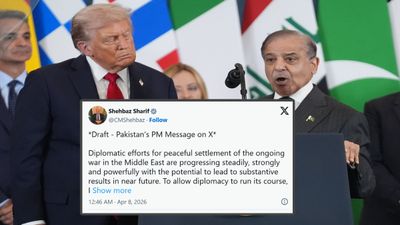 Did US Write Pakistan’s PM Shehbaz Sharif's Tweet To Trump On Iran Ceasefire Talks?
 -
 Pakistan PM Shehbaz Sharif Urges Trump To Extend Iran Deadline As Warring Nations Agree For Ceasefire
 -
 Civilians Form Human Chains as Iran Braces for Possible US Strikes
 -
 What Is the US ‘Doomsday Plane’? Boeing E-4B Nightwatch Sightings Explained
 -
 Who Is Majid Khademi, Iran's Revolutionary Guards' Intel Chief, Killed By US?
 -
 India Issues Advisory For Citizens In Iran Amid Regional Tensions
 -
 ‘Puts Your Life In Danger’: Israel Issues Chilling Farsi Warning To Iranians To Avoid Train Travel
 -
 Iran Refuses To Reopen Strait Of Hormuz Under Temporary Ceasefire As US Tensions Rise
 -
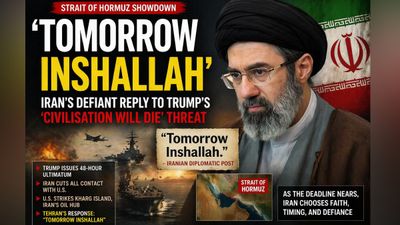 ‘Tomorrow Inshallah’: Iran’s Two-Word Reply to Trump’s ‘Civilisation Will Die’ Warning



 Click it and Unblock the Notifications
 Sign in with Google