


Sharif and Bhutto Parties Join Forces For New Pak Government; Nawaz Nominates Brother Shehbaz As PM Candidate


Pakistan's leading parties, excluding the party of imprisoned former prime minister Imran Khan, announced that they will endeavor to establish a coalition government led by Pakistan Muslim League-Nawaz, on Tuesday, thus concluding speculation about the future configuration of the political landscape.
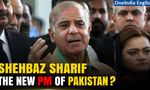
Although the identity of the prime minister was not explicitly disclosed, PML-N president Shehbaz Sharif stated that he would propose to his elder brother and the 74-year-old party leader Nawaz Sharif to assume the role of the premier for a record fourth time.

Sharif and Bhutto's Parties to Form New Pak Government
At the residence of Shujaat Hussain of Pakistan Muslim League-Quaid (PML-Q), a consultative meeting was held where Shehbaz Sharif, along with Asif Ali Zardari of Pakistan Peoples Party (PPP) and Khalid Maqbool Siddiqui of Muttahida Qaumi Movement (MQM), convened.
The assembled leaders united to communicate to the nation their acceptance of the split mandate. Appreciation was expressed towards Zardari and Bilawal for the decision to have their party vote for the PML-N, along with gratitude extended to other leaders present. For the formation of a government, a party must secure 133 seats out of the 265 contested seats in the 266-member National Assembly.
Recommended Video
As per the announcement by the Election Commission of Pakistan, independent candidates, with a majority backed by the PTI, secured 101 seats. This was followed by Pakistan Muslim League-Nawaz (PML-N) with 75 seats, Pakistan Peoples Party (PPP) with 54 seats, and Muttahida Qaumi Movement-Pakistan (MQM-P) with 17 seats. Additionally, other parties obtained 17 seats, while the result of one constituency was withheld.
Shehbaz Sharif stated that the new government aims to address the country's challenges, particularly its economic issues. Emphasis was placed on stabilizing the economy as a crucial task, noting that progress is achieved when leadership unites to overcome conflicts and resolve national issues.
Furthermore, Shehbaz Sharif announced that his niece Maryam Nawaz, daughter of Nawaz Sharif, will be nominated as the party candidate for the chief minister of Punjab, dispelling speculations regarding the future of the Punjab government.
At the same press conference, Zardari declared the intention to establish a coalition government, emphasizing the goal of steering the country out of its economic crisis. Additionally, he expressed a commitment to reconciliation with all stakeholders, including the Pakistan Tehreek-e-Insaf of jailed former prime minister Khan, aiming to lead the nation towards prosperity.
The convergence of key parties to form the new government suggests that the transition from the election to the new government will adhere to legal procedures and is expected to occur by the end of the month.
Nawaz points Shebhaz As PM
Shehbaz Sharif, former Pakistan Prime Minister, has been nominated as the next premier to lead a new coalition alliance formed between different parties, announced a spokeswoman on Tuesday after national elections last week returned a hung parliament.
Announcing the decision, Pakistan Muslim League-Nawaz (PML-N) spokesperson Marriyum Aurangzeb said, "PML-N supremo Nawaz Sharif, 74, has nominated his younger brother Shehbaz Sharif, 72, as a candidate for the slot of prime minister and his daughter Maryam Nawaz, 50, for chief minister of Punjab province."
"Nawaz Sharif has thanked the political parties which provided support to the PMLN (in forming the upcoming government) and expressed hope that through such decisions Pakistan will come out of crises," she added.
Shehbaz Sharif is affiliated with the PML-N, led by his brother, Nawaz Sharif, which is the largest recognised party with 75 seats. The Pakistan Peoples Party (PPP) holds the second position with 54 seats. Combined, these two parties have sufficient seats to secure a simple majority in the 266-seat legislature.
On Tuesday, Bilawal Bhutto Zardari withdrew from contention for the prime ministerial position and announced that his party would endorse any nominee put forward by the PML-N, led by Nawaz Sharif. The PPP on Tuesday announced its decision to back Sharif's party in establishing a minority government, resolving a deadlock following inconclusive elections in the nuclear-armed nation. Bhutto further stated that his party would refrain from participating in the cabinet.
Nevertheless, this alliance has quelled concerns regarding government formation, coming five days after the Feb. 8 elections yielded a divided outcome and raised fears of renewed instability.
Independent candidates backed by jailed former premier Imran Khan have won 92 seats, making them the largest group, but they cannot form a government on their own, having run as individuals and not a party, and have ruled out alliances with PML-N or PPP.
Bhutto Zardari said that Khan's independent candidates and the PML-N collectively held more seats than his party, though Khan had dismissed the idea of allying with the PPP. According to the Election Commission of Pakistan, independent candidates, largely backed by the PTI, secured 101 seats, followed by the Pakistan Muslim League-Nawaz (PML-N) with 75 seats, the Pakistan Peoples Party (PPP) with 54 seats, and the Muttahida Qaumi Movement-Pakistan (MQM-P) with 17 seats.
To establish a government, a party must secure 133 seats out of the 265 contested seats in the 266-member National Assembly. Other parties garnered 17 seats, while the outcome of one constituency was withheld.



 Click it and Unblock the Notifications
 Sign in with Google