


Jintao is worried, can China survive without democracy?


While the world witnessed the graceful resumption of President Barack Obama's second stint at the White House, another country is preparing for the obverse. The latter, not very far from the USA in terms of global importance, is set to witness a new leader in Xi Jinping taking over the Presidency from Hu Jintao.
Whether the beginning of a new term at around the same time in these two countries will see a major shift is for time to decide, but the more crucial question is: Will China move a step closer to the political reforms that seemed impossible for many till the recent years? The warning that the outgoing paramount leader, Hu Jintao, aired about the threat of corruption to the Communist Party is particularly worrying. Jintao uttered the disturbing words: "If we fail to handle the corruption issue well, it could prove fatal to the party and even cause the collapse of the party and the fall of the state."
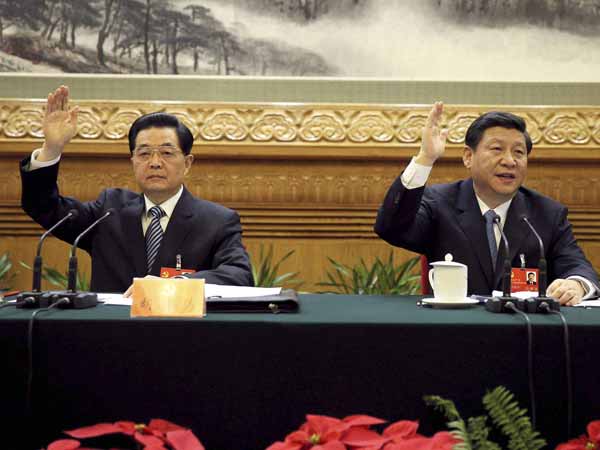
Jintao said the party must continue to reform the political structure and "make people's democracy more extensive, fuller in scope and sound in practice". He, however, said that China will never imitate the western style of democracy. Issues like introducing direct elections to local congresses were not mentioned while another party congress spokesperson Cai Minghazo said political reforms would be limited and never challenge the party's supremacy.
Jintao has understood that things may go wrong
The situation is not easy for Beijing. Hu Jintao can clearly understand how inner problems have plagued the Communist Party. The impact of expelling Bo Xilai or the investigation made by a US newspaper citing details about the riches of the outgoing Premier, Wen Jiabao, will not be easy to overlook and forget. Jintao appealed to the leading Chinese officials to "exercise strict self-discipline and strengthen education and supervision over the family and staff, and they should never seek any privileges." A desperate call indeed.
Many say China's tremendous economic boom suggest that the country can do without democracy. The country rushed from the sixth to the second position in terms of the world's biggest economies and Jintao said the Chinese should target to double its 2010 GDP and per capita income by 2020. Great countries dream big. But Jintao also cautioned that China faced both unprecedented opportunities and great risks in economic terms.
Are Chinese apprehensive about political reforms just as India is about economic reforms?
The Chinese have succeeded to maintain a controlled society where no dissent is ever allowed. The political leaders have ensured that common people do not take interest in the party affairs and in lieu of that 'political freedom' of the party, the citizens are being given a reward in terms of economic progress.
Any decisive change originates mainly from the middle class but for the Chinese, the high degree of consumerism keeps them satisfied and given there is no precedent of a democratic political culture, the people find it more convenient to continue with the available comfort rather than entering an uncertain zone of political adventurism. The situation is comparable with the Indian psyche's apprehension about economic reforms by opening the national market to retail giant like Walmart.
Is dissent slowly eating into the Chinese political structure?
But despite the fact that China's regular political succession and strong economic performance make it a better place than the former USSR, the underlying threat can not be ruled out. The Chinese party has no external competition (for there are no elections) and no formal accountability (since it is not elected) to the people. May be a modern society based on undemocratic and non-accountable norms is unique by the standard of the world influenced by the western ideals but it will not be something abnormal if indeed the party begins to undergo deep fissures, thanks to inner splits and factionalism.
A monolithic political model co-existing with a increasingly liberalised economy is bound to breed severe differences for there will be clash of interests and counter-pressures and this can lead to an implosion in the political power centre.
The fact that China has not known to develop an alternative (that a democracy facilitates) is worrying for the day the party fails to deliver good governance, credible leadership and satisfaction to the citizens owing to its internal decay hastened by corruption, the entire system will crumble with no easy remedy available.



 Click it and Unblock the Notifications
 Sign in with Google