


Google Doodle Celebrates the Accordion's Rich Cultural Heritage and Joyful Melodies


In a small town nestled amidst rolling hills, the accordion's soulful melodies weave through the air, captivating hearts and inviting all to dance. Today, Google Doodle pays homage to this beloved instrument, celebrating its ability to bring people together and foster joy.
The accordion's origins can be traced back to the early 19th century. It quickly gained popularity for its versatility and portability. Over the years, it has become an integral part of various musical genres, adding a touch of magic to folk, jazz, and traditional music worldwide.
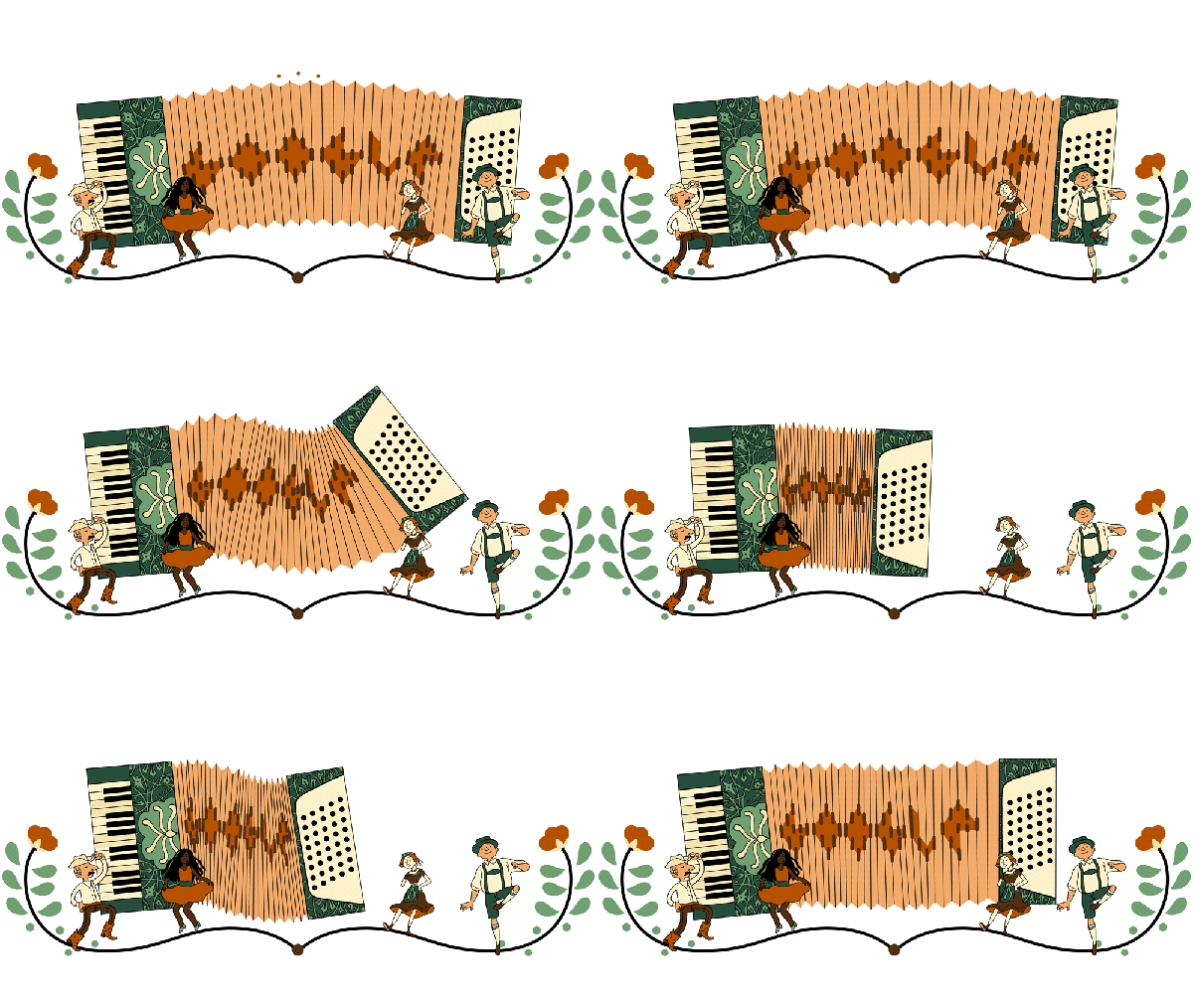
In the hands of skilled musicians, the accordion becomes a living entity. Its bellows expand and contract like a beating heart. Its keys and buttons dance beneath nimble fingers, producing a rich sound that can evoke a range of emotions, from toe-tapping merriment to heart-wrenching melancholy.
Whether it's the lively polka that sets feet tapping in a Bavarian beer hall or the soulful tango that ignites passion in Buenos Aires, the accordion's presence adds enchantment to any occasion. It has the power to transport listeners to faraway lands, evoking images of quaint villages and vibrant festivals.
The accordion's appeal lies not only in its musical prowess but also in its ability to unite people. In small towns and big cities alike, accordion players gather to form vibrant communities. They share their love for music and foster a sense of belonging.
As we celebrate the accordion today, let us appreciate the rich cultural heritage it represents and the joy it brings to people of all ages. From the lively melodies of Eastern Europe to the soulful rhythms of Latin America, the accordion's music transcends borders. It reminds us of the power of music to unite and inspire.
So, let's raise our glasses and sway to the rhythm of the accordion, embracing its spirit of joy and togetherness. Long may this cherished instrument continue to enchant us, bringing happiness to hearts and keeping the world dancing to its tune.
On this day in 1829, an instrument was patented with the name accordion. The name is derived from the German word "akkord" (chord). Throughout the late 1800s, manufacturers in Germany increased their accordion production due to its popularity among folk musicians across Europe.
Early accordions had buttons on just one side. Each button created the sound of an entire chord. Another impressive feature is that the same button could produce two chords — one when the bellows were expanding and another when they were contracting.
As Europeans emigrated around the world, the accordion’s use in music expanded. Modern versions can be played with either buttons or a piano-style keyboard. Some even have both options. They also sometimes incorporate electronic elements so they can be plugged into an amplifier or create synthesized sounds.
Today, the instrument can be heard in folk music, Latino polka, tango, cajun music, and more! One event where the accordion is always present is Oktoberfest. This lively festival is full of carnival fun, music, and traditional clothing like Dirndl dresses and lederhosen.
With this melody maker in hand, everything goes according to plan! The traditional sound continues to influence German celebrations and music across the world 200 years later.



 Click it and Unblock the Notifications
 Sign in with Google