


US Shares Video Of Strikes On 90 Iranian Military Targets - Watch


The United States has carried out a new round of strikes on Iranian military targets, sharply widening a confrontation that now threatens one of the world's most important shipping routes.
US Central Command said the July 8 operation hit about 90 targets inside Iran, including air defence systems, missile and drone facilities, and command networks linked to attacks near the Strait of Hormuz.
AI-generated summary, reviewed by editors

It has released a footage of its strikes on 90 military targets in Iran. The black-and-white operational video shows what it described as precision strikes on Iranian military installations, followed by multiple secondary explosions.
The strikes came a day after American forces hit around 80 Iranian targets, according to US defence officials. It destroyed more than 60 Islamic Revolutionary Guard Corps boats.
The US launched the strikes following attacks on its commercial vessels passing through the Strait of Hormuz. The CENTCOM said in a statement on X that the latest strikes were intended "to further degrade Iran's ability to attack commercial shipping and innocent civilian mariners in the Strait of Hormuz."
The US military said the targets included launch systems, storage sites and strategic assets used by Iranian forces. It also said the latest round of airstrikes had ended after approximately 90 targets were struck. "U.S. forces remain vigilant, lethal, and prepared to execute operations directed by the Commander in Chief," CENTCOM said in its statement.
— U.S. Central Command (@CENTCOM) July 9, 2026
The Strait of Hormuz is a passage through which a major share of the world's seaborne oil trade moves and any disruption there can quickly affect energy markets, insurance costs, shipping schedules and fuel prices far beyond the Gulf, including in import-dependent economies such as India.
Iran responded with sharp warnings, accusing the US of choosing confrontation. Iranian Parliament Speaker Mohammad Bagher Ghalibaf said Washington had failed to understand that "bullying and breaking promises are no longer cost-free." In a public address, he warned: "Let me put it plainly: if you strike, you'll get hit."

Ghalibaf also linked Iran's response to control over the Strait of Hormuz, signalling that Tehran could use the waterway as leverage. "The Strait of Hormuz will only open with Iranian arrangements, not American threats," he said.
Iranian state media reported powerful explosions in several coastal and strategic locations, including Bandar Abbas, Konarak, Chabahar and Kish Island. Local reports said parts of Chabahar, an important port city, faced extensive power outages after the strikes. The full extent of damage and casualties, if any, was not immediately clear from the available information.
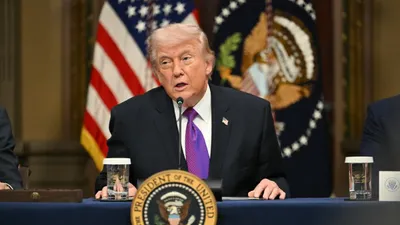
The situation has escalated between the two warring nations with US President Donald Trump declaring that the ceasefire is over as he claimed that negotiations with Tehran were a "waste of time."

The development comes about three weeks after the US and Iran signed a memorandum of understanding (MoU) to cease fighting, lift the US naval blockade of Iran, and open the Strait of Hormuz.
Speaking at the NATO summit in the Turkish capital of Ankara, the US President, "To me, I think it's over. I don't want to deal with them anymore. They're scum...They're sick people. They're led by sick people. They're viscous violent people. If they had a nuclear weapon they'd use it. As far as I'm concerned it's over."









 Click it and Unblock the Notifications
 Sign in with Google