


Pakistani Driver Killed In Dubai After Debris Falls On Vehicle In Al Barsha Amid West Asia Conflict


The ongoing tensions and military exchanges in West Asia have begun to affect parts of the Gulf region.

AI-generated summary, reviewed by editors
In a tragic incident in Dubai, a Pakistani driver lost his life after debris from an aerial interception fell onto his vehicle. Authorities confirmed the incident and said investigations are underway while the region remains on high alert due to escalating conflict.
Pakistani Driver Dies In Al Barsha Incident
Officials from the Dubai Media Office confirmed that the incident took place in the Al Barsha area. According to authorities, debris from an aerial interception operation fell onto a vehicle being driven by a Pakistani national.
The driver died at the scene after the debris struck the vehicle. Officials described the event as a rare but tragic consequence of the rising military tensions in the wider region.
Authorities did not immediately release the identity of the victim but confirmed that emergency teams responded quickly to the scene.
Minor Incident Reported In Dubai Marina
In a separate development, officials also confirmed a minor incident involving the facade of a building in Dubai Marina. Debris caused slight damage to the outer structure of a tower in the area.
Fortunately, no injuries were reported in this case. Authorities reassured residents that the situation was under control and that safety checks were being carried out to ensure no further risks.
Dubai authorities continue to monitor the situation closely while maintaining normal operations across the city.
Rising Military Activity Across West Asia
The incident comes as military tensions continue to escalate across West Asia. According to reports by Islamic Republic News Agency, the Islamic Revolutionary Guard Corps claimed that the Haifa refinery in Israel was targeted by Kheibarshekan missiles.
At the same time, reports suggested that air strikes hit an oil storage facility in Tehran, indicating continued exchanges between opposing forces.
Meanwhile, the militant group Hezbollah said it launched missiles towards the Haifa naval base and fired rockets at Kiryat Shmona.
These developments show that the conflict is spreading across multiple fronts, increasing concerns about regional stability.
Israeli Strikes On Iranian Oil Infrastructure
According to sources cited by the Israel Defense Forces, the Israeli Air Force conducted attacks on significant oil-related infrastructure in the Tehran region.
Reports indicated that the targeted facilities were linked to Iran's military-industrial network. The strikes were reportedly carried out as part of Israel's efforts to weaken Iran's military capabilities.
Such attacks on energy infrastructure highlight how the conflict is now affecting critical economic resources in the region.
Iran Warns Of Continued Retaliation
Iranian officials have also issued strong warnings regarding the role of other regional countries. Iranian judiciary chief Gholam-Hossein Mohseni-Ejei said intelligence gathered by Iran's armed forces suggests that certain regional states may be allowing their territory to be used for attacks against Iran.
He stated that retaliatory strikes against such locations would continue. According to him, the policy has full support from Iran's government and other branches of its leadership.
These remarks underline the possibility that the conflict could widen further if more countries become involved.
Conflict Escalates After Strike On Iran
The tensions sharply increased after a joint military strike by the United States Armed Forces and the Israel Defense Forces on February 28 inside Iran.
The attack reportedly killed Ayatollah Ali Khamenei along with several senior Iranian figures. The development triggered a strong response from Tehran.
In retaliation, Iran launched ballistic missiles and drones targeting US assets and allied countries across the region.
Gulf Region Faces Growing Security Concerns
Iran's response reportedly included attacks on targets connected to the United States and its allies in several countries, including Bahrain, Kuwait, Qatar, Saudi Arabia, the United Arab Emirates, and Jordan.
The widening conflict has raised concerns for civilians, expatriates, and businesses across the Gulf region. While authorities in these countries continue to strengthen security measures, the risk of accidental incidents-such as falling debris-has also increased.
The tragic death of the Pakistani driver in Dubai highlights how geopolitical conflicts can have unexpected consequences far beyond the battlefield. As tensions remain high, governments across the region are urging calm while closely monitoring the evolving situation.
-
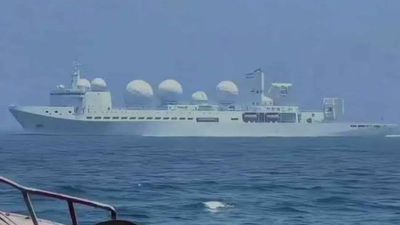 Chinese Spy Ship Liaowang-1 Spotted Near Oman: Why Its Presence Near Oman Is Concerning For US Military
 -
 Iran Earthquake: 4.1 Magnitude Tremor Recorded Near Bandar Abbas
 -
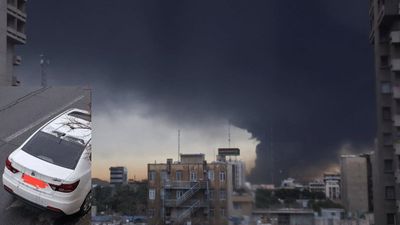 Black Rain in Tehran: Can War Cause Acid Rain? If So, What Are Its Risks? Watch
 -
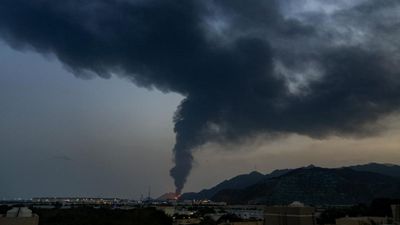 Water Wars: How US Attacks On Desalination Plants In Iran Could Leave The Country Facing Water Shortage
 -
 UAE Attacks Iran, Becomes 5th Nation To Enter War; Reports Suggest Strike On Iranian Facility
 -
 China Warns Against Foreign Push For Regime Change In Iran, Urges End To US-Israel Strikes
 -
 Russia Accused of Sharing Military Intelligence With Iran to Track US Forces: Report
 -
 Donald Trump Calls Iran “Loser Of The Middle East”, Warns It Will Be “Hit Very Hard”
 -
 Blast Outside US Embassy In Oslo Triggers Major Police Response, Investigation Underway
 -
 Gold Rate Today 7 March 2026: IBJA Gold Prices Updated; Retail Rates At Tanishq, Malabar, Kalyan, Joyalukkas
 -
 Gold Silver Rate Today, 7 March, 2026: City-Wise Prices As MCX Gold, Silver Rise Amid Safe-Haven Demand
 -
 Vijay-Trisha Affair: Did Trisha Hint At Marriage With ‘Big Announcement After Election’ Post?



 Click it and Unblock the Notifications
 Sign in with Google