


H-1B Visa $100,000 Fee Takes Effect: Key Questions Answered for Indian Professionals


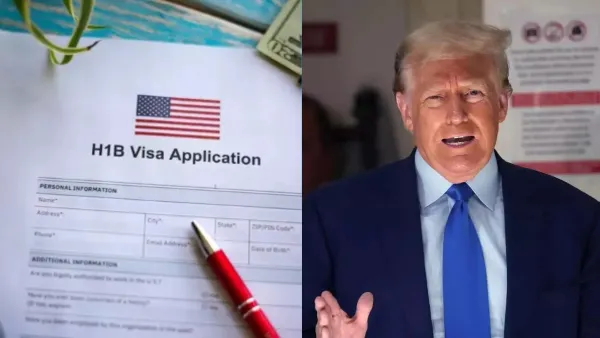
The recent executive order by President Donald Trump has caused concern in the tech industry and among Indian H-1B visa holders. The order introduces a $100,000 fee for certain H-1B visa applications. However, there is confusion about its implications. Here's a breakdown of what the order entails and dispels some common myths surrounding it.
AI-generated summary, reviewed by editors
In 2024, Indians accounted for 71% of the 399,395 H-1B visa recipients, while China ranked second with just 11.7%. Over the years, India has consistently held the largest share of H-1B visa holders.
With Indians making up more than 70% of all H-1B recipients, any new restrictions are expected to disproportionately impact the Indian diaspora in the United States.
H-1B Visa $100,000 Fee: Key Questions Answered
Q1: Who is required to pay the $100,000 H-1B fee?
A: The fee applies only to new H-1B petitions for workers currently outside the United States. H-1B workers already in the U.S. are not affected unless they apply for renewals or new petitions from abroad.
Q2: Can the $100,000 fee be waived?
A: Yes. The Department of Homeland Security (DHS) can waive the fee for industries critical to U.S. national interests, including defense contractors, essential healthcare workers, and STEM researchers. Waivers are allowed when hiring these workers benefits the U.S. without compromising security or welfare.
Q3: Will current H-1B visa holders be affected?
A: No. Current H-1B visa holders retain their status under existing rules. The fee applies only to petitions filed after September 21, 2025. Existing visas are not revoked or canceled.
Q4: Is the $100,000 fee an annual requirement?
A: No. The fee is temporary and set for a 12-month period, after which it will be reviewed. It is not a recurring annual fee unless further extended.
Q5: Can companies bypass the fee using B-visas?
A: No. The executive order explicitly prohibits using B-visas to circumvent the H-1B fee. The State Department will provide strict guidance to prevent misuse of B-visas.
Q6: Who benefits from this fee policy?
A: The policy prioritizes highly skilled and well-paid foreign workers. It targets outsourcing firms that rely on cheaper labor, encouraging U.S. employers to hire fewer but more highly compensated H-1B workers.
Q7: Who pays the $100,000 fee?
A: Employers are responsible for paying the fee on behalf of foreign workers. Documentation proving payment is required before filing an H-1B petition.
Q8: Will this fee impact H-1B renewals or transfers?
A: For workers already in the U.S., immediate changes are minimal. However, renewals or transfers filed from outside the U.S. may incur higher costs if employers choose to refile petitions abroad.



 Click it and Unblock the Notifications
 Sign in with Google