


Mars had water once, finds NASA's rover 'Opportunity'


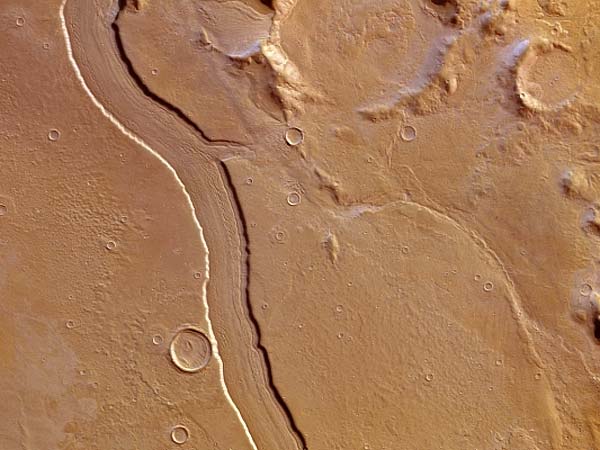
These evidences back similar discoveries made by Curiosity on the other side of the planet, scientists said on Thursday.
Opportunity, along with its twin, Spirit, landed on Mars 10 years ago for concurrent 90-day missions to look for clues of the past existence of water.
Both rovers did so, confirming evidence collected by orbiting spacecraft that Mars, the planet believed to be most like Earth in the solar system, was not always the cold, dry desert that appears today. curiosity arrived much later, in August 2012, equipped with an onboard chemistry lab, arrived for follow-up investigations to determine if Mars had other ingredients essential for supporting life.
On the other side of the planet, meanwhile, Opportunity has been analyzing water-bearing rocks at the rim of an ancient impact crater called Endeavour. Rather than the chemical fingerprints of acidic, salty water found at previous sites, Opportunity discovered telltale clays called smectites that form in Ph-neutral water.
"It's like drinking water," planetary scientist Ray Arvidson, with Washington University in St. Louis, said in an interview.
"This would have been a niche for whatever life at the time existed," he said.
The finding adds to an emerging picture of a planet that spent its first billion years or so warmer than it is today, with pools of fresh water on its surface, scientists say.
Gradually, water activity declined and what did exist became acidic, scientific findings reveal, and then, beginning about 3 billion years ago, Mars dried up.
"Most of the activity on Mars in terms of habitability and water activity was concentrated in the first billion or so years," said Opportunity lead scientist Steve Squyres, with Cornell University in New York.
Opportunity is expected eventually to head south toward a ridge on the rim of Endeavour Crater that appears to contain a much richer cache of clay-bearing rocks.
Curiosity, which is exploring an area known as Gale Crater, is driving toward a three-mile (5 km) high mountain of layered deposits.
By studying rocks at various levels, scientists expect to not only get a better idea of how long the planet was able to sustain life, but where conditions might be favorable to perverse key evidence, such as organic carbon.
Oneindia news
(With agency inputs)



 Click it and Unblock the Notifications
 Sign in with Google