


Fukushima nuclear accident a 'man-made' disaster: probe


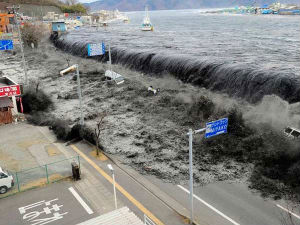
"The TEPCO Fukushima Nuclear Power Plant accident was the result of collusion between the government, the regulators and TEPCO, and the lack of governance by said parties," said the report by the Diet's Fukushima Nuclear Accident Independent Investigation Commission.
"They effectively betrayed the nation's right to be safe from nuclear accidents. Therefore, we conclude that the accident was clearly 'man-made'."
"We believe that the root causes were the organisational and regulatory systems that supported faulty rationales for decisions and actions, rather than issues relating to the competency of any specific individual."
The probe is the third of its kind in Japan since the world's worst nuclear crisis in a generation.
An earlier report by the plant operator Tokyo Electric Power (TEPCO) had all but cleared the huge utility, saying the size of the earthquake and tsunami was beyond all expectations and could not reasonably have been foreseen.
But an independent group of scholars and journalists, who reported their findings in Feb, said TEPCO could and should have done more.
It also said that had the company had its way, its staff would have been evacuated from the crippled plant and the catastrophe could have spiralled even further out of control.
The findings published on Thursday call for further investigation into the impact of the 9.0 magnitude earthquake -- as opposed to the towering tsunami -- on the reactors at Fukushima.
"As for direct cause of the accident, the commission reached the conclusion that we cannot definitely say any devices that were important for safety were not damaged by the earthquake," it said.
"We cannot rule out the possibility that a small-scale LOCA (loss-of-coolant accident) occurred at the reactor No. 1 in particular."
Although many scientists and activists have questioned the dominant narrative that cooling systems were knocked out by the rising waters, the government and TEPCO have been unwilling to say the reactors could have been damaged by the initial earthquake.
Tectonically-volatile Japan has a network of nuclear reactors that, until Fukushima, had supplied around a third of the nation's electricity.
The nuclear industry has long boasted of its many safeguards against earthquakes, but much recent public opposition to atomic power has focussed on plants' vulnerability, especially those that sit near seismic faults.
AFP



 Click it and Unblock the Notifications
 Sign in with Google