


South Korea's Martial Law Crisis: A Shocking Decree And A Swift Reversal


South Korea's political landscape was rocked on December 3, 2024, when President Yoon Suk Yeol made an unprecedented move, declaring martial law across the nation.
What followed was a whirlwind of political chaos, swift opposition, and a reversal of the decree within hours, as reported by CNN.

Here's a breakdown of how events unfolded:
A Surprise Announcement
In a late-night address, President Yoon declared martial law, accusing the opposition Democratic Party of anti-state activities and stalling government operations. He argued that the measure was necessary to protect the country from threats, particularly from North Korea. Troops were immediately deployed, and the National Assembly found itself at the center of the storm as military units moved in to enforce the decree.
Recommended Video
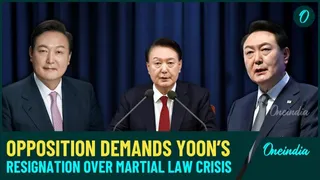
Political Backlash and Public Outcry
The declaration sent shockwaves through the country. Lawmakers from the Democratic Party, which holds the majority in Parliament, quickly called the move unconstitutional, as reported by CNN news. Citizens took to the streets in protest, demanding that the president step down. Tensions rose as news spread that people could be arrested without warrants under the new martial law measures.
Parliament Takes Action
In a dramatic twist, South Korea's National Assembly held an emergency session to vote on the decree. Lawmakers from across the political spectrum united to block the president's martial law, with 190 out of 300 parliamentarians voting against it. The swift parliamentary action was a crucial moment in defending South Korea's democratic institutions.
The President's Backpedal
Just hours after declaring martial law, President Yoon had no choice but to backtrack. His cabinet announced the reversal of the decree, and the military withdrew from key locations. The president, still defiant, blamed the opposition for disrupting the government's agenda and insisted that martial law was meant to safeguard the country, as per CNN report.
The Fallout
While martial law was lifted, the political fallout was far from over. The Democratic Party, furious at what they saw as an abuse of power, called for President Yoon's resignation and threatened impeachment proceedings. Public reactions were mixed, with many relieved that the crisis had been averted, but others were left questioning the stability of their democracy.
International Concern
The sudden announcement of martial law also raised alarms internationally. The United States, a key ally of South Korea, expressed deep concern over the decision, noting that it had not been informed in advance, as per media reports. The Biden administration emphasized its commitment to the South Korean-U.S. alliance and vowed to monitor the situation closely.
A Nation in Uncertainty
While the immediate crisis was resolved, the events have left a lasting impact on South Korea's political climate. President Yoon's controversial decree has sparked debates over the limits of executive power, the role of the military in governance, and the health of South Korea's democracy. What started as a surprise decree has now become a defining moment in South Korea's modern political history, one that will shape the country's future for years to come.



 Click it and Unblock the Notifications
 Sign in with Google