


Pakistan University Now Starts Sanskrit Course, Aims To Produce Mahabharata, Gita Scholars In 10 Years


In a development that would have been unthinkable a generation ago, the classical cadences of Sanskrit are once again echoing within the walls of a Pakistani university. Breaking a silence that has endured since the Partition of 1947, the Lahore University of Management Sciences (LUMS) has formally introduced Sanskrit into its curriculum, marking a subtle but significant cultural shift.
This academic journey began modestly as a three-month weekend workshop. However, the overwhelming interest from a diverse group of students, lawyers, researchers, and academics signaled a latent curiosity. Recognizing this, LUMS has now transformed the initiative into a full-fledged, four-credit university course, with ambitions to expand it into a year-long programme by 2027, The Tribune reported.
AI-generated summary, reviewed by editors

The driving force behind this endeavour is a compelling academic necessity. As Dr. Ali Usman Qasmi, Director of the Gurmani Centre at LUMS, reveals, Pakistan sits atop a veritable treasure trove of Sanskrit heritage that remains largely untouched by local scholars. The Punjab University library in Lahore houses one of the world's richest collections of Sanskrit palm-leaf manuscripts, meticulously catalogued in the 1930s by scholar J.C.R. Woolner. Yet, in a poignant reflection of post-Partition intellectual divides, not a single Pakistani academic has engaged with this archive since independence. "Only foreign researchers use it," Dr. Qasmi notes, emphasising that training local scholars is key to reclaiming this intellectual legacy.
The course at LUMS is just the beginning. The university plans to soon offer studies on seminal texts like the Mahabharata and the Bhagavad Gita. "Hopefully, this sets a momentum," Dr. Qasmi envisions. "In 10-15 years, we could see Pakistan-based scholars of the Gita and the Mahabharata." This initiative is part of a broader effort to strengthen the subcontinent's linguistic ecosystem at LUMS, which already includes Sindhi, Pashto, Punjabi, Balochi, Arabic, and Persian.
At the heart of the classroom is Dr. Shahid Rasheed, an Associate Professor of Sociology from Forman Christian College, whose personal passion paved the way for this institutional leap. A linguist at heart, Dr. Rasheed's journey into Sanskrit began with Arabic and Persian, before he ventured into what he saw as the foundational language of the region. With no local teachers or textbooks, he turned to the digital world, studying under scholars from Cambridge and Australia for over a year to master classical Sanskrit grammar.
When LUMS approached him, Dr. Rasheed took a sabbatical to teach. His students, he shares, experienced moments of revelation. While teaching subhashitas (wisdom verses), many were fascinated to discover the profound Sanskrit roots of everyday Urdu words. "Many didn't even know that Sanskrit was different from Hindi," he says. Initially daunted by the language's complexity, the students found immense pleasure in deciphering its logical structure. "Modern languages derive from classical traditions. There is just a veil that separates them-once you cross it, you realise they are all our own," Dr. Rasheed reflects.
This venture is not without its political sensitivities in a nation founded as a Muslim homeland. Yet, both scholars perceive a shifting intellectual climate. Dr. Rasheed often faces curious questions about why a Pakistani Muslim would study Sanskrit. His response is firm and visionary: "Why should we not learn it? It is the binding language of the entire region." He points to the ancient grammarian Panini, whose village lay in this region, and to the Indus Valley Civilisation's legacy. "Sanskrit is like a mountain-a cultural monument. We need to own it. It is ours too; it's not tied to any one particular religion."
For Indian readers, this development across the border is more than an academic footnote; it is a poignant reminder of a shared civilisational heritage that politics has long obscured. It speaks to a nascent desire, particularly among the younger generation, to engage with the subcontinent's pluralistic past on their own terms.
Dr. Rasheed's concluding thought offers a powerful vision for the future: "If we want people to come closer, then it's essential to understand and absorb our rich classical traditions. Imagine if more Hindus and Sikhs in India started learning Arabic, and more Muslims in Pakistan took up Sanskrit, it could be a fresh, hopeful start for South Asia, where languages become bridges instead of barriers."
In the hallowed halls of LUMS, a small class of students is thus engaged in an act of quiet, scholarly reclamation-not of territory, but of a common inheritance. It is a tentative but telling step towards a South Asia where the echoes of the past are not heard as dissonance, but as a complex, harmonious chord linking its people.
-
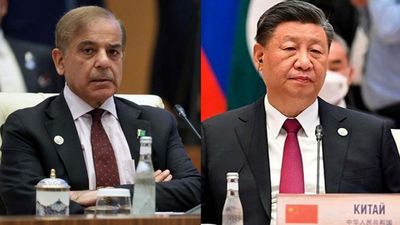 China, Pakistan Call for Immediate Ceasefire in Iran War, Push Peace Talks ‘As Soon As Possible’
 -
 Gold Rate Today 31 March 2026: Latest IBJA Benchmark And Tanishq, Kalyan, Malabar, Joyalukkas Rates
 -
 Gold Rate Today 1 April 2026: Latest IBJA Gold Rates, Tanishq, Kalyan, Malabar, Joyalukkas Prices
 -
 Gold Silver Rate Today, 31 March 2026: City-Wise Prices, MCX Trend As Gold Rises And Silver Slips
 -
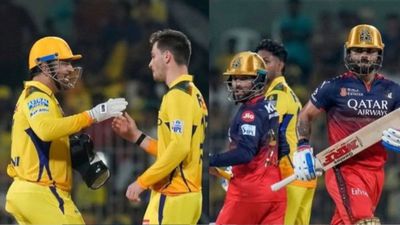 RCB Vs CSK IPL 2026 Tickets At Chinnaswamy: Official Sale, Metro Perks, And Entry Guidelines
 -
 Hyderabad Gold Silver Rate Today, 1 April 2026: Check 18K, 22K, 24K Gold And Silver Prices In Nizam City
 -
 War Lockdown Notice Goes Viral Over Iran Claims, Sparks Panic Online
 -
 Hyderabad Gold Silver Rate Today, 31 March 2026: Gold And Silver See Fresh Movement, Check Latest City Rates
 -
 Gold Silver Rate Today, 1 April 2026: City-Wise Prices Rise Sharply, MCX Gold And Silver Surge
 -
 Laid Off After 20 Years Via Email: Oracle Faces Criticism As Viral Post Highlights Cancer Patient’s Job Loss
 -
 UP STF Nabs Maulana Abdullah Salim Over Controversial Comment On CM Yogi's Mother
 -
 Iran-US War: Donald Trump’s Missteps And The NATO Paradox



 Click it and Unblock the Notifications
 Sign in with Google