


Iran-US War: Donald Trump’s Missteps And The NATO Paradox


There are days and then there are days. Donald Trump's latest threat of "strongly considering" pulling the United States out of NATO, comes not as a strategic doctrine, but as a reaction to a crisis that bears his own imprint. The Iran files show a pattern: escalation without endgame, pressure without coalition discipline and rhetoric substituting for strategy.

AI-generated summary, reviewed by editors
The first American misstep was structural. The withdrawal from the Iran nuclear deal (JCPOA) in 2018 dismantled a functioning, if imperfect, verification regime. At the time, the International Atomic Energy Agency had repeatedly confirmed Iranian compliance. By exiting unilaterally, Washington forfeited inspection leverage and fractured alignment with European partners- Britain, France, and Germany- who remained invested in the agreement. What followed was predictable: Iran resumed enrichment at higher levels, shrinking its breakout time and raising regional anxieties.
Second, the "maximum pressure" campaign was heavy on sanctions but light on diplomacy. US sanctions did significantly contract Iran's economy- oil exports fell sharply, inflation surged. But coercion did not translate into renegotiation. Instead, Tehran adapted through regional proxies and asymmetric responses. The absence of a credible diplomatic off-ramp turned pressure into stalemate, not leverage.

Third, Trump's signalling has been inconsistent. Military posturing- aircraft carrier deployments, targeted strikes, red lines. All this oscillated with sudden de-escalatory statements. This inconsistency erodes deterrence. Adversaries test ambiguity; allies distrust it. In the current crisis, even close partners like the UK have opted for calibrated distance rather than full alignment, citing legal constraints, domestic pressures and strategic caution.
Fourth, Trump's tendency to personalise alliances has weakened coalition coherence. His public disparagement of NATO as a "paper tiger" and remarks about allied military capabilities may play well to a domestic audience sceptical of burden-sharing, but they carry strategic costs. Alliances function on credibility and predictability. Undermining both during an active regional crisis reduces Washington's ability to mobilise collective pressure on Iran.
Fifth, and most consequentially, Trump appears to be externalising responsibility for a crisis that is, in part, the product of earlier policy choices. Blaming allies for not joining a conflict they neither shaped nor endorsed is politically expedient, but strategically hollow.
The NATO paradox lies here: Trump needs the alliance more than he admits. The United States' global military posture- bases, logistics, intelligence sharing, force projection- rests heavily on allied infrastructure. NATO is not charity; it is an amplifier of American power. European bases enable rapid deployment to the Middle East. Intelligence networks improve situational awareness. Even burden-sharing debates, often cited by Trump, have trended in Washington's favour in recent years, with increased European defence spending since 2014.
More importantly, legitimacy flows through alliances. Any sustained pressure on Iran- economic, diplomatic, or military- requires multilateral buy-in to be effective. Unilateral action invites evasion; coordinated action constrains it. By threatening withdrawal, Trump weakens the very architecture that converts US power into global influence.
Across the Atlantic, the UK's restraint underscores this divergence. Prime Minister Keir Starmer's insistence on acting in the national interest reflects domestic realities: economic fragility, political volatility and a war-weary public after Iraq and Afghanistan. Britain is recalibrating toward Europe, not out of defiance, but necessity.
In the end, Trump's Iran approach reveals a contradiction. He seeks decisive outcomes while dismantling the coalitions that make such outcomes possible. NATO, for all its imperfections, remains central to American leverage. Walking away from it in the midst of a self-escalated crisis would not signal strength- it would confirm strategic overreach without support.
-
 Gold Silver Rate Today, 30 March 2026: City-Wise Prices, MCX Update On 24K Gold, 22K Gold And Silver
 -
 LPG Crunch: Karnataka Brings New SOPs, Makes PNG Registration Mandatory for Businesses
 -
 Hyderabad Gold Silver Rate Today, 30 March 2026: Check Fresh 24K, 22K, 18K Gold And Silver Prices In City
 -
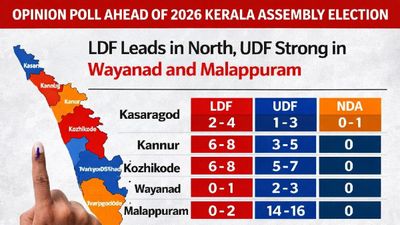 Opinion Poll For Kerala Assembly Election 2026: Ldf Strength In Kannur And Kasaragod
 -
 Tamil Nadu Polls 2026: Vijay Reveals Rs 645 Crore Assets, Rs 266 Crore in Banks; Know All His Declaration
 -
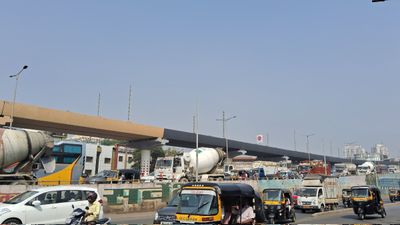 Mumbai Metro Line 9 Set for April 3 Launch, Dahisar-Mira Bhayandar to Get Direct Boost
 -
 Hyderabad Gold Silver Rate Today, 31 March 2026: Gold And Silver See Fresh Movement, Check Latest City Rates
 -
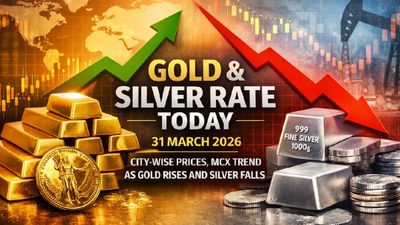 Gold Silver Rate Today, 31 March 2026: City-Wise Prices, MCX Trend As Gold Rises And Silver Slips
 -
 Rahul Arunoday Banerjee Autopsy Report: Actor Was Underwater For Over An Hour, Sand Found In Lungs
 -
 Thunderstorm Warning In Delhi NCR: IMD Issues Orange Alert Amid Sudden Weather Shift
 -
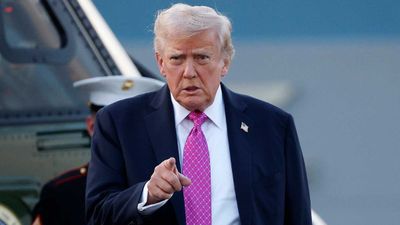 Trump Hints At Breakthrough With Iran Amid War Escalation, Calls Recent Move A ‘Sign Of Respect’
 -
 UP STF Nabs Maulana Abdullah Salim Over Controversial Comment On CM Yogi's Mother



 Click it and Unblock the Notifications
 Sign in with Google