


7 ways we can help slow climate change


Brussels, Sep 22: Many of us bemoan our inability to limit the wildfires, cyclones and flooding that are being experienced with more frequency and intensity due to climate change. There is a belief that polluting fossil fuel companies cannot be stopped, that governments will not regulate them, that emission reduction targets will never be met.
But individually — and in the end collectively — there are many things we can do to help limit the greenhouse gas (GHG) emissions that supercharge global heating.

1. Ditch airplanes and petrol vehicles for buses, trains or bicycles
Transport generates around one fifth of the world's emissions, with road traffic as the worst offender.
One easy way we can cut emissions is to decarbonize our transport by ditching petrol cars for trains, bicycles, e-vehicles, and, whenever possible, walking — the ultimate zero-emission transport.
In cities, electrified transport options from e-scooters to e-buses are becoming a low-emission route from A to B. A petrol car pumps out over 10 times more carbon than an electric scooter — when also factoring in manufacturing and disposal emissions.
For the roughly 10% of the world's population who has ever boarded a flight, favoring trains over planes can also have a big impact. A typical rail journey between European cities emits up to 90% less CO2 than an equivalent flight.
2. Eat plants instead of animals
Farming meat and dairy contributes around 15% of global GHG emissions — not to mention biodiversity loss, contamination of soils and pollution.
When the Intergovernmental Panel on Climate Change (IPCC) this year said that emissions need to be cut by half by 2030 to mitigate global heating, it stressed that a shift to "diets high in plant protein and low in meat and dairy" had the greatest potential to lower greenhouse gases.

So going vegetarian — or even better, vegan — seems like a no-brainer for those looking to mitigate their climate impact.
A boom in climate-friendly plant-based meats makes that choice even easier.
But so far plants only provide 2% of protein — though that's set to rise to 11% by 2035 and could be accelerated if more of us reduce our demand for meat and dairy, according to the Boston Consulting Group.
3. Pressure governments to take action
School kids at the Fridays for Future protests showed it's possible to take a collective stand for the climate. Politicians might not be doing enough, but they have had to listen as climate concerns drive voting intentions at elections around the world — including recently in Australia, with the new leader promising to significantly raise climate ambition (even if many believe the target remains inadequate).
And sometimes the courts also listen. In April 2021, young people from Fridays for Future successfully argued in a German higher court that a lack of climate action threatened their fundamental freedoms and was unconstitutional. As a result, the court forced the federal government to strengthen emission reduction targets — which it did a couple of months later.
With climate ranking as the top issue of concern among a rising generation of voters, many are pressuring politicians on climate via protests, social media campaigns, or writing to local representatives.
Demanding carbon neutrality by 2030 — the goal of a citizen initiative for a climate referendum in the German capital — is a good place to start.
4. Switch to green energy providers and (when possible) install renewables
Burning fossil fuels for energy is the largest source of global GHG emissions. This makes choosing green electricity from clean, renewable sources such as wind or solar a great way to cut a key source of climate wrecking carbon.
And consumers have already made a difference. By 2019 in the European Union, renewable electricity generation doubled from 2005, making up 34% of all electricity generation. This means that coal, the highest emitting fossil fuel, no longer supplies most of the EU's electricity.

Those living in a house or even an apartment block can also try to install clean solar power on the roof, or electric heat pumps as a substitute for gas heating. Some communities are even getting together to run their neighborhoods almost exclusively on renewable energy.
5. Turn off the lights, turn down the heating
Something as simple as turning the heating down can save a lot of energy. That's why the German government, faced with an energy crisis due to the nation's reliance on Russian gas, will limit heating temperatures to 19 degrees Celsius this winter in public buildings.
Shutting down your computer at night and eliminating "vampire" power by unplugging idle electronics is another climate change busting action we can achieve today. Even easier is to simply turn off the lights when we aren't in the room.
Using highly energy-efficient appliances — induction instead of gas stoves, for example — is another step forward. Better still, demand that your government switch off the night lights at monuments and buildings, a policy recently implemented in the German capital.
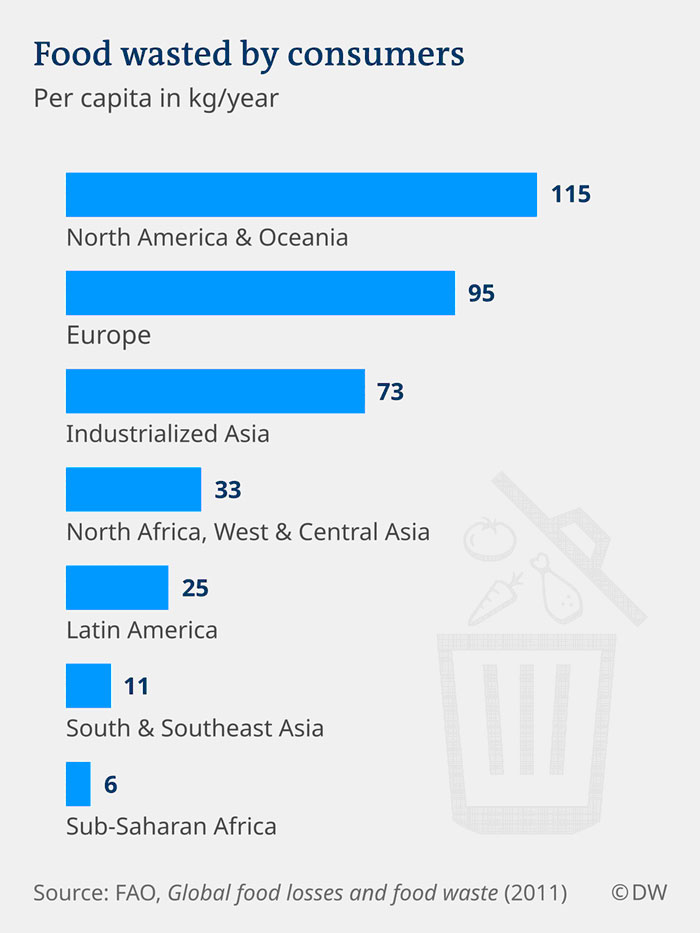
6. Waste less food
Meanwhile, around one third of food grown globally is thrown away. This food loss and waste is a massive carbon emitter when the production, transportation and handling of food is calculated — food that ends up in landfills also generates methane, a highly potent GHG over the short term.
In the US, annual food loss and waste creates 170 million metric tons of carbon dioxide equivalent GHG emissions, and that's excluding landfill emissions. It's equivalent to the annual emissions of 42 coal-fired power plants.
So if we can't eat everything in the fridge, at least compost the rest — to fertilize the garden or for biogas.
Meanwhile, pressure supermarkets to stop throwing away extra food, instead offering it to foodbanks or charities; or ask restaurants to offer "doggy bags" for uneaten food — both measures are included in a food waste law recently passed in Spain.
7. Plant trees
Trees are vital carbon sinks yet deforestation continues at alarming rates — logging of the Amazon forest, for example, rose by 20% in the last year.
More than ever, planting trees is one of the best thing we can do as individuals to reduce CO2 in the atmosphere.
While also cleaning the air, increasing biodiversity and maintaining healthy soils, trees too save energy — especially in cities where more plants on the street keep things cooler and reduce the need for air conditioning — according to non-profit Become Carbon Negative.
So too in the winter, trees can shelter homes from the wind, helping to reduce heating costs by up to 25%.
Source: DW



 Click it and Unblock the Notifications
 Sign in with Google