


India Census 2026 Begins: A Massive Nationwide Exercise to Count Over 1.4 Billion People


India has rolled out its long-delayed Census 2026, launching one of the most extensive administrative exercises ever undertaken anywhere in the world. After a gap of more than 15 years since the last count in 2011, the country is set to gather fresh, comprehensive data on its population, households, and socio-economic conditions.
Conducted by the Government of India, the census will cover every corner of the country-from dense urban centers to remote villages-through a structured, multi-phase process.
AI-generated summary, reviewed by editors
Scale and Reach of Census 2026

The census will span:
- 36 states and union territories
- Over 7,000 districts
- Nearly 9,700 towns
- Around 640,000 villages
To manage this enormous task, more than 30 lakh enumerators and supervisors-primarily teachers, government staff, and local officials-have been deployed. Over the next year, they will visit households across India to ensure that every individual is counted.
What the Census Will Capture
Census 2026 will collect detailed information through a set of 33 questions posed to households. The data gathered will include:
- Population and demographic details
- Education levels
- Migration patterns
- Fertility trends
- Housing conditions and assets
Importantly, this edition of the census will also include caste data, adding a significant dimension to India's socio-economic database.
First Digital Census in India
A key feature of Census 2026 is its shift to digital data collection. Enumerators will use mobile applications to record and upload information in real time, reducing delays and improving accuracy.
In addition, citizens can now participate directly through a self-enumeration system. A dedicated online portal-available in 16 languages-allows residents to submit their details independently and generate a unique ID, which will later be verified by officials.
Two-Phase Census Process
The census will be conducted in two stages:
Phase 1: House Listing and Housing Census
This phase focuses on physical and economic conditions of households, including housing quality, access to amenities, and asset ownership.
Phase 2: Population Enumeration (scheduled for February 2027)
This stage will capture individual-level data such as age, education, occupation, and other demographic indicators, along with caste information.
Phased Rollout Across Regions
The initial phase has already begun in selected regions, including Delhi, Goa, Karnataka, Mizoram, Odisha, and the Andaman and Nicobar Islands.
- Self-enumeration: April 1 to April 15, 2026
- House listing survey: April 16 to May 15, 2026
- Why Census 2026 Is Crucial
India became the world's most populous country in 2023, according to the United Nations Population Fund. Despite its size, the country has a relatively young population, with a median age of 28 and nearly 70% in the working-age group.
The updated data from Census 2026 will play a critical role in shaping government policies, welfare schemes, infrastructure planning, and economic strategies for the coming decade.
A Long-Awaited Data Reset
Originally scheduled for 2021, the census was delayed due to the COVID-19 pandemic and other administrative challenges. Its launch now marks a significant step toward updating India's demographic profile after years of gap.
With digital tools, expanded data collection, and nationwide coverage, Census 2026 is set to become a cornerstone for India's future planning and development.
-
 Gold Rate Today 30 March 2026: IBJA Benchmark Rates, Tanishq, Kalyan, Malabar, Joyalukkas Prices
 -
 Gold Silver Rate Today, 30 March 2026: City-Wise Prices, MCX Update On 24K Gold, 22K Gold And Silver
 -
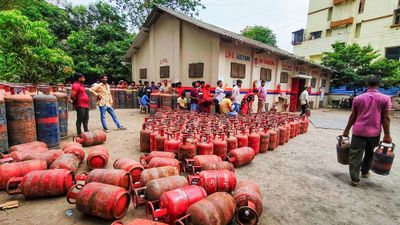 LPG Crunch: Karnataka Brings New SOPs, Makes PNG Registration Mandatory for Businesses
 -
 Hyderabad Gold Silver Rate Today, 30 March 2026: Check Fresh 24K, 22K, 18K Gold And Silver Prices In City
 -
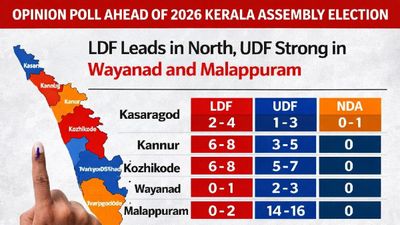 Opinion Poll For Kerala Assembly Election 2026: Ldf Strength In Kannur And Kasaragod
 -
 Tamil Nadu Polls 2026: Vijay Reveals Rs 645 Crore Assets, Rs 266 Crore in Banks; Know All His Declaration
 -
 Mumbai Metro Line 9 Set for April 3 Launch, Dahisar-Mira Bhayandar to Get Direct Boost
 -
 Trump Hints At Breakthrough With Iran Amid War Escalation, Calls Recent Move A ‘Sign Of Respect’
 -
 Rahul Arunoday Banerjee Autopsy Report: Actor Was Underwater For Over An Hour, Sand Found In Lungs
 -
 West Bengal Assembly elections: Election Commission transfers heads of 173 police stations
 -
 Delhi Weather Brings Relief: IMD Issues Yellow Alert For Rain, Thunderstorms And Gusty Winds; Check Forecast
 -
 Tamil Nadu Elections 2026: Vijay Files Nomination Same Day as MK Stalin, Sets Up Symbolic Political Face-Off



 Click it and Unblock the Notifications
 Sign in with Google