


Odisha govt ropes in drones to curb elephant menace
Drones can be a valuable tool in tracking man-elephant conflict and helping to minimise the risk of such conflicts by providing timely and accurate information about the elephants' movements and behavior.


In a bid to curb man-animal conflict, the Odisha government has roped in drones in the Keonjhar forest division. Drones equipped with thermal cameras have proven to be a very useful tool for the forest service at night, like a third eye.
"Drones with thermal cameras have proved very beneficial during the night as a third eye of the forest department. The thermal cameras help us know their (elephant) location, movement, behavior and what they are eating," said Dhanraj Dhamdhere, DFO, Keonjhar wildlife division.
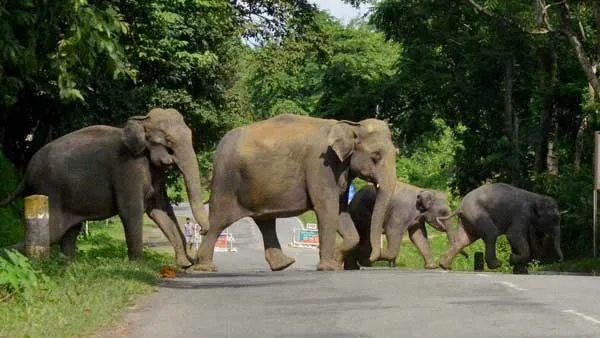
Keonjhar abode to 50 elephants
Keonjhar district is home to 50 elephants according to the last census. The district has vast expanse of dense forest often witnesses man-elephant conflicts with both humans and elephants losing their lives.
How drones help track man-animal conflict in Odisha
Drones equipped with cameras and sensors can be used to track man-elephant conflict by providing an aerial view of the situation. This data can then be analyzed to identify patterns and trends in the elephants' movements, as well as their preferred feeding and watering areas.
Drones can also be used to monitor and detect the presence of elephants in areas where they are not supposed to be, such as agricultural fields or human settlements. By using thermal imaging sensors, drones can detect the body heat of elephants and track their movements, even in low light conditions.
Furthermore, drones can be used to deploy deterrents such as loud noises, bright lights, or even non-lethal projectiles to scare off elephants from entering areas where they are not welcome. By using drones, the response time can be greatly reduced, which is critical in preventing man-elephant conflicts.
The staggering numbers
Notably, Odisha is seeing an increase in man-elephant conflict. As many as 784 elephants have died in Odisha in a span of 10 years Accidents, disease, poisoning by poachers and electrocution were some of the reasons for the elephant deaths in the state, Forest, Environment and Climate Change Minister P K Amat said in the Odisha Assembly.
The minister noted that the state had 1,976 elephants according to the 2017 census, and that whereas 80 people died in man-elephant contacts in 2012-13, that number rose to 105 in 2017-18, 139 in 2020-21, and 112 in 2021-22.
The state government has however made a provision of Rs 4 lakh as compensation to family members of people getting killed by jumbos. rutal attack" and there was a full-scale assault on the country's institutions.



 Click it and Unblock the Notifications
 Sign in with Google