


'China lost valuable mileage gained vis-a-vis India'


From the foreign policy perspective, we do not know exactly what China has gained by the DBO exercise. But one thing is certain; they have lost the valuable mileage gained in building bridges with India. It is in the long term interest of China not only to keep its relations with India on an even keel but add value to it.
Though the Chinese incursion was not very well covered by foreign media, it is sure to have rung bells of alarm among countries like Japan, Philippines, Vietnam and others who have their own problems in handling contentious territorial claims of China, in recent times. No doubt India would now be more inclined to build upon existing strategic alliances existing with like-minded allies in Asia.
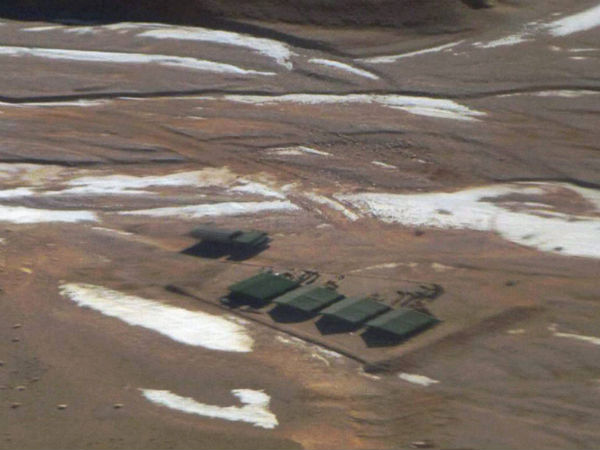
It is probably equally a setback for India's policy prescription which emphasized peaceful intentions in its handling of problem areas between the two countries. Despite public pressure, it had refrained from adopting the muscular 'hot and cold' method of alternating power assertion and friendly parleys (as the Americans do) in dealing with China. Even in the DBO incursion, India had done so.
However, the Chinese decision to pull back came only after India showed its strategic teeth when its offer to resolve the issue through parleys failed. It came about only after Indian Foreign Minister Salman Khurshid stood firm and informed the increasingly restive public that his two week-long efforts to resolve the issue through talks had proved unsatisfactory.
He also indicated that he was having second thoughts on visiting China on May 9, if the Chinese do not vacate the areas of intrusion. There were also other news stories hinting at Indian Prime Minister Dr Manmohan Singh extending his proposed visit to Japan by a day to hold strategic parleys with his Japanese counterpart. These moves came in tandem with the news of Indian troop reinforcements in the affected areas and discussion on Indian military plans. Cumulatively, these moves seem to have resulted in Chinese pull out of troops.
From strategic security perspective, the DBO incursion has validated Clausewitze's cliché ‘war is an extension of diplomacy' emphasizing diplomacy and power assertion mutually reinforce each other and the use of the mailed fist as much as the kid glove when necessary. But one lesson we cannot miss in this experience is that while every opportunity to resolve problems peacefully should be used, the option to use strategic power should considered in early stages.
The episode has shown the fragile nature of India-China relations which continue to be bugged by unresolved border issue despite successes working together in trade and commerce and on global issues. So the Chinese will continue to be tempted to use the border issue as the strategic ace to politically trigger confusion and confrontation within Indian democratic set up when it suits them. To foreclose this option to the Chinese, we need to insist on the Chinese to produce their maps which has been a long pending demand. Otherwise, endless rounds of border talks would be an exercise in futility.
On strategic front, despite all the well meaning plans to strengthen the infrastructure in Ladakh and Arunachal Pradesh, the progress is too slow for comfort. There is a need to show urgency in getting the job done rather than explaining the delays if we want to strengthen our strategic readiness. In this regard, we can learn from the large scale Chinese involvement in building the infrastructure in Pakistan Occupied Kashmir in their strategic interest, regardless of its impact on India-China relations. Our development activity in border areas should be carried out wholly focused on national interest, than what China or any other country feels about it.
This brings up the question of India's strategic relations with the U.S. Far from ganging up with the US against China or any other country, India need to take its strategic relationship with the US beyond the current low profile relationship between the armed forces of the two countries in its own long term strategic interest.
The difficult exercise of building a multifaceted strategic relationship with the US cannot be avoided anymore because the Afghan situation may reach criticality in 2015 disturbing our strategic environment, around the same time as Sino-Pak strategic relationship becomes more robust in the region. Of course a national consensus would be required for this and if the nation wills it can be achieved.
[Col R Hariharan is a retired military intelligence officer associated with the Chennai Centre for China Studies and the South Asia Analysis Group, an intelligence think tank. E-mail: [email protected] Website: www.colhariharan.org]



 Click it and Unblock the Notifications
 Sign in with Google