


'The dominant economy has excluded the lower classes'


Yes, media is not interested in any kind of movement per say that is not likely to increase its revenue.
Media is a business, pure and simple, in the era of globalisation. If media takes an interest in something and ignore some other, it should be reckoned as its strategy. It can boost up some seemingly minor issue if it sees potential of profit in it. It does not have any moral qualms that people innocently associate with it.
OneIndia: Does the country's economic sphere also witness a sense of exclusivity? We have grown into an urban-centric civilisation with little emphasis on the rural life. We are lighting up India by exploiting resources gathered from Bharat but are returning little back. The tribals, foresters, farmers, rural cottage industry workers are not getting to taste the fruits of the bigger economic growth. Is this a sustainable model for development? If that supply line collapses one fine morning, what will happen to the lopsided growth?
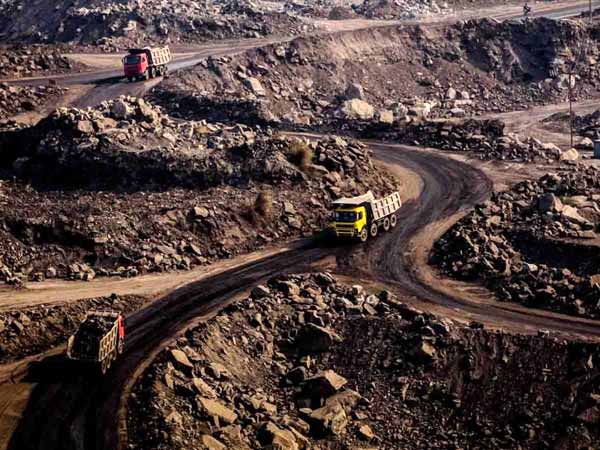
Dr Teltumbde: Yes, the country's economic sphere which is informed by capitalism is inherently based on some sink, either in geographical form or in social forms. The capitalist process drives it to create such sinks as the absorber of shocks of the capitalist crisis.
The growth of capitalism in the Western world was largely due to the exploitation of colonies in Asia, Africa and Latin America. Thereafter, it created its own sink in terms of negative terms of trade for Agriculture and excluded entire rural sphere. Now in its neo-liberal avatar, it creates sinks in terms of galloping inequalities. It is not us; the entire globe is following the same model of urban centric development.
China for instance, which in Mao's times focused on development of villages, has consciously reversed the policy to urbanisation. They may not be inherently wrong with urbanisation if we imagine future with advanced technology. After all, everybody has a right to enjoy amenities that the urban setting provides.
But are we at that stage or are we really driving urbanisation as China is doing? Answer will be in negative. Our urbanisation does not absorb surplus rural people. It is creating islands of prosperity for the rich and the swelling middle classes excluding all others.
Even the poor people who were a part of the urban settlements previously are being driven out to peripheries. So, it is essentially a process of exclusion of the lower classes. They are rather becoming nowhere classes. The agriculture, howsoever it suffers negative terms of trade, cannot absorb them. It is already crisis driven impelling middle farmers to suicides. The cities are demolishing their habitats to release lands for amenities for the rich.
You are very right; these urban settlements suck disproportionate resources from rural areas spoiling
their habitat of the poor. Take an example of consumption of electricity. The hamlets in Jharkhand or
Chhattisgarh that have been displaced by the coal companies to take up mining typically do not have water, coal, or fuel wood although their areas have these things in plenty. They are taken away to
generate power to be supplied to run the air conditioners in cities. There is little that really returned
to the villages. The kind of people that you mention are getting devastated in process. Land has been
the basic source people are clinging to and there is a big land grab operation by the corporates duly
supported by the state.
In forested areas where tribals are seating on a wealth of trillions of dollars worth minerals, the state has unleashed the military campaign like Operation Green Hunt basically to drive people from there; in cities, it has taken a drive to clearing slums so as to hand over the land to the builders and in rural areas they have given the freedom to corporates to acquire lands in the name of SEZ.
All these moves do not just exclude these people from the development process but are also aimed at
destroying them altogether. If we analyse each policy component of the government during the last two
decades, one can find this embedded in some degree in all.
There is no doubt about its unsustainablility. The capitalist model itself is not sustainable but instead
of learning from its experiences it has adopted a more extremist model of globalisation. That model
basically is premised on social Darwinism, which does not really care for the ones who cannot compete
in the marketplace.
It is emboldened by technological advances that have divided the economy into two parts: one, the dominant one confined to those who have purchasing power and two, those who just subsist, both as producers and consumers.
The production as well as consumption spheres have undergone a change in the dominant economy that has literally excluded the downtrodden. But the problem is that even the creed of social Darwinism will tend to marginalise progressively people making the pyramid base increasingly narrower. The system can be seen as unsustainable in many other ways: Environmental, moral, political and any other.



 Click it and Unblock the Notifications
 Sign in with Google