


Eight Years to save Planet Earth...


 Rise in Temperature
The Intergovernmental Panel on Climate Change (IPCC) expects a 3 to 11 degree increase in temperatures by the year 2100. Even a modest rise of 2 to 3 degrees Fahrenheit would result in huge amount of warming. Rise in temperature indeed will lead to rise in sea level. In June, 2003, 1700 people died during a heat wave hit in India, while 35000 Europeans died in a heat wave following August.
Rise in sea level
 Sea level rise comes from the thermal expansion of the upper ocean layers and melting of mountain glaciers. Experts says that in the last 100years has risen about 7 inches and is projected to increase another 6 to 36 inches or so by 2100. Islands are endangered by the rise in sea levels. National climate Data Center (NOAA) says that global warming has produced an increase in precipitation during the 20th century, mostly in the form of heavy rainstorms. In 1998 there was about 96 floods in 55 countries. Scientists are saying that global warming is causing early snow melts.
Deaths due to Climate Change
A study by scientists at the World Health Organisation(WHO) shows that around 154000 people die every year due to Global Warming. The number is due to double by 2020.
Coral Bleaching
We are losing our valuable Coral reefs. As a result of increased underwater temperature corals expels the algae that nourishes and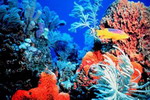 gives the coral its colour. This is called Coral bleaching. Corals Usually recovers from bleaching but it cannot survive the stress of constant warming waters.
Threat to Animals
Climate change could lead to the extinction of many animals including migratory birds, says a report commissioned by the UK government. Scientists have already observed a wide range of changes in the migration patterns of birds, fish and turtles, apparently in response to warming which has already taken place. Warmer seas could render some turtle species entirely female.
Threat to Polar bears
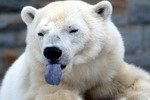 Temperatures in the Antarctic and Arctic has increased significantly to the point that sea ice has diminished in both regions. This results in threat to the habitat of Polar bear. The polar bear depends heavily on the capture of ringed seal, because this seal has a very heavy lipid layer. This fatty tissue is especially needed by the female, who banks on the energy stores for the winter when she gives birth to cubs. The decreasing Arctic ice will vastly diminish the chances of polar bears capturing these seals, because the bear stalks seals using the seal's breathing hole in the ice. Melting sea ice is leaving greater and greater distances for polar bears to travel in their hunt for food.
Coastal Flood, wildlife fire increasing, disappearing of beaches, melting glaciers, increasing ocean storm and coastal erosion, spread of infectious diseases, intense hurricanes are some of the other effects of Global Warming.
To tackle the issue of Global Warming, world nations are joining hands. The first step in this way is the Kyoto Protocol. On December 11, 1997 an International Protocol was proposed in Kyoto , Japan. In a nut shell, the agreement requires US, European Union and Japan to reduce the Green house gas emissions(below 1990 level) by 7%, 8% and 6% respectively by the year 2010. But in 2001, George W Bush announced US will abandon the Kyoto Protocol, because it produces about one quarter of the world's green house gases. This was regarded as a big blow to the effort to slow Global Warming. Truth remains that largest source of global warming pollution is the United States.
Although Global Warming is increasing, it is not alarming. Still we have time to save this beautiful Planet. A ray of hope still remains. Scientists are discovering ways to reduce the effect of CO2 output. Cost effective technologies to reduce Global Warming pollution are now available. Each of us can contribute to reduce Global Warming by make conserving energy a part of daily routine.
>



 Click it and Unblock the Notifications
 Sign in with Google