


Colombia court decriminalises cocaine, marijuana


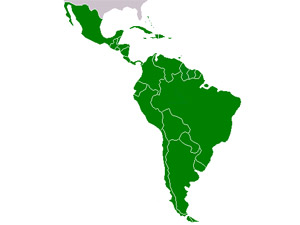
The latest move by the Latin American country is part of a new growing trend in this part of the world, i.e., to raise a voice against decades of suffering caused by the USA's failed prohibitionist drug policies.
Recently, The Uruguayan government announced that it would submit a proposal to legalise marijuana which, if brought into force, would make it the first nation in the world to sell marijuana directly to its people. The proposal was drafted by President José Mujica and his staff and requires parliamentary approval.
Uruguay and Colombia added strength to the growing political and judicial movement in Latin America and Europe that people who consume drugs should not be treated as criminals. Colombia's case has been particularly important for the country's court rejected former President Álvaro Uribe's efforts to criminalise drug-users and gave a strong basis to the new incumbent, Juan Manuel Santos's call for a change of drug policy. Other courts of the region have also supported the new movement emerging.
It is consistent with prior rulings by Colombian courts before former president Álvaro Uribe sought to undermine them, and also with rulings by the Supreme Court of Argentina in 2009 and other courts in the region. The Colombian Constitutional Court's decision is obviously most important in Colombia, where it represents both a powerful repudiation of former president Uribe's push to criminalise people who use drugs and a victory for President Juan Manuel Santos' call for a new direction in drug policy.
However, it is important to take note of the fact that most of the decriminalisation of drug-users initiatives have been taken by the national leaders and the parliaments. The presidents of Guatemala, Costa Rica, Ecuador and Argentina, too, are advocates of the decriminalisation movement, in some form or the other. The reformist attitude has emerged following the European reforms since the 1990s. Portugal, which had decriminalised drug possession in 2001, stands as a model for the supporters of the new movement.
Decriminalising drug possession, however, seems to have impacted illicit drug use a little. Its main consequences have been reduction in arrests of drug users, especially the young ones and the members of minority groups; curbing scopes for low level police corruption and allowing the police to concentrate more on serious crimes; lowering criminal justice expenditure; and enabling people and local governments to take up addiction as a health and not a criminal issue.
It does not address ill-effects of prohibition either, like high levels of crime, corruption, violence, empowerment of criminal organisations, massive black marketing and health issues caused by a lack of regulation of drug use.
The big brother, United States clearly falls far behind Europe and Latin America with regard to ending criminalisation of drug possession. A demand towards the direction is growing, nevertheless, with respect to decriminalisation of marijuana possession. Massachusetts had reduced penalties in 2008, California in 2010, Connecticut in 2011 and Rhode Island earlier this year.
Thirteen states, the District of Columbia, and the federal government consider possession of drugs for personal use as a misdeed and punishment for such act can lead upto a year in jail. The remaining states treat possession of cocaine, heroin and other drugs as a felony and the 'criminals' can be sent to several years of imprisonment. Possession of other illegal drugs is considered a crime in all states of the US.
OneIndia News



 Click it and Unblock the Notifications
 Sign in with Google