


Gujarat’s 10-year tryst with peace, unity & brotherhood


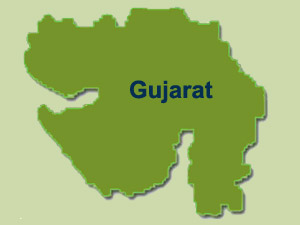
12th February 2012 marked the completion of 36 Sadbhavana fasts across the state of Gujarat. Sadbhavana Mission is nothing but the manifestation of the spirit of peace, unity and brotherhood that has characterized Gujarat in the last decade. Rejecting politics of vote banks, Gujarat has shown the world how development can indeed become a true mass movement through the mantra of ‘Sabka Saath, Sabka VIkas’ (all together, growth for all).
Today, it is well established that the last decade has been the most peaceful decade in the history of Gujarat ever since its creation! There has been not a shred of violence and nobody remembers Section 144 being imposed judiciously by the administration. In September 2002, anti-national elements struck at the heart of our culture, tradition and ethos when the Akshardham Temple was attacked. Priests, devotees or security men no one was sparred in this ruthless bloodbath. But, despite this attack there was not even one episode of violence reported across the length and breadth of Gujarat. From the very next day, it was work as usual for the citizens of the state.
Years later on 26th July 2008 a series of bomb blasts rocked the city. To make matters worse, among the most powerful of them exploded in the premises of the Civil Hospital where helpless victims awaited medical attention.
The dastardly was followed by not violence but unprecedented calm and solidarity among the people of Gujarat. In no time, the state sprinted back to normalcy and it was business as usual for the people of Gujarat. The year 2008 was particularly cruel for the country as terror strikes became common, culminating with the infamous 26/11. The global scenario appeared weak in the wake of Lehman Brothers but Gujarat wasn’t bogged down! Despite the blasts and the gloomy atmosphere that engulfed the nation, Gujarat bagged the ambitious Tata Nano project in October 2008 and the 2009 Vibrant Gujarat brought in record investments in the state. Is this not a fitting tribute to the peaceful surroundings of Gujarat?
But, was this always like this? Did attacks on temples always maintain calm? Did blasts of any kind bring out solidarity over hatred? Unfortunately for Gujarat, this was never the case. Gujarat has seen some very unpleasant times in its formative years where a culture of violence, intolerance and artificial divisions ruled the roost. It is a fact that when a child was born in this state, the first word he learnt (even before ‘Ma’ or ‘Pa’) was ‘curfew’. At the slightest provocation the state burst into flames.
Be it 1969, Navnirman in 1974, the gruesome decade of the 1980s, KHAM, reservations there were floods of violence across Gujarat. For every post-Akshardham calm there are memories of the 1980s when the Jagannath Yatra would be followed by endless violence only because it suited the political masters of the day. Diving society was considered acceptable as long as it got the votes.
Criminalization was fully entrenched in Ahmedabad society best illustrated by the life and times of gangster Latif.
Things are more than different today. Individuals and institutions are judge not by the exceptions but by the norm. In the last decade, Gujarat has clearly shown that 2002 was not the norm but the exception. Peace, unity and brotherhood combined with inclusive development the norm. For all those who going on and on about the riot victims, the example of Qutub Ansari will be an eye opener. A tailor by profession, Qutub’s teary-eyed face became the ‘face’ of Gujarat 2002. After returning to Gujarat in a few years after the violence, he wrote to the Ahmedabad Police Commissioner in September 2011 seeking a ban on the usage of his photo that has been rather judiciously milked by certain ‘secular activists’ to enhance their own career prospects, a fact he himself admits.
He says, “Today, I am living in peace with my family. Not only that, my children are also being brought up in a very good environment.” Enough said.
The minority communities in Gujarat have enjoyed tremendous peace and security in the last decade. The Sachar Committee opined that the Muslim community in Gujarat is much happier than its counterparts in other states.
Recently, a newspaper report featured a tailor from Godhra who found it truly remarkable that in the last ten years not one did he have to close shop on the count of any disturbance!
Gujarat has clearly moved on. There is peace, security and all round development. When roads are being built, nobody is seeing whether a Hindu or Muslim uses them, when water from the Narmada goes to Kutch nobody bothers about the ethnicity of the individual drinking it. History suggests the environment of peace in Gujarat is unprecedented. Therefore, it is indeed high time people take note of this facet. On the 10th anniversary of an unfortunate wave of violence, this is the least we can do!



 Click it and Unblock the Notifications
 Sign in with Google