


Chinese-born Taiwan athletes won't talk politics


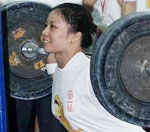
Tsoying (Taiwan): Weightlifter Li Fengying is one of Taiwan's best bets to bring home the island's first ever Olympic gold, but for her it's just another job.
Li is one of a flock of mainland Chinese-born athletes who have left their country and will compete in the 2000 Sydney Games under the flag of Taiwan, arch-rival of their nation of birth. Others include women's table tennis duo Chen Jing and Xu Jing.
They would rather not talk about politics."I consider it a job. I don't care about politics," said Li, who was naturalised after marrying Taiwan weightlifting coach and former Olympian Chung Yung-Chi.
"It doesn't matter which side I represent," the 25-year-old said when asked how she felt representing the wealthy democratic island against her former teammates. "I won't feel animosity just because my status is now different."Li, born in China's central province of Hunan, looks forward to a joyful reunion with her former compatriots. She intends to exchange greetings when they meet and maybe even go shopping together.
Taiwan competes as "Chinese Taipei" because it's barred from using its official name due to pressure from Beijing, which regards the island as a breakaway province that must eventually be reunified with the motherland, by force if necessary.
Li is not the only one who is apolitical. Xu, who married a Taiwan student in the United States months after student-led demonstrations for democracy at home were crushed by the Chinese army at Tiananmen Square in 1989, could not agree more that sports competition is just a job.
"A person living in any place needs to eat, work, make money and sleep," Xu said in an interview during a break from training at the Tsoying sports camp in southern Taiwan.
Taiwan, so far without an Olympic gold, offers lucrative rewards for medallists.
Instant millionaire
The cash-flushed island will shower an Olympic gold medallist with T$10 million (US$333,000) and throws in a similar amount for the coaches.Taiwan Olympians pocket T$6 million for a silver, T$4 million for a bronze and lesser prizes right down to a 10th placing.
Their mainland Chinese counterparts are promised 80,000 yuan (US$10,000) each for an Olympic gold, 50,000 yuan for a silver and 30,000 yuan for a bronze.China is a powerhouse in table tennis, winning nine of 12 Olympic golds since 1988 and Taiwan has tried to lure "outstanding" Chinese athletes.The yawning income disparity is attractive to many Chinese athletes, but not many make it.
One of the luckier ones is Chen, who defected to Taiwan in 1993 after winning the women's singles gold at the 1988 Seoul Olympics and retiring from the Chinese national team.
Her departure to play for Beijing's political nemesis was particularly galling for China's national sports system. Many Chinese and the official media consider her a turncoat.
Chen, ranked third in the world, is China's most feared opponent after she won the singles silver at the 1996 Atlanta Olympics.
"I'll try my best," Chen said when asked to comment on her chances of winning the gold this year.



 Click it and Unblock the Notifications
 Sign in with Google