


Joint Session of Parliament: How NDA stands


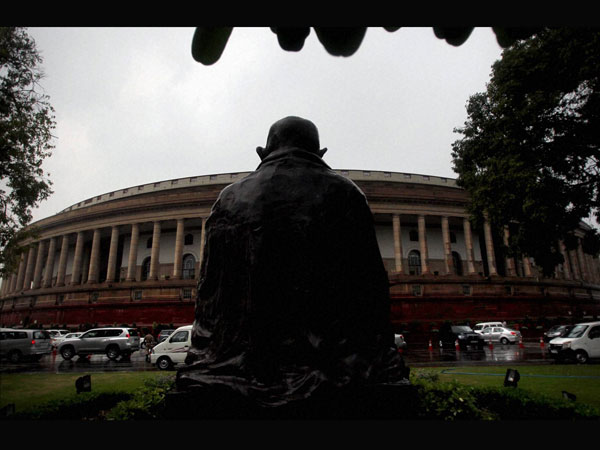
Current scenario in the Rajya Sabha:
Total members: 242 (Halfway mark: 122)
BJP: 42
NDA: 57
Congress: 69
UPA: 102
In this situation, passing a bill (new or those lapsed in the previous Lok Sabha) is a worry for the new government and it requires support from both the Houses for getting a bill passed to become a law. Here a Joint Sitting of the Parliament becomes relevant.
Constitutional provision for Joint Session
As per Article 108 of the Indian Constitution, a joint sitting of both Houses can be convened if a bill
a) has been passed by one House but rejected by another or
b) if the two Houses disagreed on the amendments to be made in the bill
c) if over six months have elapsed after a bill has been passed by one House but is not passed by the other.
A joint sitting is presided over by the Lok Sabha Speaker and a simple majority is required to get a bill passed. It is then sent to the President for his assent.
Under Article 118 of the India Constitution, the President can call a joint session of the two Houses to pass a bill which is not a constitutional amendment one.
Joint session figures in the current Parliament:
Total members: 785 (543 in Lok Sabha and 242 in Rajya Sabha)
Majority mark: 393
NDA: 391 members (BJP has 330)
UPA: 162 members (Congress 113)
Others: 232 members
Bills passed in joint sitting so far:
Only three bills have been passed at joint sessions in the history of the Indian Parliament. They are the Dowry Prohibition Act, 1961 (session was called on May 6 and 9, 1961), the Banking Service Commission Repeal Bill, 1977 (session was called on May 17, 1978) and the Prevention of Terrorism Act, 2002 (session on March 26, 2002). A fourth session was called in 2008 for the Women Reservation Bill but it could not be passed.
Oneindia News



 Click it and Unblock the Notifications
 Sign in with Google