


‘No Nation Could Do This’: Trump Hails Capture of Maduro
Summary of the US strike on Venezuela, the capture of Nicolas Maduro, subsequent legal actions, and proposed US involvement in the country’s transition and oil sector, with international responses and opposition dynamics.


The United States strike on Venezuela and capture of Nicolás Maduro has triggered a political and legal storm, as Donald Trump declares that Washington will run the country during a transition, while critics worldwide question the operation’s legality and Venezuelan opposition figures push to assert what they call an electoral mandate.
Speaking at Mar-a-Lago in Florida after the overnight attack, Trump praised the mission, confirmed that Maduro would face charges in New York, and outlined plans for US involvement in Venezuela’s oil sector, even as many governments demanded clarity over the scale of the intervention and its legal basis.
AI-generated summary, reviewed by editors

Venezuela crisis and Nicolás Maduro capture
Trump opened the press conference by celebrating the military action, saying: "This was one of the most stunning attacks and effective and powerful displays of American military might and competence in American history." Trump said "All Venezuelan military capacities were rendered powerless as the men and women of our military, working with US law enforcement, successfully captured Maduro in the dead of night."
Trump stated that Maduro had been seized during the strike and flown out of Venezuela, and later posted a photograph on Truth Social which Trump described as "Nicolas Maduro on board the USS Iwo Jima", apparently showing the Venezuelan president in handcuffs, wearing wrap‑around goggles and headphones, with a grey sweatshirt and sweat pants and holding a plastic water bottle.
Venezuela power vacuum and US plans for control
During the briefing, Trump declared that Washington would take charge of the country during an undefined handover period. "We're going to run the country until such time as we can do a safe, proper and judicious transition," Trump said, adding that Maduro was a dictator and drug kingpin, but giving no detail on the legal basis or structure of such direct control.
Trump expanded on this involvement by criticising Maduro’s rule, describing Maduro’s leadership as "both horrible and breathtaking". Trump said: "We want peace, liberty and justice for the great people of Venezuela, and that includes many from Venezuela that are now living in the United States and want to go back to their country, it's their homeland," stressing that Washington did not want another hostile leader installed in Caracas.
Trump then said: "We can't take a chance that somebody else takes over Venezuela that doesn't have the good of the Venezuelan people in mind [after] decades of that. We're not going to let that happen." Trump added: "We're there now … We're going to stay until such time as a proper transition can take place." Exact mechanisms for US control remained unclear at the time of the statement.
Venezuela oil, US companies and military options
Trump placed Venezuela’s oil reserves at the centre of the post‑strike strategy and said: "We're going to have our very large US oil companies, the biggest anywhere in the world, go in, spend billions of dollars, fix the badly broken infrastructure, the oil infrastructure, and start making money for the country and we are ready to stage a second and much larger attack if we need to do so. So we were prepared to do a second wave."
According to Trump, the US military had prepared a "second wave" of attacks during the overnight operation into Saturday but did not need to launch it. Trump also told reporters earlier that the United States would be "very strongly involved" in Venezuela’s oil industry going forward, though no contracts, agreements or timelines were announced.
Venezuela indictment of Nicolás Maduro and family
Alongside the military strike, the US Department of Justice issued a new indictment in New York against Maduro, his wife Cilia Flores, Maduro’s son and others. The document said: "For over 25 years, leaders of Venezuela have abused their positions of public trust and corrupted once-legitimate institutions to import tons of cocaine into the United States. NICOLAS MADURO MOROS, the defendant, is at the forefront of that corruption and has partnered with his co-conspirators to use his illegally obtained authority and the institutions he corroded to transport thousands of tons of cocaine to the United States."
The indictment continued: " … the defendant, now sits atop a corrupt, illegitimate government that, for decades, has leveraged government power to protect and promote illegal activity, including drug trafficking." Among the defendants, prosecutors named Maduro’s son as Nicolas Ernesto Maduro Guerra, "aka Nicolasito, aka The Prince". The US attorney general earlier confirmed that Maduro would face criminal charges following the New York filing.
Venezuela strike timeline and global reactions
The operation and its aftermath unfolded over several hours, with political responses arriving from across the world. Below is a simplified timeline of major developments related to Venezuela and Maduro as reported.
| Approx. time | Key event |
|---|---|
| 9h ago | Venezuela accused the US of trying to "seize control" of its resources and reported explosions in Caracas. |
| 8h–7h ago | Venezuela defence minister vowed to resist foreign troops; Trump said Maduro was "captured and flown out of the country" and called the attack a "brilliant operation". |
| 7h–6h ago | Venezuelan vice-president demanded "proof of life" for Maduro and Cilia Flores; Trinidad and Tobago’s prime minister said the country was "not a participant in ongoing military operations" in Venezuela. |
| 5h ago | Colombian president requested an emergency UN security council meeting; Russia called for "immediate clarity" on Maduro’s whereabouts; a US senator said Maduro would stand trial in the United States, while Marco Rubio said Maduro was "under indictment for pushing drugs in the United States". |
| 4h–2h ago | US attorney general confirmed criminal charges; France said the operation went against international law; Brazil’s Luiz Inácio Lula da Silva said the bombardment and capture "cross an unacceptable line". UK prime minister Keir Starmer said Britain was not involved and argued "we should all uphold international law". |
| 2h ago | JD Vance called it a "truly impressive operation" in Venezuela and insisted "stolen oil must be returned to US". |
| 47m–13m ago | The Justice Department released the new indictment; Trump held the Florida press conference and declared "We're going to run the country". |
Venezuela opposition, María Corina Machado and Edmundo González
From exile, Venezuela’s main opposition figure María Corina Machado welcomed the US seizure of Maduro and urged allies to prepare for what Machado described as a democratic transition. Machado, who has long supported US efforts to remove Maduro, posted from an undisclosed location that "the time for freedom has arrived" and said the opposition was "ready to assert our mandate and take power".
Machado outlined a central role for the opposition’s 2024 presidential candidate, the retired diplomat Edmundo González Urrutia, who is currently in Spain. According to her statement, González Urrutia "must immediately assume his constitutional mandate and be recognised as commander-in-chief of the national armed forces by all its officers and soldiers". She urged Venezuelans to stay organised while waiting for further instructions through official channels.
Machado continued: "Today we are ready to assert our mandate and take power. Let us remain vigilant, active and organised until the democratic transition is achieved – a transition that needs all of us," and addressed supporters inside the country with the message: "To Venezuelans inside our country: be ready to carry out what we will soon communicate through our official channels." Machado ended by declaring: "Venezuela will be free. We walk hand in hand with God, until the end," reflecting frequent religious references in Machado’s speeches.
Venezuela elections, exile journey and opposition claims
In her longer written statement, Machado said: "From today, Nicolás Maduro faces international justice for the atrocious crimes committed against Venezuelans and against citizens of many other nations. Faced with his refusal to accept a negotiated exit, the United States government has fulfilled its promise to enforce the law," underlining Machado’s backing for foreign action after years of stalemate in Caracas.
Machado added: "We are going to restore order, free political prisoners, build an exceptional country and bring our children back home. We have fought for years, we have given everything, and it has been worth it. What had to happen is happening," referring to the opposition’s claim that González Urrutia won the 2024 election before Maduro allegedly refused to concede and stayed in power, while Machado was banned from running.
Machado has been outside Venezuela since a secret 5,500‑mile escape involving several land borders, 12 hours in rough Caribbean waters on a fragile boat before a rescue by a team led by a former US special forces soldier, and then a private jet flight to Oslo, Norway, where Machado received the Nobel peace prize amid international support for Venezuela’s opposition.
Celebrations broke out among Venezuelan communities abroad after news of Maduro’s capture, including in Doral, Florida, where Venezuelans such as David Nuñez, Lisbeth Garcia and Victor Gimenez gathered outside El Arepazo restaurant with a banner of Machado, now a Nobel peace prize winner, as they followed developments in Venezuela and awaited clarity on the next steps for González Urrutia and any interim authority.
With Maduro in US custody, a new indictment filed, and Trump claiming the United States will manage Venezuela through a "safe, proper and judicious transition", the country faces a period of deep uncertainty, with opposition leaders seeking to assert electoral claims, foreign governments arguing over international law, and Venezuelans at home and abroad waiting to see who will actually govern.
-
 Gold Rate Today 31 March 2026: Latest IBJA Benchmark And Tanishq, Kalyan, Malabar, Joyalukkas Rates
 -
 Gold Rate Today 1 April 2026: Latest IBJA Gold Rates, Tanishq, Kalyan, Malabar, Joyalukkas Prices
 -
 Gold Silver Rate Today, 31 March 2026: City-Wise Prices, MCX Trend As Gold Rises And Silver Slips
 -
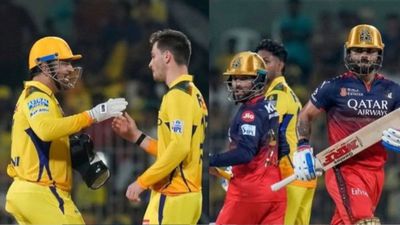 RCB Vs CSK IPL 2026 Tickets At Chinnaswamy: Official Sale, Metro Perks, And Entry Guidelines
 -
 Hyderabad Gold Silver Rate Today, 1 April 2026: Check 18K, 22K, 24K Gold And Silver Prices In Nizam City
 -
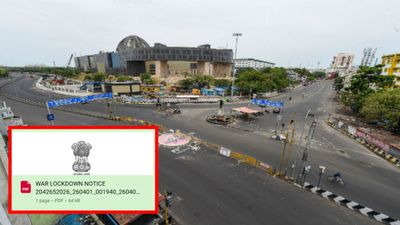 War Lockdown Notice Goes Viral Over Iran Claims, Sparks Panic Online
 -
 Hyderabad Gold Silver Rate Today, 31 March 2026: Gold And Silver See Fresh Movement, Check Latest City Rates
 -
 Gold Silver Rate Today, 1 April 2026: City-Wise Prices Rise Sharply, MCX Gold And Silver Surge
 -
 Laid Off After 20 Years Via Email: Oracle Faces Criticism As Viral Post Highlights Cancer Patient’s Job Loss
 -
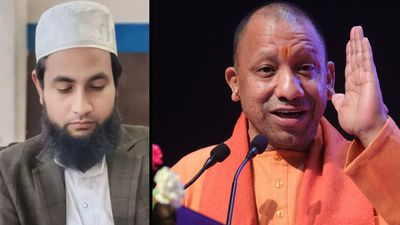 UP STF Nabs Maulana Abdullah Salim Over Controversial Comment On CM Yogi's Mother
 -
 Iran-US War: Donald Trump’s Missteps And The NATO Paradox
 -
 Iran Threatens To Hit US Companies in Region From April 1, Names Microsoft, Apple, Tesla, Boeing



 Click it and Unblock the Notifications
 Sign in with Google